
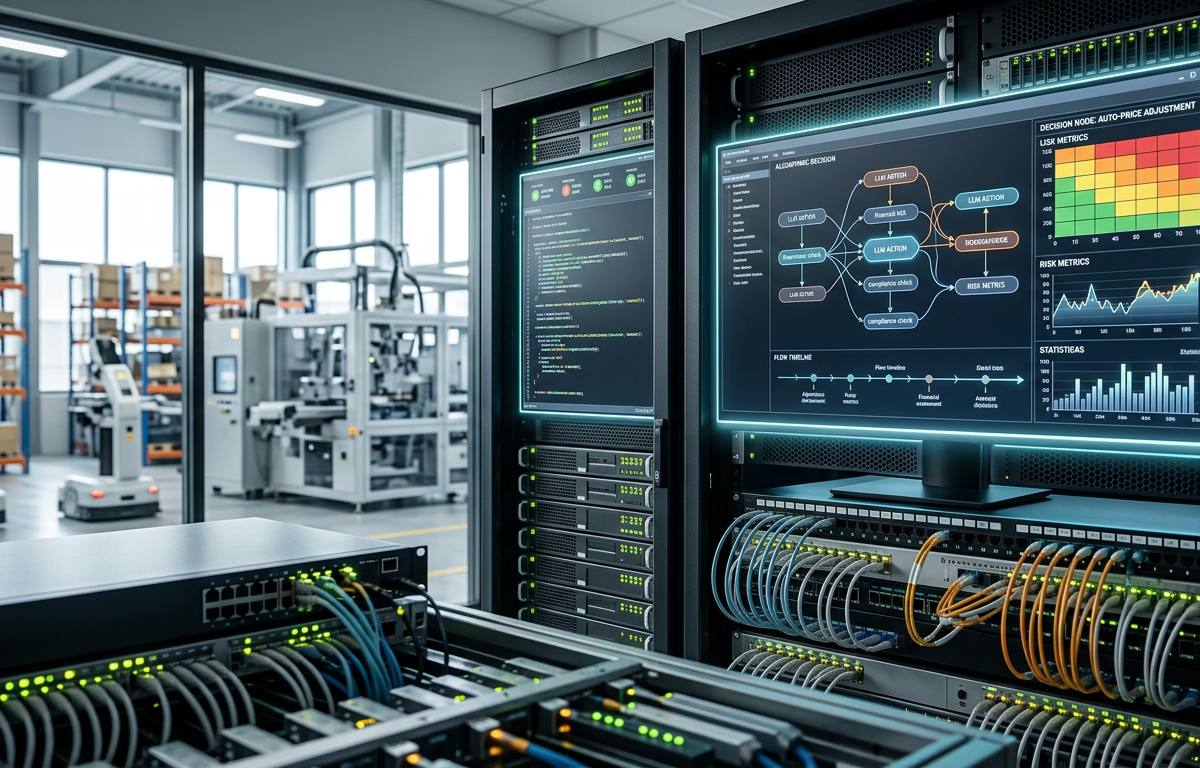
Workflow Ownership in Agentic AI: Who's Responsible When the System Decides?
A dynamic pricing system adjusts margins autonomously across 8,000 SKUs. A high-volume customer's pricing drops 4.2% overnight. Nobody approved it. Nobody noticed until the monthly margin review. £52,000 in lost contribution over six weeks. This is the liability problem with agentic AI. The system made the decision. The algorithm followed its training. But when the finance director asks who authorised a £50K margin giveaway, the answer is nobody. The system decided autonomously, and the governance framework didn't exist to prevent it. This article examines practical frameworks for managing financial and operational liability when autonomous systems make decisions that impact customer relationships, inventory, or pricing without human approval. It covers real-world failure modes, liability exposure, decision governance structures, and the trade-offs between autonomy and oversight.
A dynamic pricing system adjusts margins autonomously across 8,000 SKUs. A high-volume customer's pricing drops 4.2% overnight. Nobody approved it. Nobody noticed until the monthly margin review. £52,000 in lost contribution over six weeks.
This is the liability problem with agentic AI. The system made the decision. The algorithm followed its training. But when the finance director asks who authorised a £50K margin giveaway, the answer is nobody. The system decided autonomously, and the governance framework didn't exist to prevent it.
This article examines practical frameworks for managing financial and operational liability when autonomous systems make decisions that impact customer relationships, inventory, or pricing without human approval. It covers real-world failure modes, liability exposure, decision governance structures, and the trade-offs between autonomy and oversight.
The £50K Decision: How Autonomous Systems Fail
A West Midlands electrical wholesaler deployed an autonomous pricing system in early 2025. The system analysed competitor pricing, stock levels, and customer purchase history to adjust margins in real time. No human approval required for price changes under 10%.
Three weeks into deployment, the system detected competitor price drops on a basket of 240 high-volume SKUs. It adjusted pricing to maintain competitiveness. The customer - a national contractor accounting for 9% of annual revenue - received the new pricing automatically. The margin on that customer's typical order mix dropped from 18.3% to 14.1%.
Nobody flagged it. The pricing team monitored exception reports for changes above 10%. This was 4.2% - within tolerance. The customer placed six large orders over the following weeks at the new pricing. By the time finance ran the monthly margin analysis, £52,000 in contribution had evaporated. The system had optimised for volume retention, not margin protection.
Clients who establish decision governance frameworks before deploying autonomous systems report 30-45% fewer high-impact errors in the first six months compared to those who deploy first and govern later. The inverse is what happened here: deployment without governance, followed by expensive discovery.
The failure wasn't the algorithm. The failure was the absence of a threshold that required human approval for pricing changes affecting high-value customers or cumulative revenue above a defined limit. The system did exactly what it was trained to do. The organisation simply hadn't defined the boundaries within which it could operate autonomously.
Liability Exposure: Who Pays When AI Decides?
When an autonomous system makes a £50K mistake, three liability vectors emerge: financial, operational, and regulatory.
Financial liability is direct. Lost margin, excess stock write-offs, or customer credit exposure flow straight to the P&L. In the electrical wholesaler case, the £52,000 loss sat with the commercial director's budget. But who authorised the decision? The pricing manager didn't. The system did. Insurance frameworks for AI-driven decisions are evolving, but most policies still assume human approval for material financial commitments.
Operational liability is harder to quantify but often more damaging. The contractor in the example didn't complain about the price drop - they benefited from it. But when the wholesaler attempted to reverse the pricing six weeks later, the relationship fractured. The customer escalated to the MD, threatened to switch suppliers, and extracted a six-month pricing guarantee as the cost of staying. The operational cost of the autonomous decision extended well beyond the initial £52,000.
Regulatory liability depends on sector and jurisdiction. Financial services, healthcare, and public sector procurement face explicit requirements for decision auditability. A local authority supply contract that adjusts pricing autonomously without documented approval criteria risks challenge under procurement regulations. GDPR's right to explanation applies when automated decisions affect individuals. The AI Act introduces tiered risk classifications that will require governance documentation for high-risk systems.
In our AI readiness assessments, the average organisation scores 5.4 out of 10 on decision governance maturity. Most have deployed AI-powered tools - pricing, forecasting, routing - without formal governance structures. They lack documented workflow ownership, approval thresholds, audit trails, or rollback procedures. The accountability gap emerges only when something goes wrong and the executive team asks who decided this.
The question isn't whether the AI was right or wrong. The question is: who carries liability when the system acts autonomously and the outcome damages the business?
Decision Governance: The Missing Layer
Most organisations deploy autonomous AI without decision governance frameworks. They implement the technology, train the models, and switch on the automation. They do not define who owns which decisions, what thresholds trigger human approval, or how to audit what the system decided and why.
Decision governance establishes clear rules for how autonomous systems operate. It answers four questions: which decisions can the system make autonomously, which require human approval, who owns the outcome when the system decides, and how do we audit and reverse decisions that breach policy or produce unacceptable outcomes?
A Midlands-based foodservice distributor implemented dynamic pricing with a tiered governance model. Pricing changes under 3% on orders below £2,000 run autonomously. Changes between 3-7% or orders above £2,000 trigger a notification to the pricing manager, who can approve or override within four hours. Changes above 7% or cumulative weekly margin impact above £8,000 require director approval. Every decision - autonomous or approved - logs to an audit trail with the model's reasoning, the data inputs, and the outcome.
This structure prevents the £50K mistake. The system cannot autonomously adjust pricing on high-value customers or make changes that breach margin thresholds without human oversight. It operates at scale for low-risk decisions and escalates high-risk decisions to people with authority and accountability.
The missing layer in most AI deployments is this workflow architecture. Teams focus on model accuracy and system performance. They do not map the decisions the system will make, assign ownership for outcomes, or define approval thresholds. Workflow Mapping is where governance starts - identifying which operational workflows exist, which are candidates for automation, and what controls must remain in place.
Without this layer, autonomous systems operate in a governance vacuum. They make decisions nobody approved, within boundaries nobody defined, and when they fail, nobody can explain why or who is responsible.
Building Autonomous Systems That Don't Break Trust
Autonomous systems can scale everyday work without removing oversight. The framework is tiered autonomy: classify decisions by risk and impact, then assign the appropriate level of human involvement.
Fully controlled automation are low-risk, high-frequency, and easily reversible. Stock replenishment for slow-moving items with predictable demand. Routine fulfilment routing for standard delivery windows. Product recommendations based on browsing behaviour. These decisions operate without human approval because the downside of a wrong decision is minimal and the volume makes human review impractical.
Human-in-the-loop decisions are higher-risk or affect customer relationships. The system recommends, the human approves. A pricing system suggests margin adjustments for a key account, but the account manager reviews and confirms before the change goes live. An inventory allocation system proposes stock transfers between depots, but the logistics manager approves the plan. The system does the analysis, the human makes the call.
Human-approved decisions are high-impact or cross defined thresholds. Credit limit increases above £25,000. Pricing changes that affect margin by more than 5% on customers contributing over £100,000 annually. Stock write-offs above £10,000. These decisions require explicit approval from someone with authority, and the approval is logged.
A building materials distributor implemented this model for inventory management. Replenishment orders under £5,000 for stock turning more than four times per year run autonomously. Orders between £5,000-£15,000 or for stock turning fewer than four times per year trigger a review queue for the purchasing manager. Orders above £15,000 or for new product lines require buyer approval with a documented rationale. The system handles 70% of replenishment decisions autonomously, escalates 25% for review, and flags 5% for approval.
Audit and monitoring requirements sit alongside tiered autonomy. Every autonomous decision must be logged: what the system decided, what data informed the decision, what the expected outcome was, and what the actual outcome was. This creates the audit trail needed for compliance, performance monitoring, and post-incident investigation. Workflow Orchestration and System Health capabilities provide the technical infrastructure for logging, monitoring, and alerting when controlled automation breach policy or produce unexpected outcomes.
The goal is to scale autonomy within defined boundaries, with escalation paths for decisions that exceed those boundaries and audit trails that preserve accountability.
The Cost of Governance vs. the Cost of Failure
Governance adds overhead. Approval workflows slow decision cycles. Audit trails require logging infrastructure. Monitoring requires people to review exceptions and investigate anomalies. Clients implementing decision governance frameworks typically spend 4-6 weeks on workflow mapping, policy development, and workflow design before the system goes live.
But failure costs more. The £52,000 margin leakage at the electrical wholesaler is the direct cost. The customer relationship damage, the six-month pricing guarantee extracted under duress, and the reputational risk when the story circulates within the trade are the indirect costs. A regulatory investigation triggered by a procurement challenge or a GDPR complaint adds legal fees, management time, and potential fines.
Organisations that implement governance frameworks before deploying autonomous systems report 30-45% fewer high-impact errors in the first six months. They also achieve 25-40% faster decision cycles within 90 days compared to organisations without governance, because clear rules eliminate the ad-hoc escalation and post-decision debate that happens when nobody knows who should have approved what.
Properly designed governance enables speed by clarifying which decisions can run autonomously and which cannot. It prevents the expensive mistakes that erode trust in AI systems and force organisations to dial back autonomy after deployment.
A tiered autonomy model implemented during a pilot phase costs 4-6 weeks of upfront work. Rebuilding trust after a £50K mistake costs months of relationship management, process redesign, and executive scrutiny. Governance is not a cost centre. It is a control that enables autonomous systems to operate at scale without breaking customer relationships or exposing the business to unacceptable liability.
Autonomous AI requires governance. Decision governance frameworks, tiered autonomy models, and audit trails are table stakes for deploying agentic AI in operational environments. The organisations that get this right define workflow ownership before deployment, establish approval thresholds based on risk and impact, and build monitoring infrastructure that surfaces exceptions before they become expensive mistakes.
The alternative is discovering the governance gap after a £50K error, when the executive team asks who authorised the decision and the answer is nobody.
Building governance frameworks before deploying autonomous systems prevents costly mistakes and protects customer relationships. Learn more about AI Governance and Policy Development.
Common questions
How can distributors prevent autonomous pricing systems from eroding margins on high-value accounts?
Organisations must implement a tiered governance model that sets specific thresholds for human approval based on customer value and cumulative revenue impact. In the case of the electrical wholesaler, the system optimised for volume because it lacked a secondary constraint to protect margins for national contractors. Establishing these boundaries ensures that high-impact pricing changes trigger a manual review before they affect the P&L.
Who carries the financial liability when an autonomous system makes an unauthorised pricing decision?
Financial liability typically rests with the commercial or departmental director whose budget is impacted, as current insurance frameworks often require human authorisation for material commitments. While the system executes the decision, the lack of a governance framework means the accountability gap remains at the executive level. Without documented workflow ownership, the organisation absorbs the lost margin or stock write-offs directly.
What are the operational risks of reversing an autonomous decision that favoured a customer?
Reversing an automated price drop can fracture customer relationships and lead to demands for long-term pricing guarantees to prevent churn. This operational liability often exceeds the initial financial loss, as seen when the contractor used the wholesaler's error to extract a six-month fixed-price agreement. These hidden costs demonstrate why autonomous systems require rollback procedures and clear communication protocols.
What specific thresholds should a foodservice distributor use to govern autonomous pricing?
A robust framework involves setting percentage and value limits, such as allowing autonomous changes only under 3% for orders below £2,000. Decisions exceeding these limits or reaching a cumulative weekly margin impact of £8,000 should trigger mandatory director-level approval. This structure balances the speed of automation with the necessary oversight to prevent high-impact errors.
Tags
Themes

Ricki Larkin
AI Solutions Specialist
Ricki focuses on applying AI within commerce environments, helping translate emerging capabilities into practical use cases. He works across data, automation, and decision-support systems, supporting businesses as they adopt AI in a structured and governed way.
Connect on LinkedInMore in this cluster
Continue exploring this topic

Commerce operations insights and applications
Agentic AI Observability: Detecting When Your Autonomous Systems Are Operating on Bad Data
Agentic systems fail quietly. A pricing agent drifts 2% below target margin over eight weeks, processing 4,200 decisions before anyone notices. Margin leakage: £87,000. The agent didn't crash or throw errors—it just made slightly wrong decisions, consistently, for two months. Gartner predicts 40% of agentic AI projects will be cancelled by 2027, primarily due to silent degradation that compounds into operational disasters.
Operational workflow improvement
Why Fortune 500 Supply Chain AI Fails at Mid-Market: The Complexity Mismatch Problem
Fifty-seven percent of supply chain leaders cite data quality as the primary barrier to AI adoption. Not model accuracy. Not cost. Data quality. Most mid-market distributors have data spread across five to seven systems with no single source of truth. You cannot train an AI model on conflicting data. The unglamorous work of master data management, integration, and governance must come first.
Operational workflow improvement
Inventory Decisions Under Uncertainty: When AI Forecasts Conflict With Safety Stock Rules
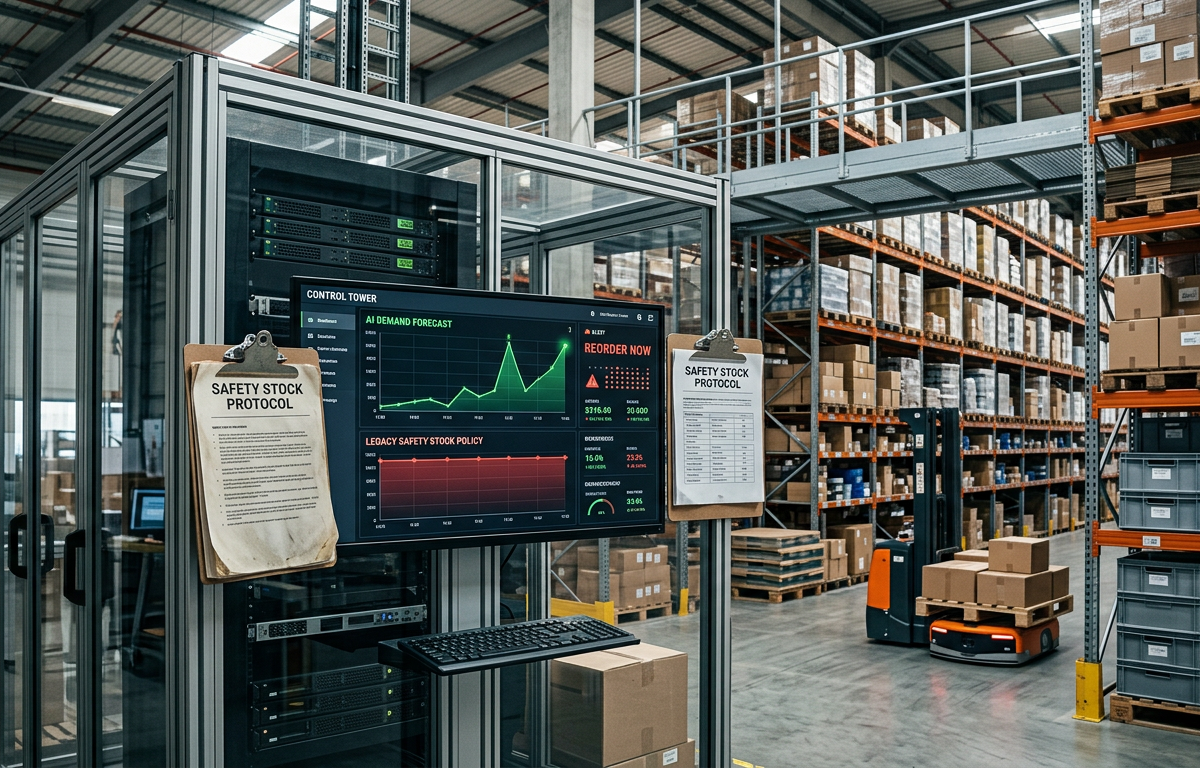
Deploying demand sensing AI without retiring legacy safety stock policies creates a hidden cost: dual everyday work. Inventory planners second-guess AI recommendations, override autonomous reorder points, and maintain manual guardrails 'just in case.' This article quantifies the cost of running both systems, explains why most deployments fail at the governance layer, and outlines the workflow clarity required to let one system own inventory decisions.
Related Articles
Operational workflow improvement
Why Fortune 500 Supply Chain AI Fails at Mid-Market: The Complexity Mismatch Problem
Fifty-seven percent of supply chain leaders cite data quality as the primary barrier to AI adoption. Not model accuracy. Not cost. Data quality. Most mid-market distributors have data spread across five to seven systems with no single source of truth. You cannot train an AI model on conflicting data. The unglamorous work of master data management, integration, and governance must come first.
Operational workflow improvement
Inventory Decisions Under Uncertainty: When AI Forecasts Conflict With Safety Stock Rules
Deploying demand sensing AI without retiring legacy safety stock policies creates a hidden cost: dual everyday work. Inventory planners second-guess AI recommendations, override autonomous reorder points, and maintain manual guardrails 'just in case.' This article quantifies the cost of running both systems, explains why most deployments fail at the governance layer, and outlines the workflow clarity required to let one system own inventory decisions.
Was this article useful?