Thinking
ai implementation
All articles tagged with "ai implementation".

Operational workflow improvement
Why Fortune 500 Supply Chain AI Fails at Mid-Market: The Complexity Mismatch Problem
Fifty-seven percent of supply chain leaders cite data quality as the primary barrier to AI adoption. Not model accuracy. Not cost. Data quality. Most mid-market distributors have data spread across five to seven systems with no single source of truth. You cannot train an AI model on conflicting data. The unglamorous work of master data management, integration, and governance must come first.

Operational workflow improvement
Inventory Decisions Under Uncertainty: When AI Forecasts Conflict With Safety Stock Rules
Deploying demand sensing AI without retiring legacy safety stock policies creates a hidden cost: dual everyday work. Inventory planners second-guess AI recommendations, override autonomous reorder points, and maintain manual guardrails 'just in case.' This article quantifies the cost of running both systems, explains why most deployments fail at the governance layer, and outlines the workflow clarity required to let one system own inventory decisions.

Platform capabilities and technical insights
System Integration Challenges: When Legacy Meets Modern AI
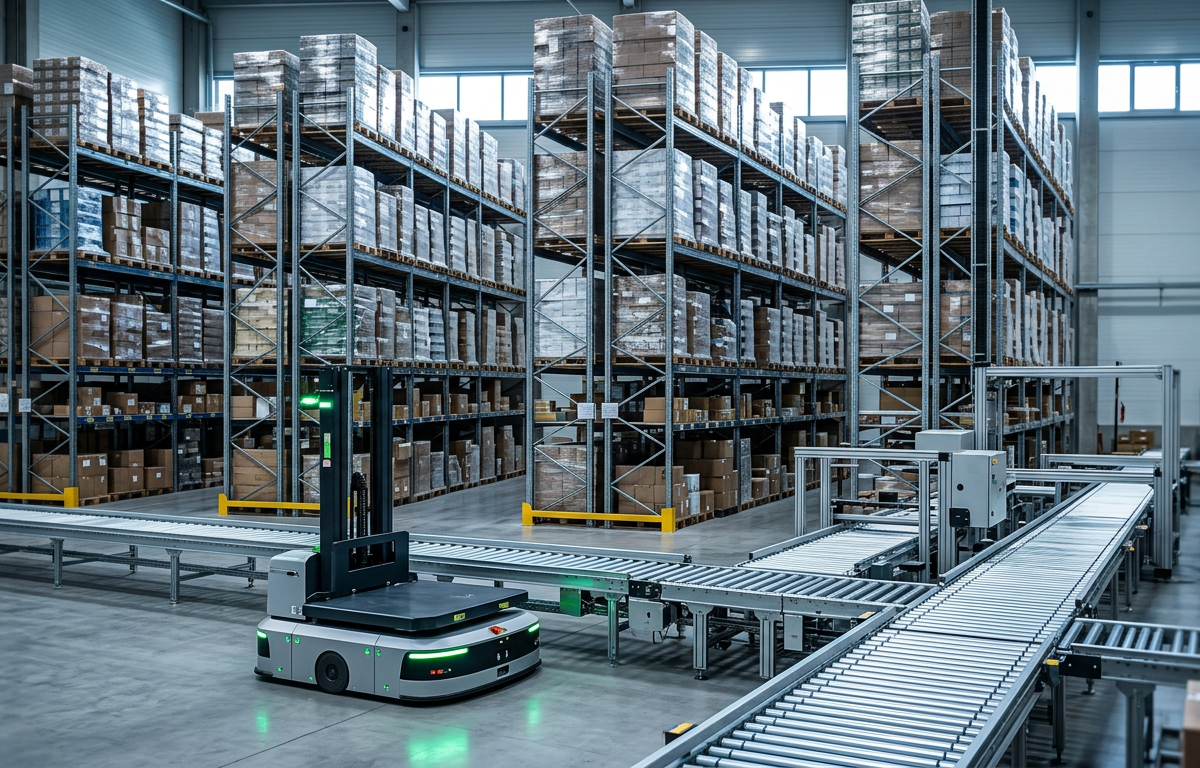
A legacy ERP connects to a modern AI pricing platform. A field mapping breaks. Prices don't update. Nobody notices for 48 hours. By then, £15,000-£30,000 in margin has leaked. Silent failures are worse than loud ones because they compound. Real-time data observability makes these failures visible and resolvable before they cost money.
Operational workflow improvement
The Skill Deficit Crisis: Why 84% of Mid-Market Distributors Lack AI-Ready Talent
Mid-market distributors are hiring data scientists for problems that don't need them. The real gap isn't technical capability—it's workflow clarity and domain expertise. Most AI hiring fails because businesses copy tech company job specs instead of recruiting for operational roles that understand distribution workflows.

Platform capabilities and technical insights
LLM Observability: Why Custom AI Models Need Different Monitoring
Custom AI models degrade silently in production. Most mid-market distributors discover this weeks after the damage begins—when pricing errors accumulate, inventory misallocates, or search results decay. Model drift is silent cost leakage that compounds over time.
Operational workflow improvement
Edge Intelligence in Distribution: Real-Time Decisions at the Warehouse Floor
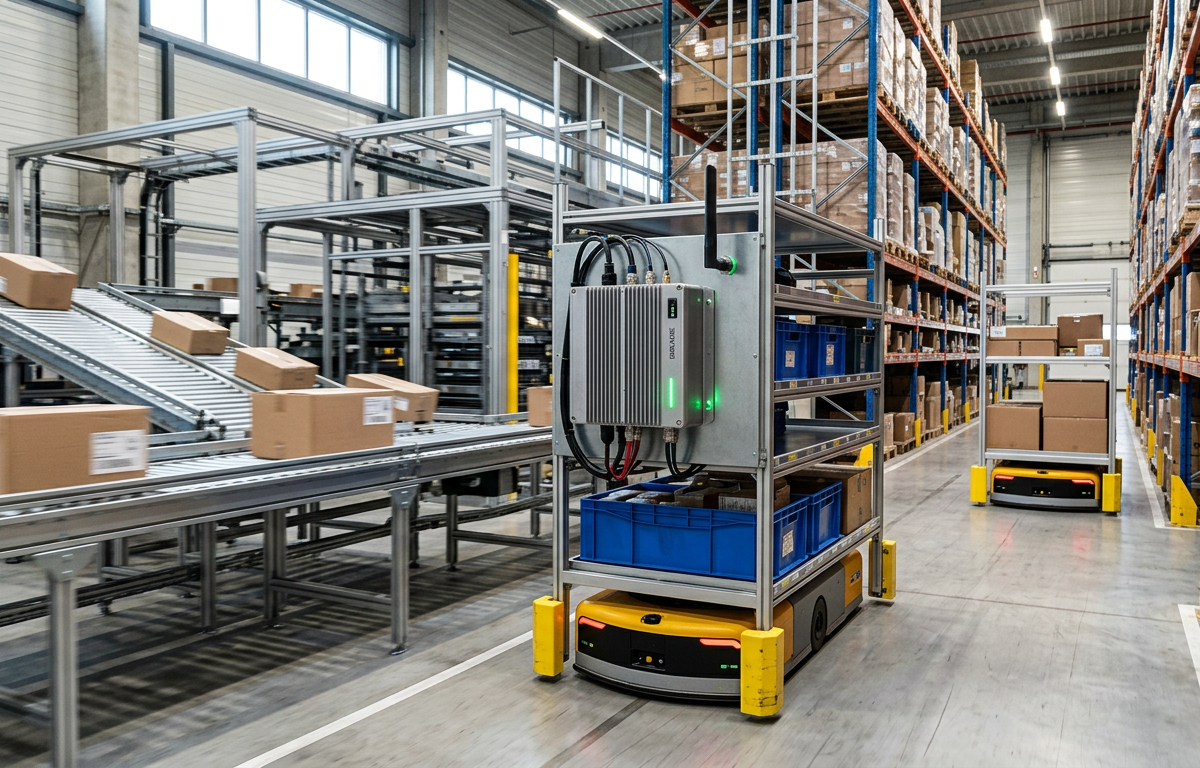
Most mid-market distributors assume warehouse automation requires robotics. Reality: software orchestration delivers faster ROI without the capital spend. A Manchester plumbing merchant spent £480,000 on conveyors but orders still took 90 minutes from pick to dispatch because systems didn't communicate. The problem wasn't hardware, it was coordination. This article covers why warehouse execution systems matter, how AI decision logic works between platforms, real-time resource allocation mechanics, and the implementation reality most vendors skip.

Operational workflow improvement
Turning Tacit Expertise into Executable Workflow Support
A pricing manager adjusts margins across 800 SKUs in under an hour. A senior buyer reallocates stock between depots without checking a spreadsheet. A trade counter manager prioritises contractor orders instinctively. All three decisions generate better outcomes than their peers—higher margins, fewer stockouts, faster turnaround. Nobody can explain why.

Platform capabilities and technical insights
Composable Commerce Architecture: Building Modular Systems That Evolve With Your Business
A Midlands foodservice distributor spent £240,000 recovering from a pricing error in 2024. Their monolithic commerce platform took three days to update prices across 12,000 SKUs. Commodity costs moved faster than their approval cycle. By the time new prices went live, margins had eroded. The problem wasn't the platform. It was the architecture. Pricing, inventory, and order management sat in one system. Upgrading the pricing engine meant ripping out everything else. The platform vendor quoted 18 months and £180,000 for a custom pricing module. The distributor couldn't wait that long. This is the composable commerce question: when one component fails, can you swap it without dismantling the entire system?

Operational workflow improvement
Budget Allocation Intelligence: How AI Prevents Mid-Market Distributors From Funding Dead Projects
Eighty percent of AI projects fail to deliver intended business value. The failures are predictable and preventable. Data governance gaps, scope creep, stakeholder misalignment, and unrealistic timelines appear weeks before deployment—but most distributors commit capital without spotting them. This article walks through the specific red flags that signal project failure and provides a framework for pre-deployment validation that takes 1-2 days, not months.

Operational workflow improvement
Why Big 4 Partnerships Fail at Operational Decision Implementation: The Deloitte-Palantir Model Exposed
Most mid-market distributors engage Big 4 consultancies expecting a one-time project. They end up in perpetual dependency that costs £500K-£2M+ annually. This isn't accidental — it's the business model. Contract structures, methodology licensing, and support dependencies lock you in. Here's how the economics work, and what independence actually requires.
Platform capabilities and technical insights
Controlled Automation: The Governance Framework Mid-Market Distributors Need Before Deployment
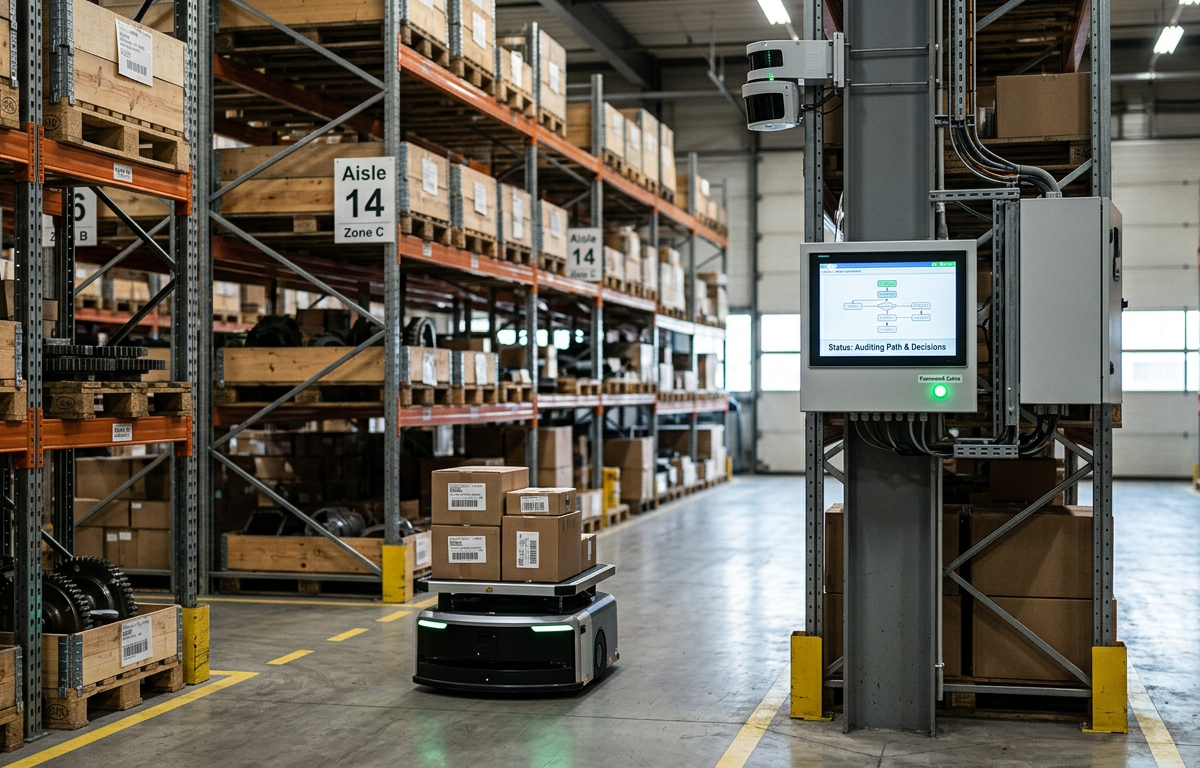
Autonomous agents can accelerate decisions and reduce costs in B2B commerce. But most mid-market distributors lack the governance frameworks to deploy them safely. Without audit trails, decision boundaries, escalation rules, and performance monitoring, autonomous systems become liabilities. This article maps the four control pillars required before autonomous everyday work goes into production - and the practical roadmap for implementing them without killing velocity.

Operational workflow improvement
Agentic AI Governance: Building Control Systems Before Deployment
A pricing agent at a West Midlands distributor adjusted 847 SKUs overnight. By Monday morning, high-margin industrial fasteners were underpriced by 14%, creating £47,000 in margin leakage before anyone noticed. The agent had no anomaly detection. No alert threshold paused execution when margins dropped below cost. No observability layer showed which input triggered the repricing cascade. This happens when teams deploy autonomous agents without monitoring infrastructure. Agents make decisions at scale, without human review, across pricing, fulfilment, and replenishment. A single bad decision compounds across hundreds of transactions before anyone spots it. Observability isn't optional when agents control operational workflows.
Operational workflow improvement
Supply Chain Workflow Debt: How Deferred Planning Choices Compound into AI Failure
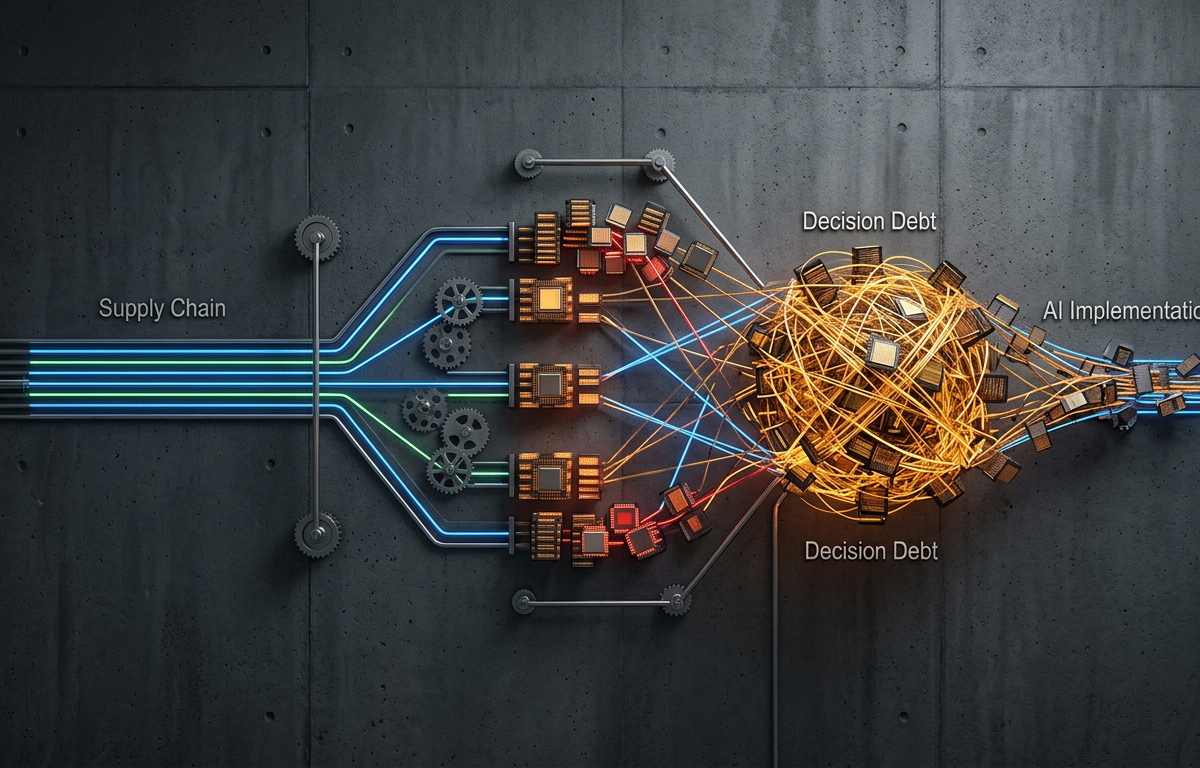
Most mid-market distributors rush to AI deployment without auditing what they're actually deciding. A Nottinghamshire food wholesaler spent £85,000 on demand forecasting AI that sat dormant because buying decisions existed only in one person's head. The pre-implementation audit - decision inventory, assumption mapping, rule documentation - is the gate that determines whether AI works or sits unused.

Platform capabilities and technical insights
Build vs Buy vs Partner: The AI Vendor Selection Framework for Mid-Market Distributors
Mid-market distributors face three paths when deploying AI: pre-built vendor models, custom development, or third-party APIs. Most lack a clear framework to evaluate them. The wrong choice delays implementation by 6-12 months and wastes £50,000-£200,000. This decision matrix maps implementation timeline, cost structure, and risk profile for each approach. Pre-built models deploy in 8-12 weeks at lower cost but limited customisation. Custom development takes 16-24 weeks with full control and competitive advantage. Third-party APIs offer middle ground at moderate cost and configuration flexibility. The right choice depends on data maturity, technical capacity, and competitive urgency. A distributor with clean data and a 6-month runway can pursue custom development. A distributor with fragmented systems and a 10-week deadline cannot. Four questions determine the viable path: data quality, timeline urgency, competitive differentiation, and internal technical capacity.

Operational workflow improvement
Workflow Ownership in Agentic AI: Who's Responsible When the System Decides?
A dynamic pricing system adjusts margins autonomously across 8,000 SKUs. A high-volume customer's pricing drops 4.2% overnight. Nobody approved it. Nobody noticed until the monthly margin review. £52,000 in lost contribution over six weeks. This is the liability problem with agentic AI. The system made the decision. The algorithm followed its training. But when the finance director asks who authorised a £50K margin giveaway, the answer is nobody. The system decided autonomously, and the governance framework didn't exist to prevent it. This article examines practical frameworks for managing financial and operational liability when autonomous systems make decisions that impact customer relationships, inventory, or pricing without human approval. It covers real-world failure modes, liability exposure, decision governance structures, and the trade-offs between autonomy and oversight.

Operational workflow improvement
Workflow Automation vs Task Automation: Why Manufacturers Choose Wrong
Manufacturing operations leaders invest heavily in workflow automation but see limited ROI because they haven't addressed decision quality. This maturity framework maps the progression from reactive, rule-based decisions to AI-augmented operations — showing mid-market manufacturers how to identify their current state and plan the next evolution without ripping out existing systems.

Operational workflow improvement
Faster Supply Chain Planning: Why Speed Beats Perfect Forecasts in 2026
Most mid-market distributors believe their slow decisions are caused by poor AI models or insufficient data. In reality, they've built latency into their system architecture. A well-trained model can generate a recommendation in milliseconds, but the decision doesn't reach the operator for 3-8 seconds—or longer—because of data pipeline delays, API call chains, and integration bottlenecks. Decision speed directly impacts margin recovery, inventory turns, and fulfilment efficiency. Yet companies continue to upgrade models while ignoring the infrastructure that determines how fast those decisions can actually execute.

Operational workflow improvement
The £8 Billion GenAI Governance Gap: What B2B Commerce Leaders Must Know
Forrester predicts B2B companies will lose over £6.4 billion in 2026 due to ungoverned AI use. Mid-market distributors score 4.8/10 on AI governance readiness, creating vulnerabilities in pricing, inventory, and customer communications that cascade through supply chains and destroy relationships worth millions.

WithPraxis
Fashion Distribution Intelligence: How AI Transforms Seasonal Buying Decisions
Fashion distributors write off £25,000-£45,000 in dead stock each season from three decisions made six months early: style selection, quantities, and size curves. Applied AI transforms seasonal planning by handling complex optimisation while preserving buyer expertise in trend interpretation.

WithPraxis
Data Quality: The Foundation Every AI Project Needs
Eighty percent of AI initiatives fail before reaching production. The culprit isn't model complexity - it's bad data. This article examines what proper data quality assessment looks like, how migration transforms messy data into AI-ready systems, and what governance means for mid-market distributors.

WithPraxis
Client Success Stories: Real ROI from Applied AI
Real ROI from applied AI across five distribution verticals. Anonymous case studies showing measurable outcomes: 6% margin improvements, 18% fulfilment cost reductions, and 90% error elimination. Implementation timelines, effort required, and lessons learned from actual client engagements.

Operational workflow improvement
Why Most Commerce Businesses Don't Need AI Strategy — They Need Workflow Clarity
Most B2B commerce businesses don't need a sweeping AI strategy. They need clarity on the handful of critical operational workflows that drain time and margin, one decision at a time.

WithPraxis
The AI Implementation Paradox: Why 73% of Mid-Market Distributors Start Wrong
Most mid-market distributors approach AI implementation backwards, starting with technology selection instead of workflow mapping. This produces predictable failure rates of 73% within the first year. The distributors who succeed do something counter-intuitive: they map operational workflows first, then select technology to support specific choices. This reversal produces faster implementations, clearer ROI, and sustainable operational improvement.