Thinking
workflow orchestration
All articles tagged with "workflow orchestration".
Commerce operations insights and applications
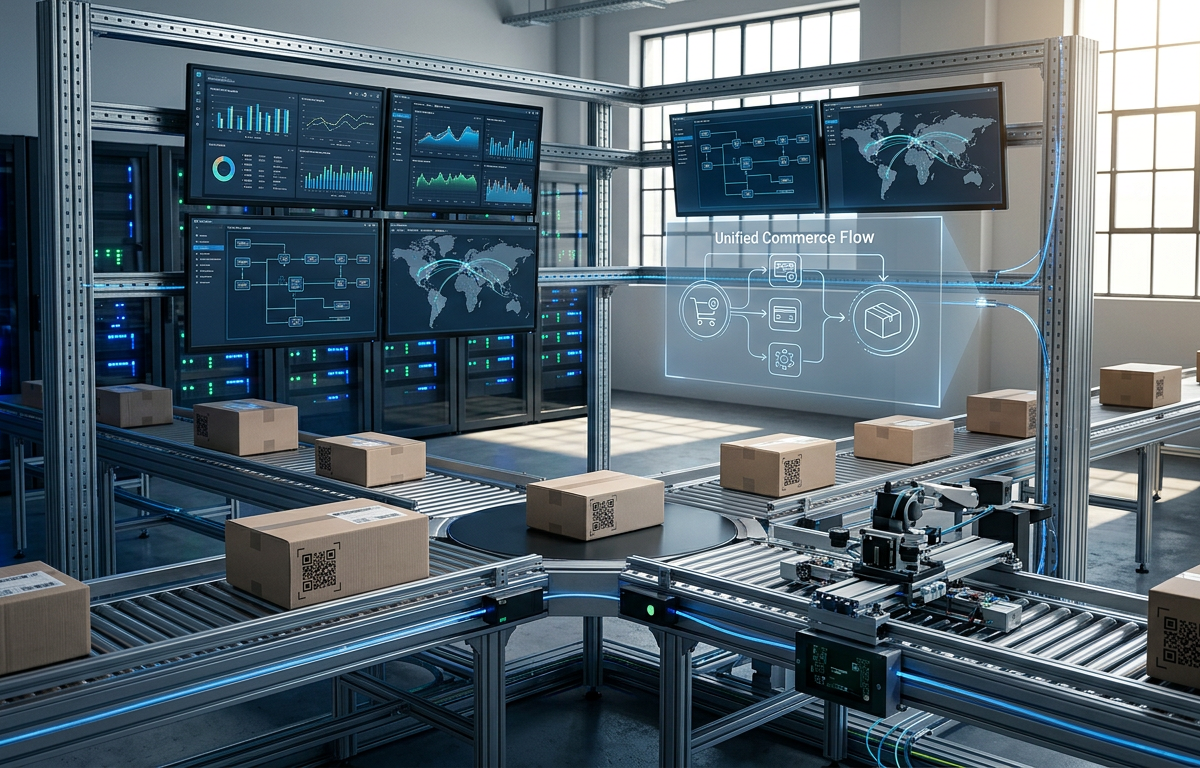
Unified Commerce Intelligence: Orchestrating Revenue Across Omnichannel B2B Transactions
A £60M foodservice distributor processes orders through four channels: Shopify Plus, EDI feeds, phone, and WhatsApp. Each channel lands in a different system. Web orders sync to the ERP overnight. EDI orders arrive every 15 minutes but don't update inventory visibility until the next batch run. Staff key phone orders directly into the ERP. Staff transcribe WhatsApp orders into a spreadsheet, then manually enter them. The operations director calculated the cost. Pricing inconsistencies between channels cost £180K annually in margin leakage. A customer quoted £4.20/kg for chicken thighs on the phone receives a different price (£4.45/kg) when they order the same product via the website three days later. They call to query it. The phone team has no visibility of the web order. They create a second order. By the time staff spot the duplicate, the customer has been invoiced twice and the stock has been picked. Resolution takes 90 minutes and involves three people.

Platform capabilities and technical insights
Event-Driven Architecture: Real-Time Commerce Operations at Scale
A West Midlands foodservice distributor runs seven systems: SAP for ERP, Shopify Plus for commerce, Manhattan for warehousing, Salesforce for CRM, Xero for accounting, Akeneo for product data, and a legacy routing tool built in-house. None of them talk to each other in real time. Pricing updates take three days. Inventory visibility lags 24 hours behind actual stock. The operations director spends Monday mornings reconciling conflicts created by systems working from different versions of the truth. This is the middleware bottleneck. Mid-market B2B distributors have invested in best-of-breed systems but lack the integration layer to connect them. The B2B middleware market reached £14.1 billion in 2025, growing at 12.23% annually (MarketsandMarkets, 2024). That growth reflects a painful reality: buying good systems is easy, making them work together is not. Event-driven architecture promises to solve this. Order placed, inventory updated, fulfilment triggered, customer notified—all in real time. But most mid-market stacks lack the middleware to orchestrate that sequence. Without it, teams fall back to manual processes and the operational friction compounds.
Operational workflow improvement
Edge Intelligence in Distribution: Real-Time Decisions at the Warehouse Floor
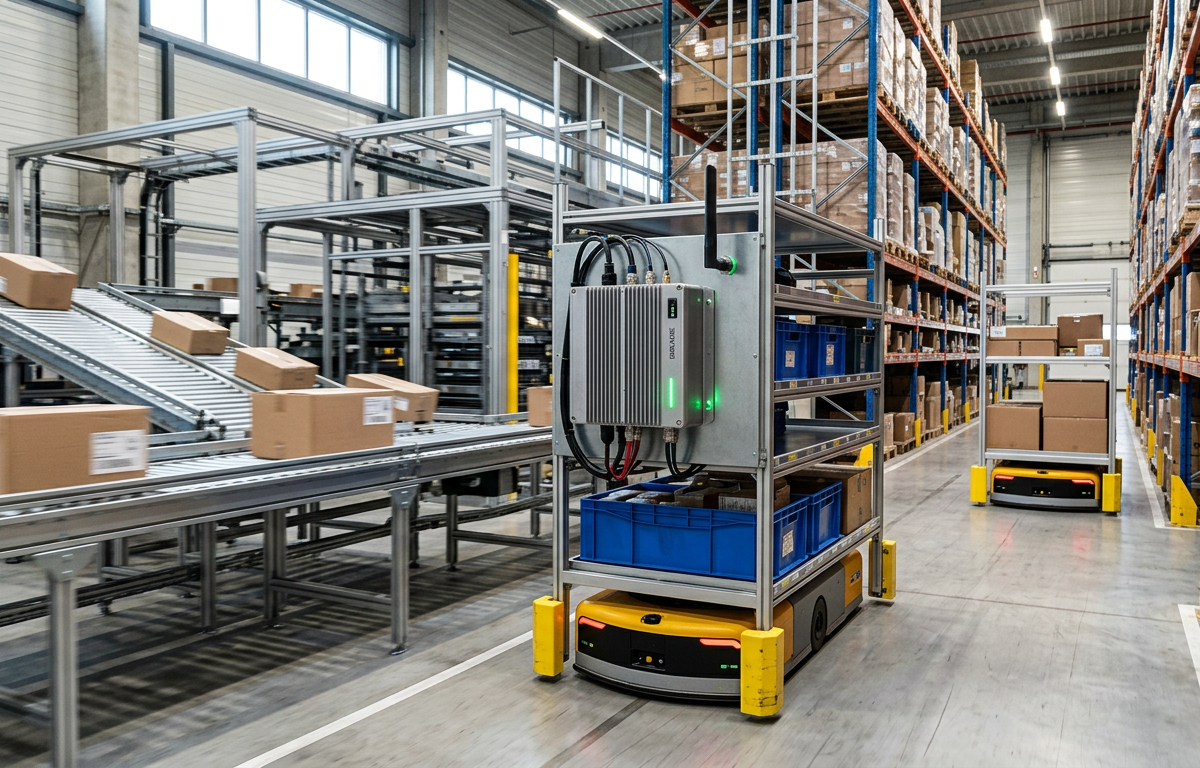
Most mid-market distributors assume warehouse automation requires robotics. Reality: software orchestration delivers faster ROI without the capital spend. A Manchester plumbing merchant spent £480,000 on conveyors but orders still took 90 minutes from pick to dispatch because systems didn't communicate. The problem wasn't hardware, it was coordination. This article covers why warehouse execution systems matter, how AI decision logic works between platforms, real-time resource allocation mechanics, and the implementation reality most vendors skip.
Operational workflow improvement
Workflow Automation vs Task Automation: Why Manufacturers Choose Wrong
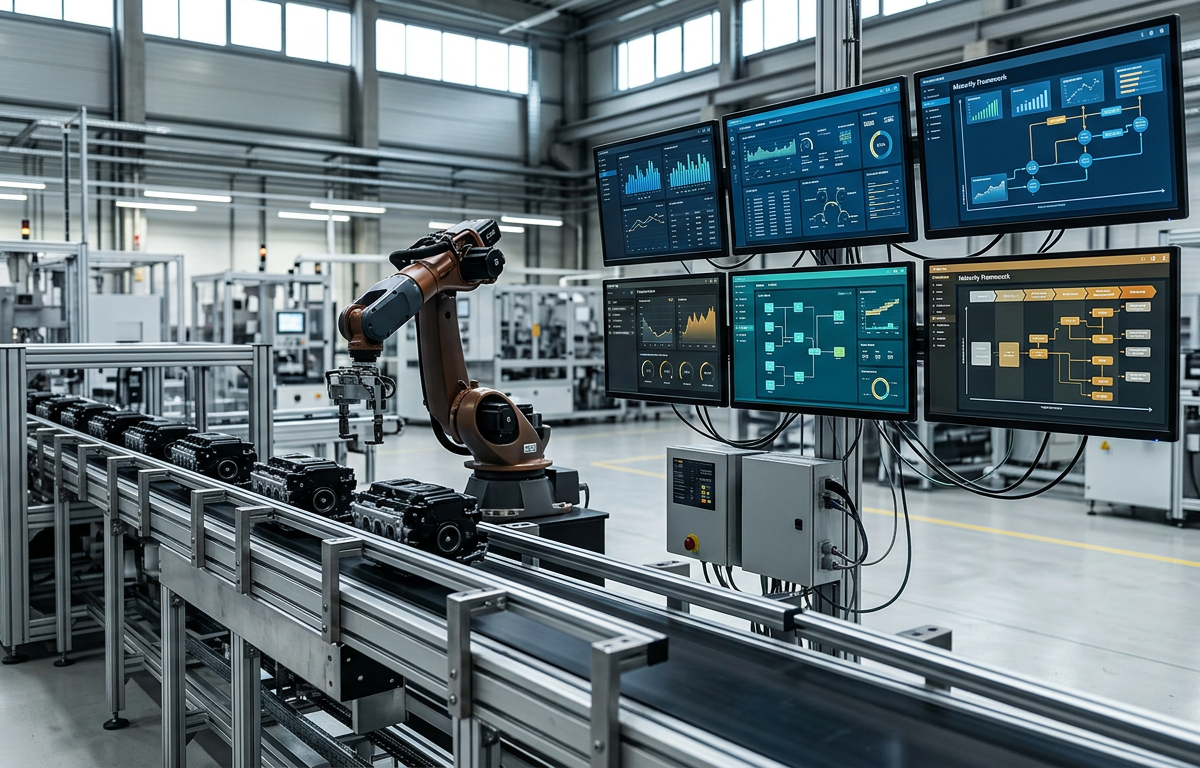
Manufacturing operations leaders invest heavily in workflow automation but see limited ROI because they haven't addressed decision quality. This maturity framework maps the progression from reactive, rule-based decisions to AI-augmented operations — showing mid-market manufacturers how to identify their current state and plan the next evolution without ripping out existing systems.