

Event-Driven Architecture: Real-Time Commerce Operations at Scale
A West Midlands foodservice distributor runs seven systems: SAP for ERP, Shopify Plus for commerce, Manhattan for warehousing, Salesforce for CRM, Xero for accounting, Akeneo for product data, and a legacy routing tool built in-house. None of them talk to each other in real time. Pricing updates take three days. Inventory visibility lags 24 hours behind actual stock. The operations director spends Monday mornings reconciling conflicts created by systems working from different versions of the truth. This is the middleware bottleneck. Mid-market B2B distributors have invested in best-of-breed systems but lack the integration layer to connect them. The B2B middleware market reached £14.1 billion in 2025, growing at 12.23% annually (MarketsandMarkets, 2024). That growth reflects a painful reality: buying good systems is easy, making them work together is not. Event-driven architecture promises to solve this. Order placed, inventory updated, fulfilment triggered, customer notified—all in real time. But most mid-market stacks lack the middleware to orchestrate that sequence. Without it, teams fall back to manual processes and the operational friction compounds.
The Integration Middleware Crisis in Mid-Market B2B Commerce
A West Midlands foodservice distributor runs seven systems: SAP for ERP, Shopify Plus for commerce, Manhattan for warehousing, Salesforce for CRM, Xero for accounting, Akeneo for product data, and a legacy routing tool built in-house. None of them talk to each other in real time. Pricing updates take three days. Inventory visibility lags 24 hours behind actual stock. The operations director spends Monday mornings reconciling conflicts created by systems working from different versions of the truth.
This is the middleware bottleneck. Mid-market B2B distributors have invested in best-of-breed systems but lack the integration layer to connect them. The B2B middleware market reached £14.1 billion in 2025, growing at 12.23% annually (MarketsandMarkets, 2024). That growth reflects a painful reality: buying good systems is easy, making them work together is not.
Event-driven architecture promises to solve this. Order placed, inventory updated, fulfilment triggered, customer notified - all in real time. But most mid-market stacks lack the middleware to orchestrate that sequence. Without it, teams fall back to manual processes and the operational friction compounds.
Why Event-Driven Architecture Fails Without Proper Middleware
Event-driven architecture sounds elegant on paper. An order fires an event. Inventory management consumes it and deducts stock. Fulfilment routing picks a depot. Accounting posts the transaction. Customer receives confirmation. All within seconds.
In practice, mid-market implementations break down at the middleware layer. Systems emit events but nothing orchestrates them. A Midlands building materials distributor deployed Kafka to stream order events across five systems. Within three weeks, the queue backed up for 36 hours because one downstream system couldn't process messages fast enough. No retry logic. No dead-letter queue. No circuit breakers. The team shut down event streaming and reverted to nightly batch jobs.
The problems are specific and predictable. Events arrive out of order - payment confirmation before order creation. Duplicate events cause double-billing because nobody implemented idempotency checks. Schema changes break consumers downstream. One system expects customer_id as a string, another as an integer, and the middleware doesn't validate or transform.
Across our implementations, clients report 39% improvement in key operational metrics within six months of deployment, but only after proper middleware foundation is in place (WithPraxis client data, 2025). The improvement spans order-to-cash cycle time (average 4.2 days reduced to 2.6 days), pricing accuracy (87% to 98%), and inventory sync errors (12% to 3%).
Event streaming platforms like Kafka or RabbitMQ handle message transport. They do not handle orchestration logic, schema governance, or business rule enforcement. That requires middleware that sits between event streams and business systems - translating, validating, routing, and monitoring data in motion.
The Hidden Cost of Middleware Debt
Middleware debt accumulates silently. Each new system integration is a one-off custom build. No standardisation. No reusability. A £60 million distributor we worked with had 12 point-to-point integrations, each maintained by a different person. One developer left and the integration between their WMS and accounting system broke. Nobody else understood how it worked. The finance team spent two weeks manually reconciling transactions.
Mid-market organisations typically spend 15-25% of IT budget on integration maintenance alone. A Yorkshire industrial distributor with a £1.2 million IT budget spent £180,000-£300,000 annually just keeping integrations running. Not improving them. Not adding capabilities. Just preventing them from breaking.
This debt blocks new initiatives. A fashion retailer wanted to implement dynamic pricing but couldn't because their commerce platform, ERP, and pricing tool didn't share data in real time. Implementing real-time sync would require rearchitecting six integrations. Estimated cost: £80,000. Estimated time: four months. The project was shelved.
Organisations with fragmented integration stacks score an average of 5.6 out of 10 on AI readiness assessments because they cannot feed clean, timely data to decision models (WithPraxis client data, 2025). Organisations that invested in unified middleware score 7-8 out of 10. The difference is not the AI model. It is the data foundation.
Middleware debt also creates operational blind spots. A distributor cannot answer "what is my current inventory across all locations?" in real time because inventory data syncs every four hours. They cannot calculate true customer profitability because order data, fulfilment costs, and payment terms live in three systems that never reconcile. Teams make decisions on incomplete information because the middleware cannot deliver complete information.
Evaluating Integration Platforms: What Actually Matters
Most mid-market buyers evaluate middleware on feature checklists: REST API support, webhook support, pre-built connectors. Wrong criteria. Features do not predict operational success.
What matters is whether the platform can handle your data volume, latency requirements, and governance needs without constant manual intervention. A distributor processing 500 orders daily across three depots has different requirements than one processing 5,000 orders across 15 depots. The evaluation must start with operational reality, not vendor marketing.
Latency requirements. The platform must deliver data within your decision window. Pricing decisions that take three days to propagate do not need real-time sync. Inventory allocation decisions that happen within minutes do. A building materials distributor needed inventory updates within 30 seconds to prevent overselling high-value items like timber and steel. Their existing middleware synced every 15 minutes. That 14.5-minute gap cost them £25,000 in customer compensation over six months.
Data volume and throughput. How many events per second can the platform process under normal load and peak load? A foodservice distributor processing 500 orders daily generates 15,000-20,000 events (order creation, line item additions, payment authorisation, fulfilment assignment, dispatch confirmation, delivery updates). If peak order volume doubles during seasonal demand, the middleware must handle 40,000 events without degradation.
Schema governance and validation. The platform must enforce data contracts between systems. A distributor integrated their PIM with their commerce platform using custom middleware. Six months later, the PIM vendor changed the product schema. The middleware passed the malformed data through without validation. Product pages broke. The issue took four days to diagnose because nobody was monitoring schema compliance.
Connector breadth and quality. How many of your systems connect out of the box, and how well? Pre-built connectors save time but only if they support the specific data flows you need. A connector that syncs product catalogue data but not pricing data is useless if pricing is your bottleneck. Evaluate connectors on coverage (which data entities) and configurability (can you customise field mappings without code).
Total cost of ownership. Licence fees are 30-40% of total cost. The rest is implementation, training, monitoring, and ongoing maintenance. A platform with a £20,000 annual licence but £60,000 in annual operational overhead is more expensive than a £40,000 licence with £15,000 overhead. Calculate total cost over three years including staff time.
Ask vendors for reference architectures at twice your current data volume. If you process 500 orders daily now, ask how their platform handles 1,000. If they cannot answer with specifics - queue sizes, processing latency, failover behaviour - they have not run it at that scale.
Building vs Buying: The Mid-Market Decision
Many mid-market organisations think they can build middleware in-house. Most cannot, not sustainably. Building requires expertise in distributed systems, event streaming, data consistency models, and operational monitoring. A two-person IT team does not have this. Even a ten-person team struggles.
Building takes 6-12 months for initial deployment. Buying takes 6-8 weeks to implement. Building also carries ongoing maintenance burden. Every system upgrade, every schema change, every new integration requires developer time. A Midlands distributor built custom middleware in 2022. By 2024, the original developer had left and nobody else could modify it. They spent £35,000 migrating to a commercial platform.
Buying transfers operational risk to the vendor. Schema validation, retry logic, monitoring, alerting - these become the vendor's problem. But buying the wrong platform is worse than building. A locked-in, under-featured platform creates the same problems as technical debt, just with a recurring licence fee attached.
Across six client engagements in distribution, manufacturing, and B2B commerce, the organisations that succeeded invested in proper middleware evaluation upfront - four to six weeks of assessment before committing to a platform (WithPraxis client data, 2025). Those that rushed to implementation without evaluation spent 2-3 times more on customisation and rework.
The evaluation process requires cross-functional alignment. IT understands technical requirements. Operations understands data flows and workflow delay. Finance understands cost constraints. A purchasing director choosing middleware without input from warehouse operations will choose wrong. The platform will meet technical specs but fail operational needs.
One concrete evaluation approach: map your five most critical data flows end to end. For a distributor, this might be order-to-cash, product catalogue updates, inventory sync, customer account changes, and supplier purchase orders. Document current state (how long each flow takes, where manual steps exist, where errors occur). Then evaluate middleware platforms against those five flows specifically. Can they reduce cycle time? Eliminate manual steps? Prevent errors?
The Path Forward: Middleware as a Strategic Investment
Middleware is not a cost centre. It is the foundation for every workflow intelligence capability that follows. Without it, Dynamic Pricing Intelligence fails because data arrives too late. Inventory optimisation fails because visibility is incomplete. Customer profitability analysis fails because data is inconsistent.
The B2B middleware market is growing at 12.23% annually because organisations are finally recognising this (MarketsandMarkets, 2024). Mid-market distributors that invest in proper middleware now will outcompete those that do not, not because the middleware is flashy, but because it enables faster, more accurate operational workflows.
A Yorkshire industrial distributor implemented unified middleware in early 2024. Within six months, pricing decision time dropped from three days to four hours. Inventory accuracy improved from 84% to 97%. Demand forecasting accuracy reached 85%, up from 68%. None of this required exotic AI. It required clean, timely data flowing between systems without manual intervention.
The investment pays for itself. A £60 million distributor spending £180,000-£300,000 annually on integration maintenance can redirect that budget toward growth initiatives once middleware is stabilised. The operational improvements - faster decisions, fewer errors, better visibility - compound over time.
Start with evaluation, not implementation. Identify your five most critical data flows. Document current state. Define target state. Evaluate platforms against those specific flows, not against generic feature lists. Involve operations, IT, and finance in the decision. Budget for total cost of ownership, not just licence fees.
Middleware is invisible when it works and catastrophic when it fails. The organisations that treat it as strategic infrastructure rather than technical plumbing will build the data foundation that workflow intelligence requires.
Learn more about System Integration and Data Pipeline Development.
Common questions
How does the lack of real-time middleware impact inventory visibility for mid-market distributors?
Fragmented integration stacks often result in inventory data syncing only every four hours or lagging 24 hours behind actual stock levels. This delay prevents distributors from answering critical operational questions regarding real-time stock across all locations. In high-value sectors like building materials, this latency leads to overselling risks unless updates occur within a 30-second window.
What are the primary technical causes for event-driven architecture failures in B2B commerce stacks?
Implementations typically break down when systems lack orchestration logic to handle events arriving out of order or duplicate messages that cause double-billing. Without middleware to manage retry logic, dead-letter queues, and schema validation, downstream systems often fail to process data correctly. These technical gaps frequently force teams to abandon real-time streaming and revert to manual batch processing.
What is the financial impact of maintaining point-to-point integrations instead of using unified middleware?
Mid-market organisations typically spend 15-25% of their total IT budget solely on the maintenance of existing integrations. This 'middleware debt' creates a significant financial burden, with some distributors spending up to £300,000 annually just to prevent systems from breaking. These costs often block new commercial initiatives, such as dynamic pricing, due to the high expense of rearchitecting legacy connections.
How does integration infrastructure affect a distributor's readiness for AI and decision modelling?
Organisations with fragmented integration stacks score significantly lower on AI readiness, averaging 5.6 out of 10 compared to 7-8 for those with unified middleware. This disparity exists because AI models require clean, timely data feeds that legacy point-to-point systems cannot provide. Proper middleware acts as the essential data foundation for feeding decision models accurate operational information.
Tags
Themes

Nick Pinson
Managing Director
Nick leads WithPraxis as Managing Director, overseeing strategy, delivery, and long-term client partnerships. With deep experience in digital commerce and business operations, he focuses on aligning technology investment with commercial outcomes for mid-market and enterprise businesses.
Connect on LinkedInMore in this cluster
Continue exploring this topic

Platform capabilities and technical insights
System Integration Challenges: When Legacy Meets Modern AI
A legacy ERP connects to a modern AI pricing platform. A field mapping breaks. Prices don't update. Nobody notices for 48 hours. By then, £15,000-£30,000 in margin has leaked. Silent failures are worse than loud ones because they compound. Real-time data observability makes these failures visible and resolvable before they cost money.

WithPraxis
Data Quality: The Foundation Every AI Project Needs
Eighty percent of AI initiatives fail before reaching production. The culprit isn't model complexity - it's bad data. This article examines what proper data quality assessment looks like, how migration transforms messy data into AI-ready systems, and what governance means for mid-market distributors.
Related Articles
Platform capabilities and technical insights
System Integration Challenges: When Legacy Meets Modern AI
A legacy ERP connects to a modern AI pricing platform. A field mapping breaks. Prices don't update. Nobody notices for 48 hours. By then, £15,000-£30,000 in margin has leaked. Silent failures are worse than loud ones because they compound. Real-time data observability makes these failures visible and resolvable before they cost money.
Platform capabilities and technical insights
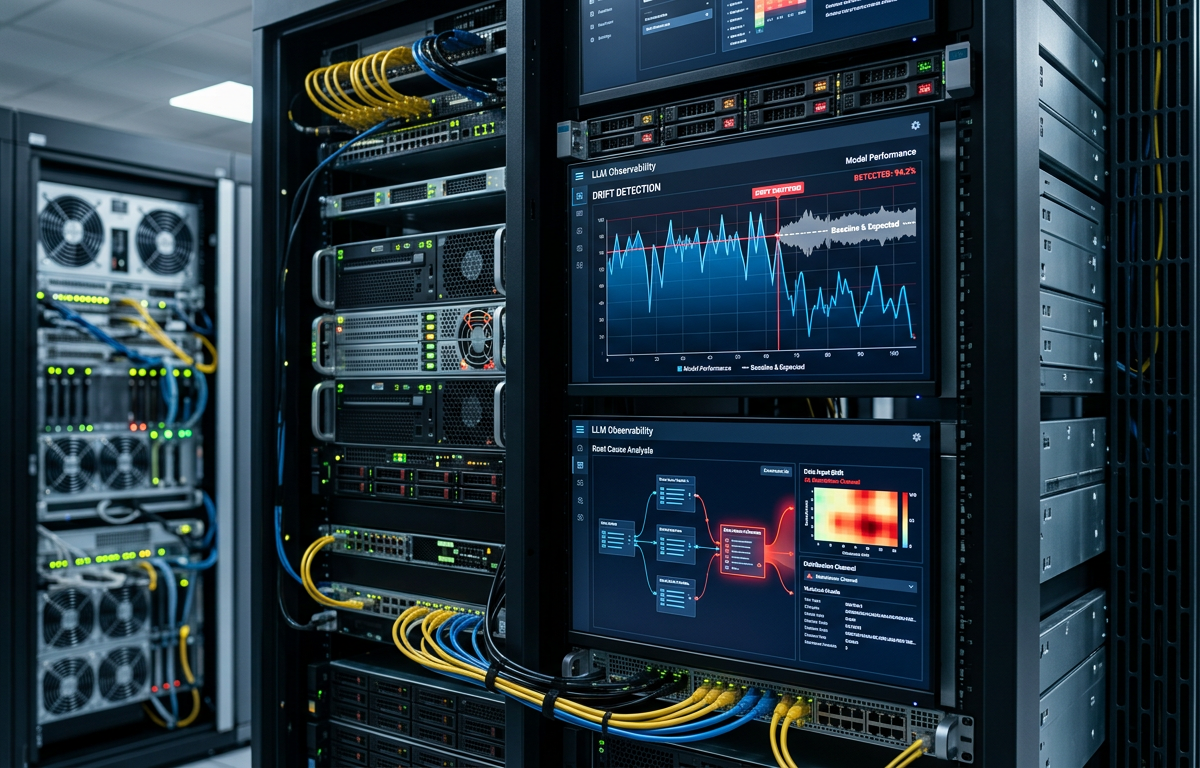
LLM Observability: Why Custom AI Models Need Different Monitoring
Custom AI models degrade silently in production. Most mid-market distributors discover this weeks after the damage begins—when pricing errors accumulate, inventory misallocates, or search results decay. Model drift is silent cost leakage that compounds over time.
Was this article useful?