Thinking
anomaly detection
All articles tagged with "anomaly detection".

Commerce operations insights and applications
Unified Commerce Intelligence: Orchestrating Revenue Across Omnichannel B2B Transactions
A £60M foodservice distributor processes orders through four channels: Shopify Plus, EDI feeds, phone, and WhatsApp. Each channel lands in a different system. Web orders sync to the ERP overnight. EDI orders arrive every 15 minutes but don't update inventory visibility until the next batch run. Staff key phone orders directly into the ERP. Staff transcribe WhatsApp orders into a spreadsheet, then manually enter them. The operations director calculated the cost. Pricing inconsistencies between channels cost £180K annually in margin leakage. A customer quoted £4.20/kg for chicken thighs on the phone receives a different price (£4.45/kg) when they order the same product via the website three days later. They call to query it. The phone team has no visibility of the web order. They create a second order. By the time staff spot the duplicate, the customer has been invoiced twice and the stock has been picked. Resolution takes 90 minutes and involves three people.

Commerce operations insights and applications
Agentic AI Observability: Detecting When Your Autonomous Systems Are Operating on Bad Data
Agentic systems fail quietly. A pricing agent drifts 2% below target margin over eight weeks, processing 4,200 decisions before anyone notices. Margin leakage: £87,000. The agent didn't crash or throw errors—it just made slightly wrong decisions, consistently, for two months. Gartner predicts 40% of agentic AI projects will be cancelled by 2027, primarily due to silent degradation that compounds into operational disasters.

Platform capabilities and technical insights
System Integration Challenges: When Legacy Meets Modern AI
A legacy ERP connects to a modern AI pricing platform. A field mapping breaks. Prices don't update. Nobody notices for 48 hours. By then, £15,000-£30,000 in margin has leaked. Silent failures are worse than loud ones because they compound. Real-time data observability makes these failures visible and resolvable before they cost money.

Operational workflow improvement
Agentic AI Data Architecture: Why Your Supply Chain Intelligence Fails Without the Right Foundation
A pricing agent at a South Yorkshire distributor adjusted 1,200 SKUs based on supplier cost data that was six weeks stale. The pipeline reported healthy. The data quality checks passed. The system lost £34,000 in margin over three months before anyone noticed. The agent hadn't malfunctioned - it had operated exactly as designed on information that was technically valid but operationally worthless. This is the observability gap that makes autonomous systems dangerous. Traditional monitoring tracks schema compliance and pipeline health. Agentic AI needs semantic monitoring - systems that understand whether data makes sense in the context of the decision being made, not just whether it arrives on time in the right format.
Platform capabilities and technical insights
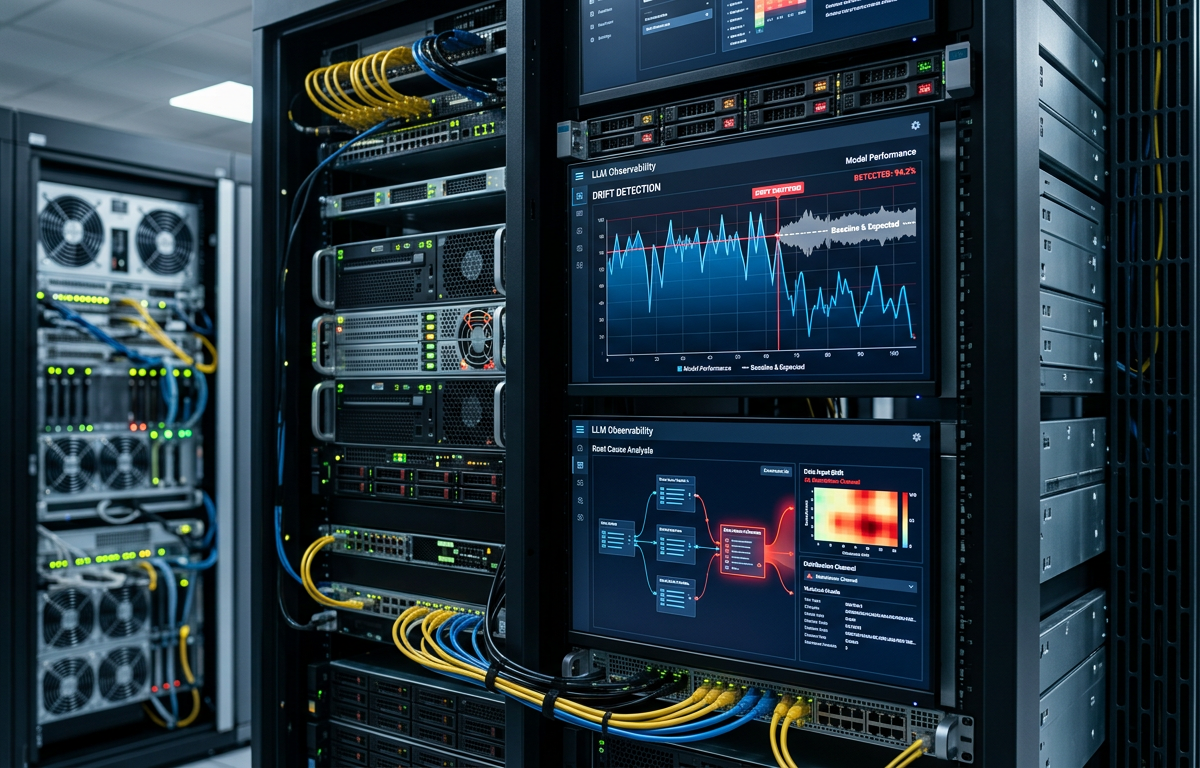
LLM Observability: Why Custom AI Models Need Different Monitoring
Custom AI models degrade silently in production. Most mid-market distributors discover this weeks after the damage begins—when pricing errors accumulate, inventory misallocates, or search results decay. Model drift is silent cost leakage that compounds over time.

Operational workflow improvement
Agentic AI Governance: Building Control Systems Before Deployment
A pricing agent at a West Midlands distributor adjusted 847 SKUs overnight. By Monday morning, high-margin industrial fasteners were underpriced by 14%, creating £47,000 in margin leakage before anyone noticed. The agent had no anomaly detection. No alert threshold paused execution when margins dropped below cost. No observability layer showed which input triggered the repricing cascade. This happens when teams deploy autonomous agents without monitoring infrastructure. Agents make decisions at scale, without human review, across pricing, fulfilment, and replenishment. A single bad decision compounds across hundreds of transactions before anyone spots it. Observability isn't optional when agents control operational workflows.