

System Integration Challenges: When Legacy Meets Modern AI
A legacy ERP connects to a modern AI pricing platform. A field mapping breaks. Prices don't update. Nobody notices for 48 hours. By then, £15,000-£30,000 in margin has leaked. Silent failures are worse than loud ones because they compound. Real-time data observability makes these failures visible and resolvable before they cost money.
A West Midlands building materials distributor connected their legacy ERP to a modern AI pricing platform. The integration ran smoothly for six weeks. Then a field mapping broke during a routine ERP update. Product cost data stopped flowing. The AI platform continued generating pricing recommendations, but they were based on outdated cost information.
Nobody noticed for 48 hours. By Monday morning, the commercial team had approved 340 price changes based on corrupted data. Margin leakage: £15,000-£30,000 before the finance director spotted the discrepancy during a manual reconciliation.
Silent failures are worse than loud ones because they compound. A broken integration that throws an error gets fixed immediately. A broken integration that continues running, producing plausible but incorrect outputs, makes every downstream decision wrong. Real-time data observability solves this problem. It detects failures the moment they occur, before they cascade into operational workflows. Across our implementations, clients report 39% improvement in operational metrics within six months, but only if data quality is maintained throughout. Observability is the foundation.
Why Legacy Systems Fail When Connected to AI Platforms
Legacy systems like SAP, Infor, and Sage were built for batch processing and manual reconciliation. A nightly export generates a file. Someone checks it in the morning. Staff flag and correct discrepancies before the data goes live. This workflow assumes human oversight at every step.
Modern AI platforms expect real-time, clean, consistent data. They make decisions continuously: pricing recommendations every 15 minutes, fulfilment routing every time an order arrives, replenishment calculations every hour. There's no manual reconciliation step. The AI trusts that incoming data is correct.
When you connect legacy systems to AI platforms, three things break. First, field mapping assumptions fail. The legacy system changes a field name during an upgrade. The AI platform still expects the old name. The integration continues running, but the field comes through blank. Second, data type mismatches emerge. The legacy system sends dates as '01/02/2025'. The AI platform expects ISO 8601 format. The integration rejects the record or misinterprets the date. Third, null and missing value handling diverges. The legacy system allows blanks in optional fields. The AI platform treats blanks as errors and halts processing.
A building materials distributor's ERP sent product codes with leading zeros: 00234, 00891, 01456. The integration middleware stripped the zeros during transformation, passing 234, 891, 1456 to the AI pricing platform. The distributor keyed pricing rules to the full code format. Every rule failed silently. The AI platform couldn't match products to their pricing logic, so it defaulted to base cost plus a fixed margin. The distributor lost customer-specific pricing, volume discounts, and promotional logic across 3,200 SKUs.
Most mid-market teams don't discover these failures until they see the operational impact: wrong prices on quotes, missed orders because inventory levels were incorrect, stock allocated to the wrong depot. Our AI readiness assessments consistently show an average score of 5.6 out of 10. Most organisations underestimate data quality complexity until they're three weeks into an integration project.
The Cost of Silent Data Failures
A pricing integration failure means AI recommendations are based on incomplete or corrupted data. Typical margin leakage: 2-5% per month until detected. For a £50 million distributor, that's £83,000-£208,000 in lost margin before someone notices the pricing looks wrong.
A fulfilment routing failure means orders route to the wrong depots. A Midlands foodservice distributor's routing algorithm stopped receiving accurate postcode data from their order management system. The integration continued running, but postcodes were truncated: SW1A 2AA became SW1A. The algorithm couldn't calculate accurate distances, so it defaulted to routing based on depot capacity. Delivery costs increased 18% over four weeks before the operations manager questioned why so many orders were crossing regions.
An inventory sync failure means stock levels are wrong. That leads to two problems: overselling (you promise stock you don't have) or excess safety stock (you hold extra buffer because you don't trust the numbers). A fashion distributor's inventory sync between their warehouse management system and commerce platform failed silently. The WMS sent stock updates every 10 minutes, but the integration middleware cached the data and only pushed changes once per hour. During peak trading, stock levels on the website were 50 minutes behind reality. They oversold 120 items in two days before the customer service team noticed the spike in "out of stock" apology emails.
The worst part: these failures are silent. No error logs, no alerts, no obvious symptoms. The distributor makes operational workflows on bad data. By the time they realise the integration is broken, they've made 100+ decisions based on corrupted inputs.
A foodservice distributor's kitchen timing data stopped syncing from their POS system to their Predictive Replenishment System. The AI no longer knew which items were actually selling at each customer site. It continued generating replenishment orders based on historical patterns, but those patterns were now three weeks out of date. The algorithm over-ordered perishables for customers who had changed their menus. Waste: £8,000-£12,000 per week. The failure went undetected for three weeks because the replenishment orders looked plausible, they were just wrong.
The cost isn't just the data loss. It's the compounding effect of bad decisions made downstream. Every pricing decision, every fulfilment route, every replenishment order amplifies the original error.
What Real-Time Data Observability Looks Like
Observability isn't just monitoring that data arrived. It's verifying that the data is correct, complete, and usable. Three layers matter.
First, pipeline observability: did the data arrive on time? Are there latency spikes? A pricing integration should deliver cost updates within five minutes of changes in the ERP. If latency exceeds 10 minutes, something is wrong: either the ERP export is slow, the network connection dropped, or the integration middleware is overloaded.
Second, quality observability: does the data match expected schemas, ranges, and distributions? Are null rates normal? A product catalogue sync should have zero nulls in the SKU field, less than 2% nulls in the product description, and prices within a defined range (£0.01 to £50,000 for most distributors). If null rates spike to 15%, the integration is broken.
Third, impact observability: is the downstream AI system making decisions based on this data? Are those decisions reasonable? If a Dynamic Pricing Intelligence system suddenly recommends 400 price increases in one hour when the average is 40, either demand has spiked unexpectedly or the input data is wrong.
For pricing integrations, monitor field completeness (are all SKUs present?), value ranges (are prices within expected bounds?), and freshness (is data less than five minutes old?). For inventory integrations, monitor stock level changes (are they realistic?), location consistency (are items in the right warehouses?), and reconciliation gaps (do totals match the source system?). For customer data integrations, monitor record counts (did 500 customers suddenly disappear?), address validation (are postcodes formatted correctly?), and credit limit consistency (did a £50,000 limit become £50?).
The alert strategy matters. Not every anomaly is critical. A 2% increase in null rates reflects a new product category with incomplete data. A 50% increase is a red flag. Real-time alerts should trigger on thresholds, not on every deviation. An alert that fires 20 times per day gets ignored. An alert that fires twice per month gets immediate attention.
Most mid-market teams don't have dedicated data engineers. Observability tools need to be accessible to operations teams, not just technical staff. A commercial manager should be able to open a dashboard and see whether pricing data is flowing correctly. A warehouse supervisor should be able to check whether inventory sync is running on time. This is where purpose-built systems like WithPraxis's System Health capability matter: they translate technical signals into operational alerts that non-technical teams can act on.
Detection and Resolution: The Operational Workflow
An alert fires at 14:32: inventory sync latency has exceeded 10 minutes. The operations team checks the alert dashboard. They see that the ERP export job is running but hasn't completed. Normal export time: four minutes. Current runtime: 12 minutes and counting.
Root cause: the ERP job is processing 50,000 SKUs, but the network connection to the integration platform dropped mid-transfer. The job continued running in the ERP, but the integration platform stopped receiving data. The ERP thinks the export succeeded. The integration platform thinks it's still waiting.
Resolution: the integration platform automatically retries the connection. Within two minutes, the sync completes. The alert clears. Total incident duration: 14 minutes. No manual intervention needed. No operational impact: the 14-minute delay is within acceptable latency thresholds.
But what if the ERP job itself fails? The alert escalates. The integration team receives a Slack notification. They check the ERP logs and find that a custom field was added to the product table during a weekend upgrade. The field mapping in the integration middleware expects 18 fields. The ERP is now sending 19. The middleware rejects the entire batch.
The integration team updates the field mapping configuration, adding the new field and mapping it to a placeholder in the target system. They re-run the export job manually. The sync completes. The alert clears. Total time to resolution: 15 minutes from alert to fix.
Without observability, this failure would have gone undetected for hours or days. The operations team would have made fulfilment decisions based on yesterday's inventory levels. They would have routed orders to depots that were out of stock. They would have promised delivery times they couldn't meet. By the time someone noticed the inventory numbers looked wrong, they'd have made 200+ decisions based on stale data.
Real-time observability doesn't eliminate failures. It makes them visible and resolvable before they compound. The difference between a 15-minute incident and a three-day margin leak is observability.
Building an Observability Strategy for Your Integration Stack
Start by inventorying your integrations. List every system that feeds data into your AI platform: ERP, WMS, CRM, commerce platform, POS, accounting software. For each system, identify the critical data flows. Pricing data from the ERP. Inventory levels from the WMS. Customer orders from the commerce platform. Delivery confirmations from the logistics system.
For each data flow, define observability requirements. What's the acceptable latency? Pricing data should arrive within five minutes. Inventory updates can tolerate 10 minutes. Customer orders need real-time sync (under 30 seconds). What's the acceptable error rate? Zero errors for critical fields like SKU, price, and stock level. Less than 1% errors for optional fields like product descriptions. What data quality thresholds matter? Null rates under 2%. Value ranges within expected bounds. Record counts consistent with historical patterns.
Implement monitoring at three levels. First, pipeline monitoring: track data arrival times, batch sizes, and error counts. Use the native monitoring tools in your integration platform: Zapier, Workato, and MuleSoft all provide built-in observability. Second, quality monitoring: validate schemas, check null rates, flag outliers. This requires custom logic: SQL queries that run after each data load, comparing incoming data against expected patterns. Third, impact monitoring: track whether the downstream AI system is making reasonable decisions. If pricing recommendations suddenly spike or inventory allocations look wrong, investigate the input data.
Establish escalation paths. Who gets notified when an alert fires? For low-priority alerts (latency slightly elevated, null rates marginally higher), notify the operations team via dashboard. For medium-priority alerts (latency exceeded threshold, schema validation failed), send a Slack message to the integration team. For high-priority alerts (data flow stopped entirely, critical field missing), trigger an immediate phone call to the on-call engineer. Define SLAs for resolution: low-priority within four hours, medium-priority within one hour, high-priority within 15 minutes.
Document failure modes for each integration. For the ERP pricing export, the most likely failures are: field mapping breaks after an upgrade, network connection drops mid-transfer, export job times out due to data volume. For each failure mode, document the symptoms (what the alert looks like), the root cause (what actually broke), and the resolution steps (how to fix it). This documentation turns a 30-minute investigation into a five-minute fix.
Observability doesn't require expensive enterprise platforms. Many mid-market teams use a combination of native integration platform monitoring, custom dashboards built in Grafana or Datadog, and business logic checks implemented as scheduled SQL queries. The key is consistency and automation: alerts should fire automatically, not require manual checking.
WithPraxis's approach: our System Health capability provides real-time visibility into data pipeline health, integration latency, and data quality metrics. It's designed for operations teams, not just engineers. A commercial manager can see whether pricing data is current. A warehouse supervisor can verify that inventory sync is running. A finance director can check that order data reconciles across systems. The platform monitors 40+ data quality dimensions and translates technical signals into operational alerts that non-technical teams understand and can act on.
The Foundation of Reliable AI
Silent data failures are expensive because they compound. A broken integration that continues running makes every downstream decision wrong. Real-time observability makes failures visible and resolvable before they cost money.
The investment in observability (monitoring tools, alert configuration, escalation workflows) pays for itself within weeks when you consider the margin leakage it prevents. A £50 million distributor losing 3% margin to pricing errors saves £125,000 per month by detecting and fixing integration failures in minutes instead of days.
As AI platforms make more controlled automation (pricing, routing, replenishment), data observability becomes non-negotiable. You can't trust an AI system to make decisions on data you're not monitoring. The foundation of reliable AI is reliable data visibility.
Learn more about System Integration and real-time data observability.
Common questions
How do silent integration failures specifically impact margin for distributors using AI pricing platforms?
Silent failures cause AI platforms to generate pricing recommendations based on outdated or corrupted cost data, leading to immediate margin leakage. For a mid-market distributor, this typically results in a loss of 2-5% in margin per month until the discrepancy is manually detected. In one instance, a building materials distributor lost up to £30,000 in a single weekend due to a broken ERP field mapping.
What are the primary technical reasons legacy ERP systems fail when integrated with modern AI?
Failures typically occur due to field mapping shifts during updates, data type mismatches such as date format inconsistencies, and diverging logic for handling null values. Legacy systems like SAP or Sage were designed for manual batch reconciliation, whereas AI platforms require real-time, consistent data streams. When these systems clash, integrations often continue to run without throwing errors while passing corrupted or blank data fields.
How does an inventory sync failure between a WMS and commerce platform affect operational performance?
Inventory sync failures lead to overselling or the accumulation of excessive safety stock because the commerce platform reflects inaccurate stock levels. If middleware caches data rather than pushing real-time updates, website inventory can lag behind the physical warehouse state by nearly an hour. This delay causes significant customer service friction and necessitates manual intervention to resolve unfulfillable orders.
What role does data observability play in preventing cascading operational errors?
Data observability provides real-time detection of integration failures the moment they occur, preventing corrupted data from reaching downstream everyday work engines. By flagging anomalies before they are processed by pricing or replenishment algorithms, it stops the compounding effect of bad data. Implementations of these observability frameworks have shown a 39% improvement in operational metrics within six months.
Tags
Themes

Andrew Pemberton
Co-founder & Development Director
Andrew is a co-founder of WithPraxis. With 25 years in commerce and technology development, he leads the build side of every engagement, turning AI strategy into working systems that fit how mid-market businesses actually operate. He has delivered projects across distribution, manufacturing, and retail for businesses from regional independents to national operators.
Connect on LinkedInMore in this cluster
Continue exploring this topic

Platform capabilities and technical insights
Event-Driven Architecture: Real-Time Commerce Operations at Scale
A West Midlands foodservice distributor runs seven systems: SAP for ERP, Shopify Plus for commerce, Manhattan for warehousing, Salesforce for CRM, Xero for accounting, Akeneo for product data, and a legacy routing tool built in-house. None of them talk to each other in real time. Pricing updates take three days. Inventory visibility lags 24 hours behind actual stock. The operations director spends Monday mornings reconciling conflicts created by systems working from different versions of the truth. This is the middleware bottleneck. Mid-market B2B distributors have invested in best-of-breed systems but lack the integration layer to connect them. The B2B middleware market reached £14.1 billion in 2025, growing at 12.23% annually (MarketsandMarkets, 2024). That growth reflects a painful reality: buying good systems is easy, making them work together is not. Event-driven architecture promises to solve this. Order placed, inventory updated, fulfilment triggered, customer notified—all in real time. But most mid-market stacks lack the middleware to orchestrate that sequence. Without it, teams fall back to manual processes and the operational friction compounds.
WithPraxis
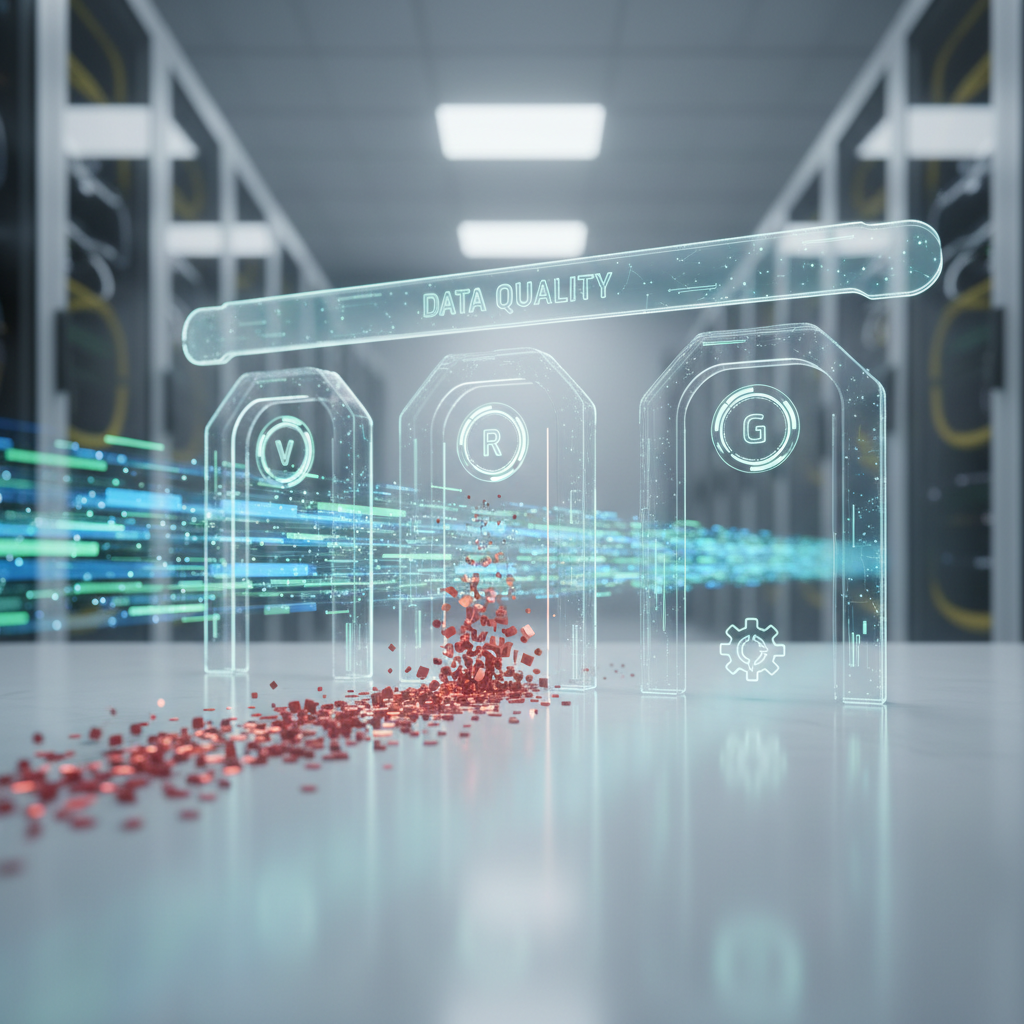
Data Quality: The Foundation Every AI Project Needs
Eighty percent of AI initiatives fail before reaching production. The culprit isn't model complexity - it's bad data. This article examines what proper data quality assessment looks like, how migration transforms messy data into AI-ready systems, and what governance means for mid-market distributors.
Related Articles
Platform capabilities and technical insights
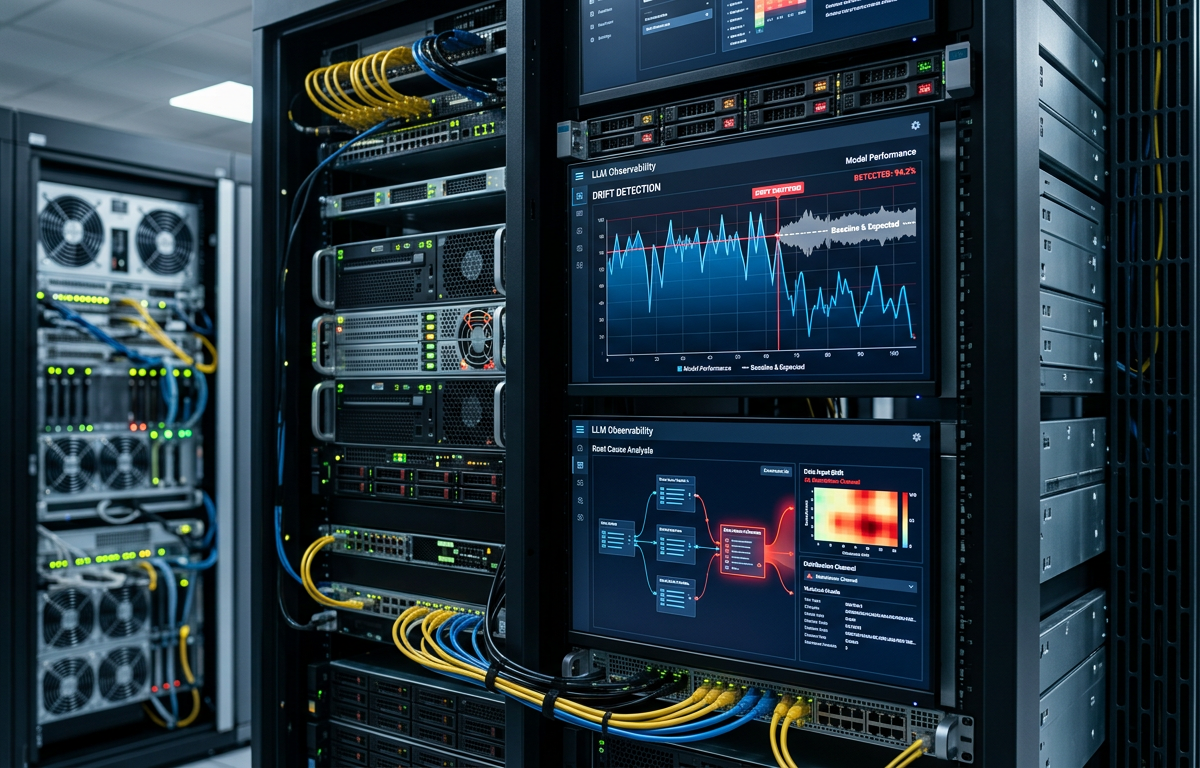
LLM Observability: Why Custom AI Models Need Different Monitoring
Custom AI models degrade silently in production. Most mid-market distributors discover this weeks after the damage begins—when pricing errors accumulate, inventory misallocates, or search results decay. Model drift is silent cost leakage that compounds over time.
Platform capabilities and technical insights
Event-Driven Architecture: Real-Time Commerce Operations at Scale
A West Midlands foodservice distributor runs seven systems: SAP for ERP, Shopify Plus for commerce, Manhattan for warehousing, Salesforce for CRM, Xero for accounting, Akeneo for product data, and a legacy routing tool built in-house. None of them talk to each other in real time. Pricing updates take three days. Inventory visibility lags 24 hours behind actual stock. The operations director spends Monday mornings reconciling conflicts created by systems working from different versions of the truth. This is the middleware bottleneck. Mid-market B2B distributors have invested in best-of-breed systems but lack the integration layer to connect them. The B2B middleware market reached £14.1 billion in 2025, growing at 12.23% annually (MarketsandMarkets, 2024). That growth reflects a painful reality: buying good systems is easy, making them work together is not. Event-driven architecture promises to solve this. Order placed, inventory updated, fulfilment triggered, customer notified—all in real time. But most mid-market stacks lack the middleware to orchestrate that sequence. Without it, teams fall back to manual processes and the operational friction compounds.
Was this article useful?