

Turning Tacit Expertise into Executable Workflow Support
A pricing manager adjusts margins across 800 SKUs in under an hour. A senior buyer reallocates stock between depots without checking a spreadsheet. A trade counter manager prioritises contractor orders instinctively. All three decisions generate better outcomes than their peers—higher margins, fewer stockouts, faster turnaround. Nobody can explain why.
Workflow Rule Mining: Extracting Hidden Logic From Your Best Performers' Daily Choices
A pricing manager adjusts margins across 800 SKUs in under an hour. A senior buyer reallocates stock between depots without checking a spreadsheet. A trade counter manager prioritises contractor orders instinctively. All three decisions generate better outcomes than their peers—higher margins, fewer stockouts, faster turnaround. Nobody can explain why.
Your best performers make better operational outcomes, but the rules they apply live in their heads. When they leave, retire, or move to a competitor, that logic walks out with them. The organisation reverts to slower, less accurate everyday work. Margin leakage appears. Fill rates drop. Customer complaints increase.
This article covers how to extract, codify, and scale the workflow rules your top performers use instinctively. The goal is not to replace human judgment with automation. It is to make judgment transparent, auditable, and repeatable—so the organisation can scale expertise without losing the nuance that made the original decisions valuable.
Why Your Best Performers' Decisions Stay Hidden
Top performers in distribution make hundreds of operational workflows weekly—pricing adjustments, inventory allocation, customer prioritisation, supplier selection. Most of those decisions are intuitive, not documented. A senior buyer at a West Midlands foodservice distributor adjusts stock allocation based on "feel" for seasonal demand. She increases fresh produce orders by 18-22% in early spring without consulting historical data. Her fill rate is 96%. Her colleagues average 87%.
When asked to explain her logic, she struggles. "You just know when demand is shifting." The rule exists, but it is tacit—held in her head, refined over 12 years of ordering decisions. When she retired in 2024, her replacement had the same systems, the same suppliers, the same data. Fill rates dropped to 83% within six weeks. The logic was lost.
WithPraxis assessed AI readiness across eight mid-market distributors in 2025. Average score: 5.6 out of 10. The most common gap: poor decision documentation and logic capture. Organisations know their best managers make better operational outcomes, but they cannot explain why or replicate the logic. A construction materials distributor in Yorkshire lost their logistics manager after 16 years. Route planning quality dropped immediately. Delivery costs increased 14% in the first quarter. The new manager had the tools but not the rules—which sites had restricted access, which customers accepted late deliveries, which loads required specific vehicle types.
Distributors that lose pricing expertise without capturing the underlying logic see 3-8% margin leakage within six months (WithPraxis client data, 2025). The erosion is gradual but compounding. Each pricing decision made without the expert's judgment costs a fraction of a percent. Multiply that across thousands of SKUs and hundreds of customers, and the cost becomes material.
What Workflow Rule Mining Actually Is (And Isn't)
Workflow rule mining is reverse-engineering the logic behind high-performing choices. You analyse transaction history, approval patterns, and outcomes to extract the rules your best performers apply instinctively. Then you codify those rules into transparent, auditable AI logic that scales without losing the nuance of human judgment.
This is not black-box machine learning. Black-box models produce predictions without explaining why. Workflow rule mining produces transparent logic: "If customer segment = contractor AND order value > £5,000 AND payment history = <5% late, then priority = 24-hour turnaround." Anyone can read it, challenge it, adjust it.
This is not generic benchmarking. Industry benchmarks ignore your specific context—your customer mix, your supplier relationships, your regional demand patterns. Workflow rule mining extracts the logic that works in your business, not someone else's.
This is not pure automation. The goal is not to remove human judgment. It is to make judgment explicit, repeatable, and scalable. A pricing manager at a Midlands industrial distributor consistently applies a 12-15% margin floor on commodity items but 8-10% on high-volume SKUs. That is a rule worth mining. Once codified, it becomes the baseline logic for a Dynamic Pricing Intelligence system—with human oversight for exceptions.
Workflow rule mining is foundational work before agentic AI deployment. You cannot build autonomous decision systems without first understanding what decisions your best performers are actually making. The mining process surfaces that logic before you attempt to automate it.
How to Extract Workflow Rules From Your Top Performers
Extraction requires structured observation, not guesswork. WithPraxis has delivered measurable outcomes across six client engagements in distribution and B2B commerce in 2025. The extraction process typically involves 4-6 hours of structured interviews with the expert, followed by documentation and validation. The process follows five steps.
First, identify your best performers by outcome. Margin per transaction, fill rate, customer retention, order accuracy, delivery performance. Rank your team by the metric that matters most to the decision type you are mining. The top quartile holds the logic you need.
Second, audit their recent decisions. Last 50-100 transactions, pricing changes, inventory moves, or customer interactions. Pull the data into a structured format: decision made, inputs available at the time, outcome. A trade counter manager prioritises contractor orders. Pull the last 80 orders they processed. What information did they have? Order value, customer payment history, job urgency, stock availability. What priority did they assign? What was the outcome—delivered on time, customer satisfaction, margin impact?
Third, map decision inputs. What factors did the performer consider? Customer segment, inventory level, competitor price, seasonality, supplier lead time, payment terms, relationship history. Not all inputs are in your systems. Some live in email threads, phone calls, or the performer's memory. This is where structured interviews matter. Ask them to walk through 10-15 decisions. Identify the factors they mention repeatedly.
Fourth, identify patterns and thresholds. A pricing manager adjusts margins differently for high-volume customers (8-10%) versus transactional buyers (12-15%). A buyer increases seasonal stock allocation by 18-22% in early spring. A logistics manager routes heavy goods orders to experienced drivers only. These are rules. Document them as conditional logic: "If X, then Y."
Fifth, validate rules against holdout data. Test the extracted rules on decisions your performer made that you did not use for extraction. Do the rules predict their actual choices 70-85% of the time? If yes, you have captured the core logic. If no, refine the rules or identify missing inputs.
This process takes 2-4 weeks per decision type with the right people in the room. A foodservice distributor in the East Midlands extracted delivery routing rules from their most experienced logistics manager in three weeks. The rules captured site access constraints, load weight limits by vehicle type, driver experience levels, and time-window penalties. Those rules became the foundation for a Smart Fulfillment Engine that replicated the manager's routing decisions at scale.
From Rules to Auditable AI: Translating Human Logic Into Transparent Systems
Extracted rules must be codified into transparent, testable logic before deployment. Rules become decision trees, thresholds, or scoring models that anyone can read and challenge. Auditability and governance become possible. You can explain why the system made a decision, adjust rules when business conditions change, and maintain human oversight.
A pricing rule extracted from a top performer reads: "Apply 15% margin floor on commodity items, 8-10% on high-volume SKUs, adjust ±3% for competitor activity, override if customer relationship score >8/10." That rule becomes a transparent pricing model. Sales teams can understand it. Finance can audit it. The pricing manager can override it when market conditions shift.
Transparency matters for three reasons. First, it builds trust. Teams will not adopt AI systems they do not understand. Second, it enables governance. You cannot audit a black-box model. You can audit a rule-based system. Third, it allows continuous improvement. When business conditions change, you adjust the rules—not retrain the entire model.
A building materials distributor in the North West codified delivery routing rules extracted from their logistics manager. The rules included: "Route heavy goods orders to drivers with HGV Class 2 licences, avoid multi-drop routes for drivers with <6 months experience, prioritise construction sites with time-window penalties >£500." The system became auditable. When a delivery failed, the operations team traced the decision back to the rule that triggered it. When fuel costs spiked in late 2024, they adjusted the route consolidation threshold from £80 to £120. The rule changed. The system adapted.
Workflow Mapping and AI Governance play a critical role in this process. Workflow Mapping identifies which decisions matter most and who owns them. AI Governance establishes the frameworks for auditing, monitoring, and adjusting rules over time. WithPraxis clients report 39% improvement in operational metrics within six months when rules are properly codified and deployed (WithPraxis client data, 2025). The improvement comes not from automation alone, but from making implicit logic explicit—and scalable.
The Scaling Challenge: Preserving Nuance While Automating Decisions
The hardest part of rule mining is capturing exceptions and context-dependent logic. Top performers do not follow rigid rules. They adjust based on relationships, market conditions, and intuition. A buyer's rule for seasonal stock allocation includes a "relationship override"—if a key customer signals demand, they increase allocation even if historical patterns do not support it. A pricing manager applies different rules during supply chain disruptions. A logistics manager reroutes deliveries when a trusted driver calls in sick.
Your AI system must preserve that flexibility or it will underperform. A foodservice distributor in the Midlands deployed a replenishment system based on extracted rules. The system worked well for 80% of decisions. The remaining 20% required human judgment—new product launches, supplier changes, unexpected demand spikes. The distributor built a hybrid model: the system handled routine decisions autonomously, flagged edge cases for human review, and logged overrides to refine the rules over time.
This is where agentic AI governance becomes critical. The system needs guardrails, not just automation. A pricing agent can adjust margins within defined thresholds (±3% for competitor activity, ±5% for volume discounts) but must escalate decisions outside those bounds. A replenishment agent can reorder stock for established SKUs but flags new products for buyer approval. The system scales the routine decisions. Humans handle the exceptions.
Some decisions will never be fully automated. A senior buyer's relationship override—increasing stock allocation because a key customer "feels like" demand is shifting—resists codification. The goal is not to automate every decision. It is to automate the decisions that follow consistent logic, preserve human judgment for the decisions that require nuance, and make both processes transparent and auditable.
A construction materials distributor in South Yorkshire extracted routing rules from their logistics manager but preserved human oversight for high-value orders (>£15,000) and complex multi-drop routes. The system handled 70% of routing decisions autonomously. The logistics manager focused on the 30% that required judgment. Delivery costs dropped 12% in six months. On-time delivery improved from 89% to 96%. The manager spent less time on routine decisions and more time solving edge cases.
Workflow rule mining is the bridge between human expertise and scalable AI. Organisations that mine and codify their decision logic will scale faster and maintain better governance than those that try to automate without understanding.
You cannot build agentic AI without first understanding what decisions your best performers are actually making. Extract the rules. Codify the logic. Preserve the nuance. Scale the expertise. When your top performers leave, their logic stays. When your business grows, their judgment scales. When market conditions change, your rules adapt.
Learn more about Workflow Mapping and Architecture.
Common questions
How does workflow rule mining prevent margin leakage when senior pricing managers leave an organisation?
Workflow rule mining reverse-engineers the intuitive logic of top performers into transparent, codified rules that remain within the business. By documenting specific margin floors and volume-based adjustments, the organisation maintains consistent pricing accuracy regardless of staff turnover. This prevents the gradual 3-8% margin erosion typically seen when expert judgment is lost.
What is the primary difference between workflow rule mining and standard black-box machine learning?
Workflow rule mining produces explicit, human-readable logic such as specific 'if-then' statements rather than opaque predictions. This transparency allows managers to audit, challenge, and adjust the rules to ensure they align with operational goals. Unlike black-box models, this approach ensures the reasoning behind inventory or pricing decisions is fully explainable.
Which operational metrics should be used to identify the experts whose logic needs to be captured?
Experts should be identified by specific performance outcomes such as margin per transaction, fill rate, order accuracy, or delivery performance. Ranking the workforce by these metrics ensures the captured logic represents the top quartile of actual results. This data-driven selection prevents the documentation of mediocre or inefficient processes.
How does capturing workflow rules improve fulfilment performance in distribution centres?
Codifying the 'instinctive' choices of high-performing logistics managers ensures that nuanced constraints, such as site access restrictions or customer delivery preferences, are integrated into the WMS or route planning. This prevents the delivery cost increases and service failures that occur when new staff lack the predecessor's tacit knowledge. Formalising these rules allows the organisation to scale expertise across multiple depots without losing local nuance.
Tags
Themes

Ian Gordon
Business Development Director
Ian leads business development at WithPraxis, working closely with clients to define and shape complex commerce programmes. With extensive experience across digital transformation and platform delivery, he focuses on connecting business goals with practical, scalable solutions.
Connect on LinkedInMore in this cluster
Continue exploring this topic

Commerce operations insights and applications
Agentic AI Observability: Detecting When Your Autonomous Systems Are Operating on Bad Data
Agentic systems fail quietly. A pricing agent drifts 2% below target margin over eight weeks, processing 4,200 decisions before anyone notices. Margin leakage: £87,000. The agent didn't crash or throw errors—it just made slightly wrong decisions, consistently, for two months. Gartner predicts 40% of agentic AI projects will be cancelled by 2027, primarily due to silent degradation that compounds into operational disasters.
Operational workflow improvement
Why Fortune 500 Supply Chain AI Fails at Mid-Market: The Complexity Mismatch Problem
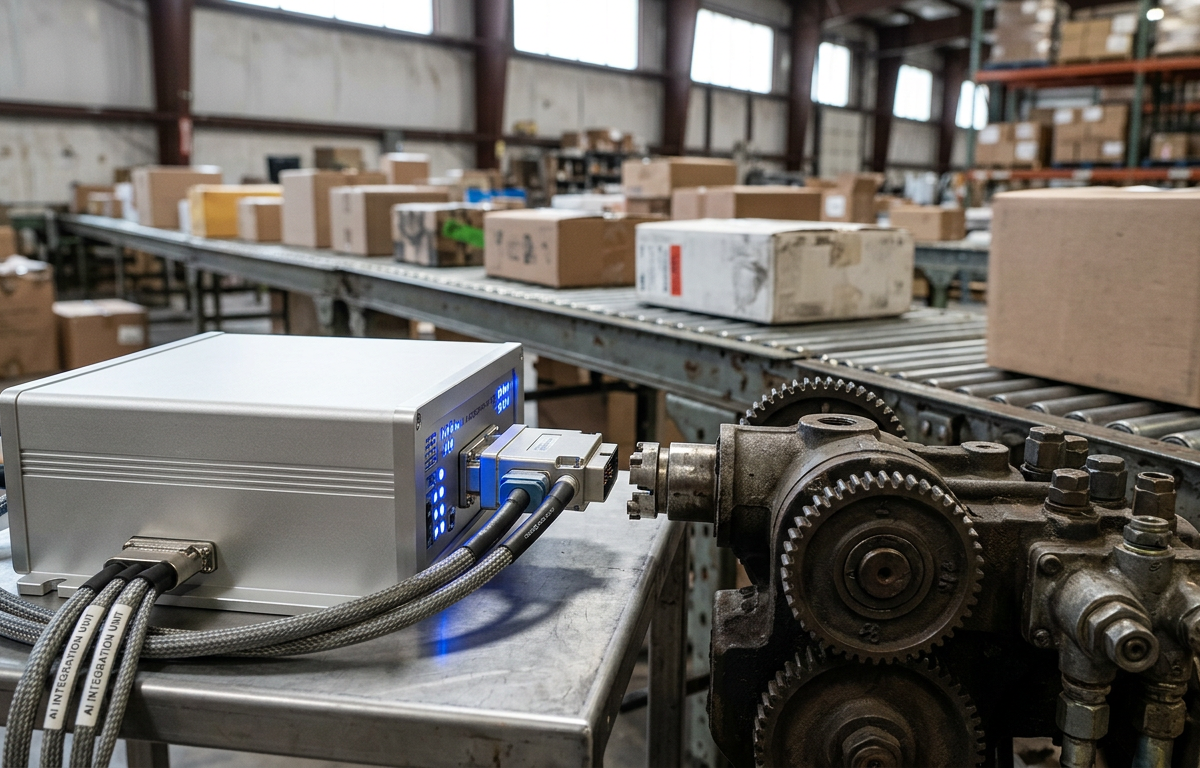
Fifty-seven percent of supply chain leaders cite data quality as the primary barrier to AI adoption. Not model accuracy. Not cost. Data quality. Most mid-market distributors have data spread across five to seven systems with no single source of truth. You cannot train an AI model on conflicting data. The unglamorous work of master data management, integration, and governance must come first.
Operational workflow improvement
Inventory Decisions Under Uncertainty: When AI Forecasts Conflict With Safety Stock Rules
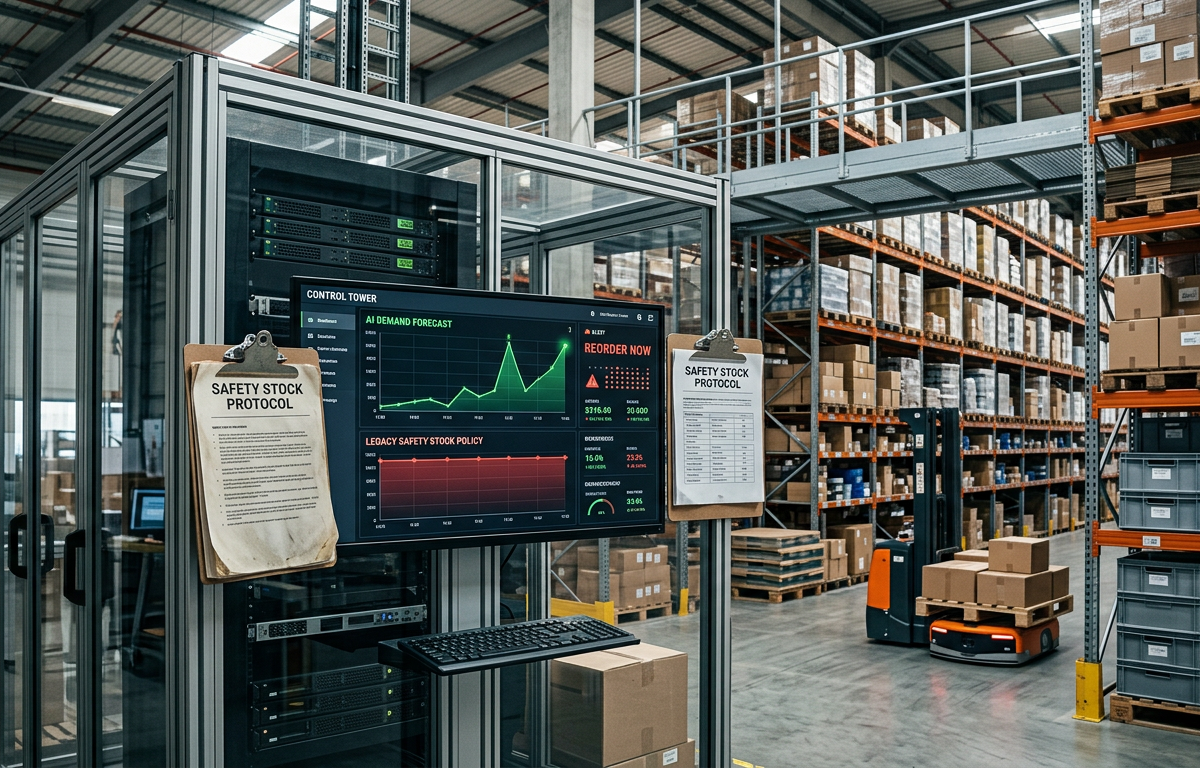
Deploying demand sensing AI without retiring legacy safety stock policies creates a hidden cost: dual everyday work. Inventory planners second-guess AI recommendations, override autonomous reorder points, and maintain manual guardrails 'just in case.' This article quantifies the cost of running both systems, explains why most deployments fail at the governance layer, and outlines the workflow clarity required to let one system own inventory decisions.
Related Articles
Operational workflow improvement
Why Fortune 500 Supply Chain AI Fails at Mid-Market: The Complexity Mismatch Problem
Fifty-seven percent of supply chain leaders cite data quality as the primary barrier to AI adoption. Not model accuracy. Not cost. Data quality. Most mid-market distributors have data spread across five to seven systems with no single source of truth. You cannot train an AI model on conflicting data. The unglamorous work of master data management, integration, and governance must come first.
Operational workflow improvement
Inventory Decisions Under Uncertainty: When AI Forecasts Conflict With Safety Stock Rules
Deploying demand sensing AI without retiring legacy safety stock policies creates a hidden cost: dual everyday work. Inventory planners second-guess AI recommendations, override autonomous reorder points, and maintain manual guardrails 'just in case.' This article quantifies the cost of running both systems, explains why most deployments fail at the governance layer, and outlines the workflow clarity required to let one system own inventory decisions.
Was this article useful?