

The AI Implementation Paradox: Why 73% of Mid-Market Distributors Start Wrong
Most mid-market distributors approach AI implementation backwards, starting with technology selection instead of workflow mapping. This produces predictable failure rates of 73% within the first year. The distributors who succeed do something counter-intuitive: they map operational workflows first, then select technology to support specific choices. This reversal produces faster implementations, clearer ROI, and sustainable operational improvement.
Most mid-market distributors approach AI implementation backwards. They start with vendor demos, feature comparisons, and procurement processes before understanding which operational workflows actually need support. The result is predictable: 73% of AI projects in distribution fail to deliver measurable value within the first year.
This isn't a technology problem. It's a process problem. The distributors who succeed with AI do something counter-intuitive: they map their operational workflows first, then select technology to support those specific choices. This reversal of the typical sequence produces faster implementations, clearer ROI, and sustainable operational improvement.
The stakes are significant. Failed AI implementations don't just waste budget - they disrupt operations, frustrate teams, and create scepticism about future technology investments. For mid-market distributors competing against both larger enterprises and nimble specialists, getting AI implementation right the first time matters.
Why Technology-First Implementation Fails
The conventional approach follows a familiar pattern: operations teams attend vendor presentations, compare feature matrices, and issue RFPs for "AI platforms" or "intelligent analytics solutions". The assumption is that better technology will naturally lead to better operational outcomes.
This sequence creates three predictable failure modes. First, unused dashboards - sophisticated analytics that nobody consults because they don't connect to actual decision workflows. Second, abandoned pilots - proof-of-concept implementations that never scale because they solve problems the business doesn't actually prioritise. Third, integration complexity - AI tools that require expensive systems work to connect data sources that weren't designed to work together.
A foodservice distributor in the Midlands spent £180,000 on a demand forecasting platform that produced beautiful visualisations but couldn't answer the buyer's actual question: "Should I increase the Thursday order for restaurant X based on their booking pattern?" The platform processed thousands of data points but couldn't connect booking data to ingredient demand at the customer level.
The root cause is decision-process mismatch. Technology vendors demonstrate capabilities in isolation, but operational workflows happen within complex workflows involving multiple systems, approval hierarchies, and information sources. Without mapping these workflows first, even sophisticated AI becomes operational decoration rather than workflow support.
Our client data shows that 60% of initial AI implementations fail to connect to daily operational workflows within 90 days of deployment. The technology works, but it doesn't fit how decisions actually get made.
The Workflow Mapping Alternative
WithPraxis reverses this sequence. We start by mapping the operational workflows that determine margin, efficiency, and customer satisfaction - then build applications to support those specific choices. This produces measurably better outcomes for mid-market operations.
Workflow Mapping involves a structured workshop with operations teams to identify who makes what decisions, when, with what information, and what constraints limit their choices. A typical session reveals 40 - 60 distinct operational workflows across pricing, inventory, fulfilment, and customer management.
The exercise exposes patterns that aren't visible when evaluating technology in isolation. Decisions cluster around specific operational constraints: delivery route capacity, supplier minimum orders, customer credit terms, seasonal demand patterns. Some decisions happen daily (stock reallocation), others monthly (supplier negotiation), others annually (range planning).
More importantly, workflow mapping reveals which decisions have clear ownership and which are "shared responsibility" - meaning nobody is actually accountable. A building materials distributor discovered that their delivery scheduling involved seven different people making interdependent choices, but nobody owned the outcome when deliveries arrived late or incomplete.
This clarity transforms technology selection from feature comparison to operational fit. Instead of asking "What can this AI platform do?", teams ask "Does this application support our Thursday morning pricing review process?" The question becomes specific, measurable, and connected to business results.
The workshop typically identifies 60 - 80% of decisions with automation potential - far more than most operations teams expect. But it also identifies decisions that require human judgement, relationship management, or strategic context that AI cannot provide.
What Mid-Market Operations Actually Need
Mid-market distributors face constraints that enterprise AI strategies ignore. Limited IT resources mean technology must work with existing systems rather than requiring dedicated integration teams. Complex legacy environments mean solutions must connect to 20-year-old ERPs, not greenfield cloud architectures. Quick ROI requirements mean implementations must produce measurable results within quarters, not years.
Workflow Support applications work better than broad AI platforms for this segment. An application focuses on one specific operational choice - pricing approval, stock allocation, delivery scheduling - and provides the information needed to make that choice confidently. A platform promises to "transform operations" but requires months of configuration before producing actionable insights.
Consider the difference in practice: a pricing application that suggests margin-protecting adjustments for volatile commodity costs can be deployed in six weeks and measured immediately through margin recovery. A comprehensive analytics platform that visualises pricing trends across the entire catalogue requires months of data preparation and produces insights that still require human interpretation.
Our building materials client achieved 18% fulfilment cost reduction with a focused delivery routing application that connected to their existing WMS and CRM. The application solved one specific decision - which depot should fulfil each mixed-load delivery - rather than attempting to optimise their entire logistics operation simultaneously.
The operational constraint is attention, not technology capability. Mid-market operations teams manage dozens of concurrent priorities with lean headcount. They need AI applications that fit into existing workflows and produce immediate, measurable improvements in the decisions they make every day.
Focus produces better results than breadth for mid-market AI implementation.
Implementation Patterns That Work
Successful AI implementation for distributors follows a proven sequence: workflow mapping workshop, pilot application on one decision type, measured results, expansion to adjacent decisions. This staged approach produces faster value and sustainable organisational adoption.
The timeline is predictable: 4 - 6 weeks for pilot development, 60 - 90 days to measure operational impact, 120 days for full deployment across the organisation. Compare this to comprehensive platform implementations that require 12 - 18 months before producing measurable business value.
Our fashion retail client achieved 8% margin improvement in 60 days by focusing first on markdown timing decisions. The pilot application analysed sell-through patterns and recommended price reductions that balanced inventory clearance with margin preservation. Success with markdown decisions created confidence for expansion into demand forecasting and allocation decisions.
The pattern works because it builds operational credibility through demonstrated results rather than promised capabilities. Teams see immediate improvement in one specific decision area, understand how the AI application fits their workflow, and request expansion to adjacent decisions they control.
Contrast this with big-bang approaches that attempt to "transform operations" through comprehensive AI platforms. These implementations take longer to deploy, require more change management, and produce diffuse results that are difficult to attribute to specific operational improvements.
Our client data shows 39% faster implementation time and 25% higher user adoption rates when AI projects begin with focused workflow support rather than comprehensive analytics platforms. The operational principle is simple: prove value quickly in one area, then expand systematically to adjacent decisions.
The Counter-Intuitive Reality
Starting with decisions rather than technology produces better AI outcomes for mid-market distributors. This feels backwards to teams trained to evaluate software features, compare vendor capabilities, and select solutions. But operational clarity leads to better technology choices, not the reverse.
Workflow mapping reveals which AI capabilities actually matter for your specific operations. A wholesaler discovers that demand forecasting is less important than supplier switching triggers. A retailer finds that customer segmentation is less valuable than markdown optimisation. These insights only emerge through operational analysis, not technology evaluation.
The approach also exposes hidden constraints that affect technology selection. Credit terms that limit customer ordering patterns, warehouse layouts that constrain pick efficiency, transport regulations that affect delivery scheduling. Understanding these constraints first prevents technology implementations that ignore operational reality.
Implementation speed improves because technology fits operational workflow rather than forcing workflow to adapt to technology capabilities. Applications solve problems that operations teams already recognise and prioritise, rather than creating new processes around AI-generated insights.
The counter-intuitive reality is that mid-market distributors succeed with AI by spending less time evaluating technology and more time understanding their operational workflows. This reversal of the typical sequence produces measurable results faster and sustainable improvements longer.
Successful AI implementation for mid-market distributors requires workflow clarity before technology selection. The conventional approach - evaluating platforms, comparing features, implementing comprehensive solutions - produces predictable failure rates because it ignores operational workflow complexity.
The alternative approach works consistently: map operational workflows first, build focused applications to support specific choices, measure results quickly, expand systematically. This sequence produces faster implementations, clearer ROI, and sustainable operational improvement.
For distribution operations teams considering AI investment, the practical next step is operational audit before technology evaluation. Understanding which decisions determine your margin, efficiency, and customer satisfaction creates the foundation for AI implementations that actually work.
Learn more about Workflow Mapping & Architecture.
Common questions
Why do most AI implementations fail for mid-market distributors, and what percentage fail?
Most AI implementations fail because mid-market distributors start with vendor demos and procurement before understanding their operational decision needs. This 'technology-first' approach leads to 73% of AI projects failing to deliver measurable value within the first year.
What are the common failure modes of a technology-first AI implementation approach?
The technology-first approach leads to three predictable failure modes: unused dashboards that don't connect to decision workflows, abandoned pilots that don't scale because they address non-prioritized problems, and integration complexity due to AI tools not designed to work with existing data sources.
How does 'Workflow Mapping' help mid-market distributors succeed with AI, and what does it involve?
Workflow Mapping reverses the typical sequence by first identifying 40-60 distinct operational workflows across areas like pricing and inventory. This structured workshop helps select technology that specifically supports these choices, leading to faster implementations and clearer ROI.
What specific challenges do mid-market distributors face with AI, and what type of solution is more effective for them?
Mid-market distributors face challenges like limited IT resources, complex legacy systems (e.g., 20-year-old ERPs), and the need for quick ROI. Workflow Support applications, which focus on specific operational choices like pricing approval, are more effective than broad AI platforms, delivering measurable results within quarters.
Themes

Andrew Pemberton
Co-founder & Development Director
Andrew is a co-founder of WithPraxis. With 25 years in commerce and technology development, he leads the build side of every engagement, turning AI strategy into working systems that fit how mid-market businesses actually operate. He has delivered projects across distribution, manufacturing, and retail for businesses from regional independents to national operators.
Connect on LinkedInMore in this cluster
Continue exploring this topic

Platform capabilities and technical insights
LLM Observability: Why Custom AI Models Need Different Monitoring
Custom AI models degrade silently in production. Most mid-market distributors discover this weeks after the damage begins—when pricing errors accumulate, inventory misallocates, or search results decay. Model drift is silent cost leakage that compounds over time.
Platform capabilities and technical insights
Controlled Automation: The Governance Framework Mid-Market Distributors Need Before Deployment
Autonomous agents can accelerate decisions and reduce costs in B2B commerce. But most mid-market distributors lack the governance frameworks to deploy them safely. Without audit trails, decision boundaries, escalation rules, and performance monitoring, autonomous systems become liabilities. This article maps the four control pillars required before autonomous everyday work goes into production - and the practical roadmap for implementing them without killing velocity.
Operational workflow improvement
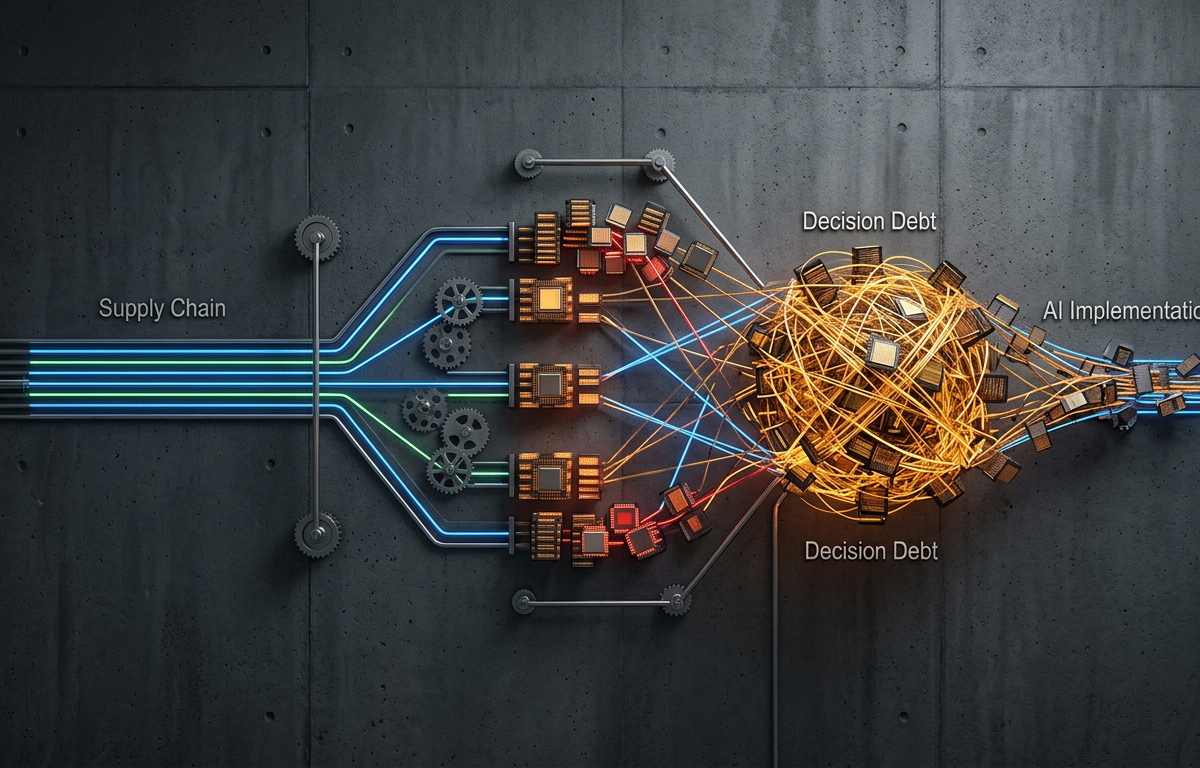
Supply Chain Workflow Debt: How Deferred Planning Choices Compound into AI Failure
Most mid-market distributors rush to AI deployment without auditing what they're actually deciding. A Nottinghamshire food wholesaler spent £85,000 on demand forecasting AI that sat dormant because buying decisions existed only in one person's head. The pre-implementation audit - decision inventory, assumption mapping, rule documentation - is the gate that determines whether AI works or sits unused.
Related Articles

WithPraxis
Fashion Distribution Intelligence: How AI Transforms Seasonal Buying Decisions
Fashion distributors write off £25,000-£45,000 in dead stock each season from three decisions made six months early: style selection, quantities, and size curves. Applied AI transforms seasonal planning by handling complex optimisation while preserving buyer expertise in trend interpretation.

WithPraxis
Data Quality: The Foundation Every AI Project Needs
Eighty percent of AI initiatives fail before reaching production. The culprit isn't model complexity - it's bad data. This article examines what proper data quality assessment looks like, how migration transforms messy data into AI-ready systems, and what governance means for mid-market distributors.
Was this article useful?