
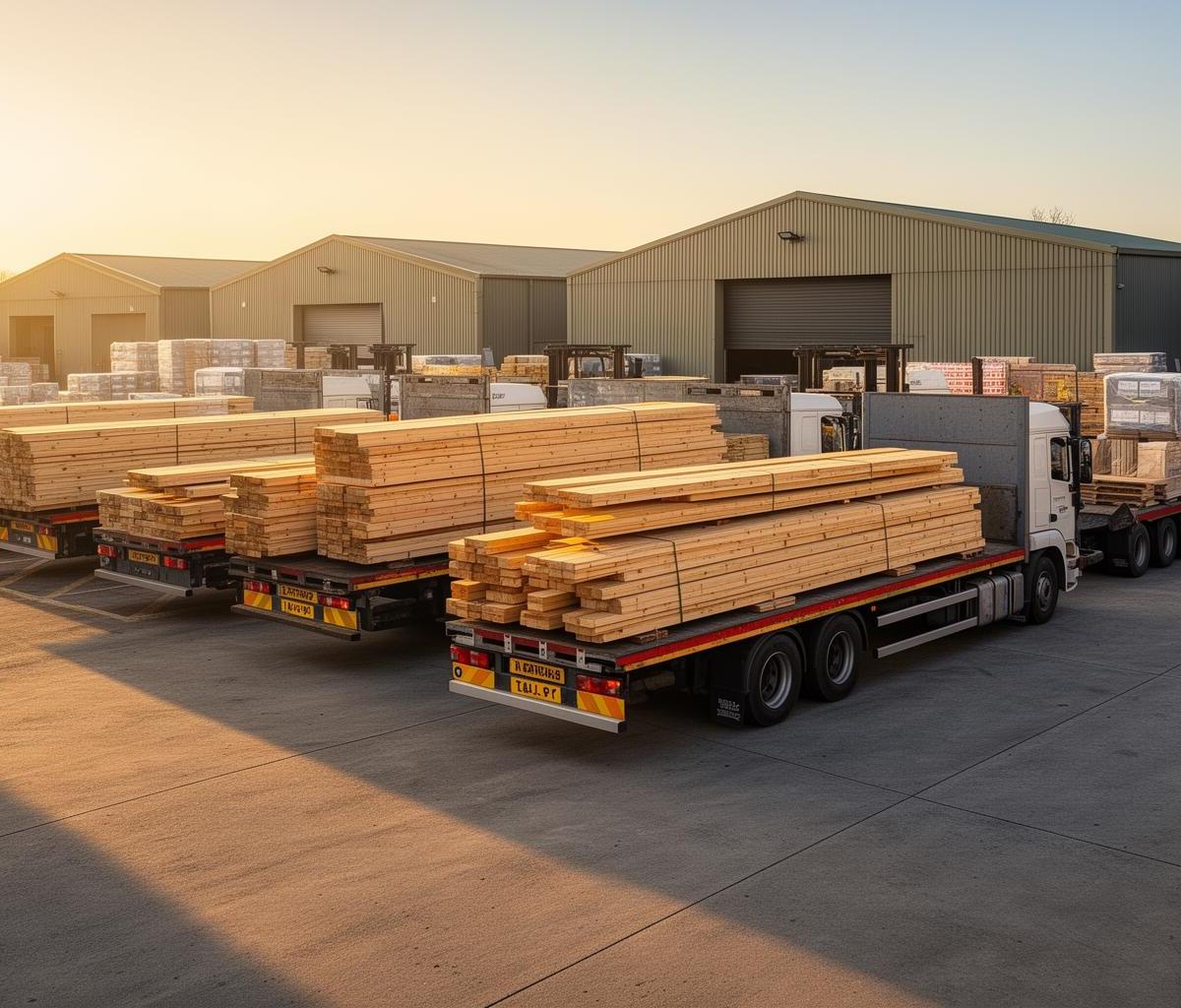
Multi-Depot Fulfilment Routing: When Driver Knowledge Isn't Enough
Manual fulfilment routing costs building materials distributors 18% in unnecessary expenses. Smart routing systems optimise multi-depot operations while preserving driver expertise.
The morning route meeting looks familiar. Depot managers review yesterday's deliveries, drivers claim their usual patches, and someone manually assigns today's orders based on postcodes and gut feel. The plan looks efficient on the whiteboard - neat clusters, logical sequences, balanced loads.
By 2pm, reality has shattered the plan. The timber delivery to the city centre site was refused because the crane wasn't available. The mixed pallet of bricks and bagged cement couldn't fit through the narrow site access. The "quick drop" in the suburbs took two hours because of roadworks that weren't on anyone's radar. The driver who "knows every shortcut" spent 45 minutes in unexpected traffic.
This is the daily friction that consumes profit margins in multi-depot distribution. Every failed delivery, every wasted mile, every overtime hour compounds into significant cost leakage. A building materials distributor managing 12 depots reduced fulfilment costs by 18% when they replaced manual routing with intelligent optimisation - not by dismissing driver knowledge, but by scaling it across their entire network.
The Route That Looks Efficient on Paper
Route planning in building materials distribution appears straightforward. Orders cluster by geography, vehicles have capacity limits, and depots serve defined catchment areas. The reality is operational chaos disguised as efficiency.
Consider Tuesday morning at a mid-sized distributor. The Portsmouth depot has 47 orders for Hampshire and West Sussex. The planner groups them by postcode, assigns three vehicles, and estimates 6-7 hours per route. The plan assumes average driving speeds, standard unloading times, and cooperative customers.
The first route fails within two hours. The scheduled delivery of roofing tiles to Winchester requires a hiab crane, but the customer's site access has changed since last month - the crane can't reach over the new scaffolding. The driver returns to depot, exchanges vehicles, and loses three hours. The domino effect hits the remaining deliveries, pushing two into overtime and forcing one into tomorrow's schedule.
Manual routing optimises for the wrong variables. It minimises theoretical distance and balances theoretical load. It doesn't account for real-time constraints: vehicle suitability, site access, customer availability, or traffic conditions. The gap between planned efficiency and delivered reality creates the margin erosion that most distributors accept as inevitable.
Why Driver Knowledge Has a Ceiling
Experienced drivers possess invaluable operational intelligence. They know which customer sites have tight access, which roads can't handle 18-tonne vehicles, and which delivery windows are firm versus flexible. Twenty years of local knowledge can't be replicated in a spreadsheet.
But driver knowledge doesn't scale beyond individual routes. Tommy knows every back road in Surrey, but he doesn't know real-time demand patterns across all twelve depots. Sarah can navigate central Birmingham's narrow streets, but she can't optimise load sequencing for maximum vehicle utilisation. Driver expertise is local and tactical. Multi-depot optimisation requires network-wide strategic intelligence.
The knowledge also walks out the door when drivers retire or change jobs. That institutional memory - the shortcuts, the site-specific constraints, the customer preferences - vanishes overnight. New drivers start from zero, making expensive mistakes that experienced drivers avoid instinctively. A distributor with 40% driver turnover effectively loses 40% of its routing intelligence every year.
Manual routing also creates perverse incentives. Drivers develop ownership of their patches and resist route changes that might improve overall efficiency. "I've run these roads for eight years" becomes a barrier to optimisation rather than an asset. The system rewards familiarity over performance, local optimisation over network efficiency.
The Hidden Costs of Manual Routing
The financial impact of manual routing compounds across every operational metric. Fuel costs, vehicle utilisation, overtime hours, and failed delivery rates all deteriorate when routing decisions rely on habit rather than data.
A building materials distributor managing 8 depots tracked their manual routing performance for six months. The results revealed systematic inefficiency: vehicles averaged 68% capacity utilisation, 12% of deliveries required second attempts, and fuel consumption exceeded benchmarks by 15%. Route optimisation felt like an operational nicety until they quantified the margin impact.
The largest cost wasn't fuel or overtime - it was opportunity cost. Inefficient routing constrained delivery capacity, forcing the business to reject orders during peak periods. A depot that could theoretically handle 180 deliveries per day consistently maxed out at 130 because of routing inefficiency. Lost revenue from capacity constraints dwarfed the direct operational costs.
Failed deliveries create the most expensive inefficiency. Every return trip doubles the delivery cost and halves vehicle productivity. The building materials customer reduced failed deliveries from 12% to 3% by incorporating site access constraints and customer availability windows into routing decisions. That 9-percentage-point improvement translated to £40,000 monthly savings across their depot network.
Vehicle utilisation improvements compound over time. Better load sequencing increased average capacity from 68% to 89% without adding vehicles. Route efficiency improved 40-60% by optimising for real constraints rather than theoretical distances. The 18% fulfilment cost reduction came from eliminating waste, not cutting service.
What Intelligent Routing Actually Looks Like
Smart fulfilment routing doesn't replace driver knowledge - it scales and optimises it. The system learns from successful routes, failed deliveries, and real-time constraints to make routing decisions that individual planners can't compute manually.
The intelligence starts with comprehensive constraint mapping. Every customer site gets tagged with access restrictions: maximum vehicle length, crane requirements, delivery time windows, and special handling needs. Road networks are weighted for vehicle type - 7.5-tonne restrictions, bridge heights, and turning constraints that affect routing feasibility. This foundational data transforms routing from postcode clustering into genuine optimisation.
Real-time demand signals drive dynamic route adjustment. When orders change throughout the day - cancellations, urgent additions, delivery rescheduling - the system recalculates optimal routes instantly. Workflow Mapping exercises typically reveal that distributors make 15-20 routing micro-decisions daily that manual systems can't handle efficiently.
Load optimisation considers product characteristics alongside vehicle constraints. Mixed loads of heavy aggregates and lightweight timber require specific sequencing to maintain vehicle stability. The system understands product density, stacking requirements, and unloading sequence to maximise both safety and efficiency. Drivers receive loads that make operational sense, not just weight-balanced cargo.
Human override capability remains essential. Drivers can flag route adjustments, report new site constraints, or request schedule changes through mobile interfaces. The system learns from these overrides, incorporating local knowledge into future routing decisions. Intelligence amplifies human expertise rather than replacing it.
Operational analytics reveal routing performance patterns that manual systems miss. Which routes consistently run over schedule? Which customer sites create delivery bottlenecks? Which vehicle types are underutilised? This visibility enables continuous improvement beyond individual route optimisation.
From Pilot to Full Fleet
Implementation doesn't require fleet-wide disruption. The most successful deployments start with constrained pilots - one depot, one vehicle type, or one route cluster - to prove value before expanding.
The pilot phase takes 8 weeks and focuses on route validation rather than full automation. Drivers receive suggested routes alongside traditional manual assignments. They can flag discrepancies, suggest improvements, and gradually build confidence in the system's recommendations. This collaborative approach reduces resistance while capturing local knowledge.
Driver involvement is crucial for pilot success. Weekly feedback sessions capture route-specific insights: which shortcuts the system missed, which delivery sequences create problems, which time estimates need adjustment. Drivers become co-developers rather than passive users, contributing expertise that improves system performance.
Measurement during the pilot phase focuses on operational metrics, not just cost savings. Route completion times, delivery success rates, vehicle utilisation, and driver satisfaction scores provide comprehensive performance indicators. The building materials distributor tracked 12 operational metrics during their 8-week pilot before committing to full deployment.
Full fleet rollout follows a depot-by-depot approach, typically taking 12-16 weeks total. Each depot gets 2-3 weeks of parallel running - manual routes alongside intelligent suggestions - before switching to optimised routing. Depot managers maintain override authority throughout the transition, preserving local operational control.
Training requirements are minimal because the system adapts to existing workflows. Drivers use familiar mobile devices to receive route instructions and flag issues. Depot managers access web dashboards that integrate with existing planning processes. The technology works within established operational patterns rather than requiring wholesale process changes.
When Manual Routing Still Makes Sense
Intelligent routing has clear limitations that manual systems handle better. Emergency deliveries, unusual loads, and completely new delivery locations often require human judgement that automated systems can't replicate.
Emergency deliveries bypass optimisation entirely. When a construction site's concrete pour depends on immediate rebar delivery, speed trumps efficiency. Manual routing allows instant everyday work and route adjustment that automated systems can't match. The system should flag emergency deliveries for manual handling rather than forcing them through optimisation algorithms.
Unusual loads - oversized items, hazardous materials, or specialist equipment - require route planning expertise that exceeds current system capabilities. A 12-metre steel beam delivery involves road restrictions, escort requirements, and site access considerations that demand human oversight. Hybrid approaches work best: automated routing for standard loads, manual planning for exceptions.
New customers and unfamiliar delivery locations present data gaps that manual routing handles more safely. Driver reconnaissance, customer consultation, and gradual learning build the constraint database that enables future automation. The system should recommend manual routing for locations without sufficient historical data.
Customer relationship management sometimes requires routing decisions that optimise for service rather than cost. The long-term client who always gets afternoon deliveries, or the difficult access site that needs the most experienced driver - these relationship considerations may justify routing inefficiency for customer retention.
Seasonal or exceptional circumstances - severe weather, road closures, or peak demand periods - often exceed the system's adaptive capacity. Manual override becomes essential when operational conditions fall outside normal parameters. The system should gracefully defer to human judgement when confidence levels drop below operational thresholds.
The goal isn't perfect automation but intelligent assistance. Manual routing should handle exceptions while automated systems optimise routine operations. This hybrid approach captures the benefits of both systematic optimisation and human expertise.
Multi-depot fulfilment routing represents a classic operational decision that benefits from intelligent assistance without requiring complete automation. The complexity of real-world constraints - vehicle limitations, site access, customer requirements - demands systems that can process more variables than manual planning while preserving the override capability that human expertise provides.
The 18% cost reduction achieved through smart routing comes not from eliminating drivers or depot managers, but from eliminating waste. Better vehicle utilisation, fewer failed deliveries, and more efficient route sequences compound into significant operational improvements. The technology serves the people making routing decisions rather than replacing them.
If fulfilment costs are climbing and route efficiency is declining, Smart Fulfilment Engine connects real-time demand signals across your depot network with automated routing that respects the constraints your drivers already know.
Common questions
What are the typical cost savings or efficiency improvements seen when switching from manual routing to intelligent optimization in multi-depot distribution?
A building materials distributor managing 12 depots reduced fulfilment costs by 18% by implementing intelligent optimization. Another distributor with 8 depots saw vehicle capacity utilization increase from 68% to 89% and reduced failed deliveries from 12% to 3%, leading to £40,000 monthly savings.
What are the common hidden costs or inefficiencies associated with manual routing in a multi-depot setup?
Manual routing leads to vehicles averaging 68% capacity utilization, 12% of deliveries requiring second attempts, and fuel consumption exceeding benchmarks by 15%. It also creates opportunity costs by constraining delivery capacity, forcing businesses to reject orders during peak periods.
How does driver knowledge, while valuable, fall short in multi-depot optimization?
Driver knowledge is local and tactical, not scalable across an entire network. It walks out the door with driver turnover (e.g., 40% turnover means 40% loss of routing intelligence) and can create perverse incentives where drivers resist route changes for overall efficiency.
What specific real-world constraints does intelligent routing account for that manual methods often miss?
Intelligent routing accounts for real-time constraints like vehicle suitability (e.g., hiab crane access), site access issues (e.g., narrow access, scaffolding), customer availability, and real-time traffic conditions, which manual methods often overlook, leading to failed deliveries and delays.
Tags

Andrew Pemberton
Co-founder & Development Director
Andrew is a co-founder of WithPraxis. With 25 years in commerce and technology development, he leads the build side of every engagement, turning AI strategy into working systems that fit how mid-market businesses actually operate. He has delivered projects across distribution, manufacturing, and retail for businesses from regional independents to national operators.
Connect on LinkedInMore in this cluster
Continue exploring this topic
Platform capabilities and technical insights
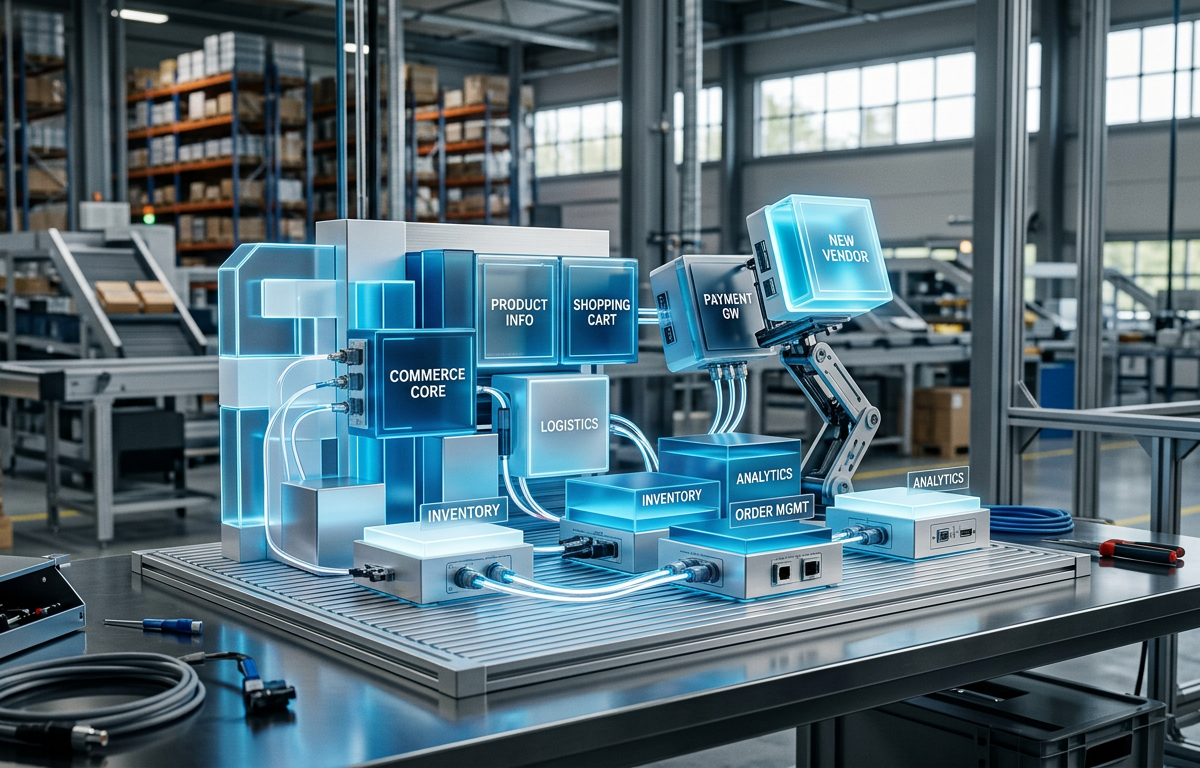
Composable Commerce Architecture: Building Modular Systems That Evolve With Your Business
A Midlands foodservice distributor spent £240,000 recovering from a pricing error in 2024. Their monolithic commerce platform took three days to update prices across 12,000 SKUs. Commodity costs moved faster than their approval cycle. By the time new prices went live, margins had eroded. The problem wasn't the platform. It was the architecture. Pricing, inventory, and order management sat in one system. Upgrading the pricing engine meant ripping out everything else. The platform vendor quoted 18 months and £180,000 for a custom pricing module. The distributor couldn't wait that long. This is the composable commerce question: when one component fails, can you swap it without dismantling the entire system?
Platform capabilities and technical insights
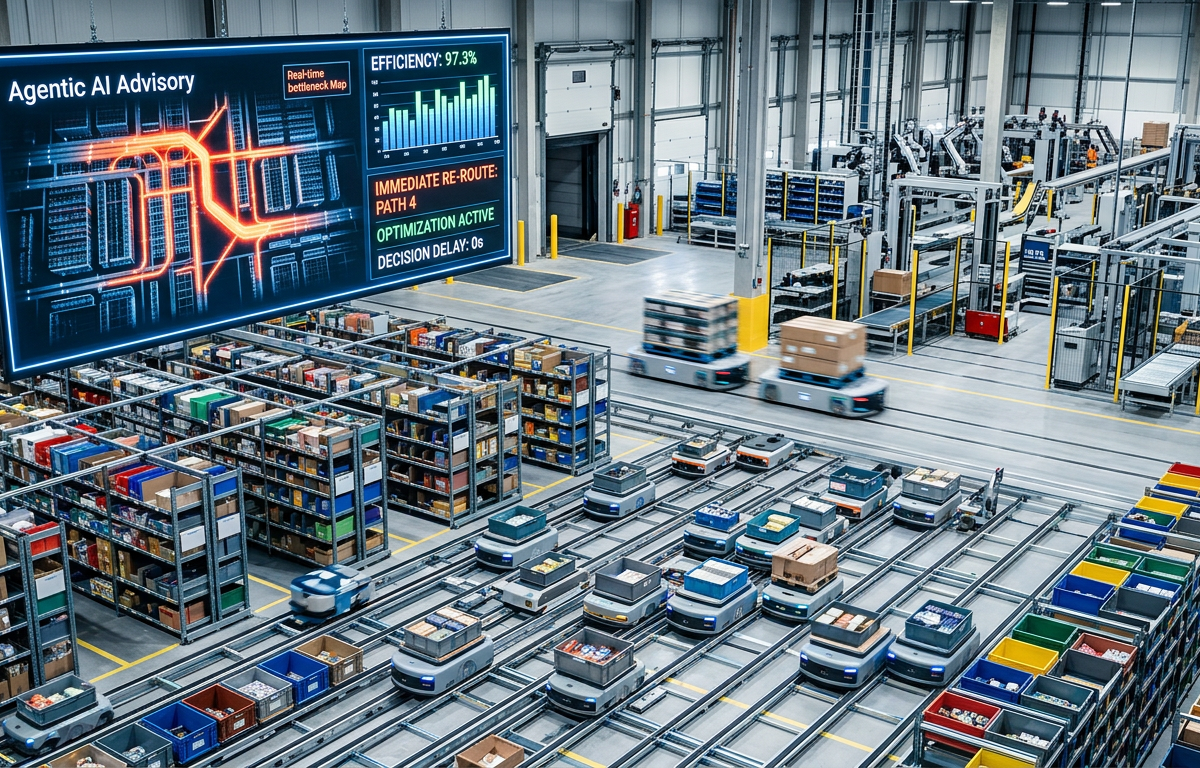
Agentic AI Advisory: When Your Operations Need Real-Time Workflow Support, Not Quarterly Reviews
A foodservice distributor takes three days to change a price. By the time the spreadsheet is approved and uploaded, the margin opportunity has passed. A seven-depot building merchant routes deliveries manually each morning, missing optimisation windows that close by 9am. A fashion retailer delays markdown decisions until stock levels force action, tying up £180,000 in slow-moving inventory for an extra six weeks. Workflow delay costs more than imperfect decisions made fast.

WithPraxis
Fashion Distribution Intelligence: How AI Transforms Seasonal Buying Decisions
Fashion distributors write off £25,000-£45,000 in dead stock each season from three decisions made six months early: style selection, quantities, and size curves. Applied AI transforms seasonal planning by handling complex optimisation while preserving buyer expertise in trend interpretation.
Related Articles

Platform capabilities and technical insights
System Integration Challenges: When Legacy Meets Modern AI
A legacy ERP connects to a modern AI pricing platform. A field mapping breaks. Prices don't update. Nobody notices for 48 hours. By then, £15,000-£30,000 in margin has leaked. Silent failures are worse than loud ones because they compound. Real-time data observability makes these failures visible and resolvable before they cost money.

Platform capabilities and technical insights
LLM Observability: Why Custom AI Models Need Different Monitoring
Custom AI models degrade silently in production. Most mid-market distributors discover this weeks after the damage begins—when pricing errors accumulate, inventory misallocates, or search results decay. Model drift is silent cost leakage that compounds over time.
Was this article useful?