Thinking
Technical articles on the WithPraxis platform
Technical insights into the WithPraxis platform, including data, models and workflow orchestration.
The WithPraxis platform is built around the data, models and workflow orchestration that support pricing, inventory and fulfilment work in production. These articles cover how the platform is architected: the unified data layer beneath it, the model behaviours used in live workflows, and the orchestration patterns that let capabilities run alongside existing ERP, commerce and CRM systems. Read these to understand how the platform is designed for everyday operational work, how its components fit together, and what to consider when integrating it with your own technical environment.

System Integration Challenges: When Legacy Meets Modern AI
A legacy ERP connects to a modern AI pricing platform. A field mapping breaks. Prices don't update. Nobody notices for 48 hours. By then, £15,000-£30,000 in margin has leaked. Silent failures are worse than loud ones because they compound. Real-time data observability makes these failures visible and resolvable before they cost money.

LLM Observability: Why Custom AI Models Need Different Monitoring
Custom AI models degrade silently in production. Most mid-market distributors discover this weeks after the damage begins—when pricing errors accumulate, inventory misallocates, or search results decay. Model drift is silent cost leakage that compounds over time.

Event-Driven Architecture: Real-Time Commerce Operations at Scale
A West Midlands foodservice distributor runs seven systems: SAP for ERP, Shopify Plus for commerce, Manhattan for warehousing, Salesforce for CRM, Xero for accounting, Akeneo for product data, and a legacy routing tool built in-house. None of them talk to each other in real time. Pricing updates take three days. Inventory visibility lags 24 hours behind actual stock. The operations director spends Monday mornings reconciling conflicts created by systems working from different versions of the truth. This is the middleware bottleneck. Mid-market B2B distributors have invested in best-of-breed systems but lack the integration layer to connect them. The B2B middleware market reached £14.1 billion in 2025, growing at 12.23% annually (MarketsandMarkets, 2024). That growth reflects a painful reality: buying good systems is easy, making them work together is not. Event-driven architecture promises to solve this. Order placed, inventory updated, fulfilment triggered, customer notified—all in real time. But most mid-market stacks lack the middleware to orchestrate that sequence. Without it, teams fall back to manual processes and the operational friction compounds.
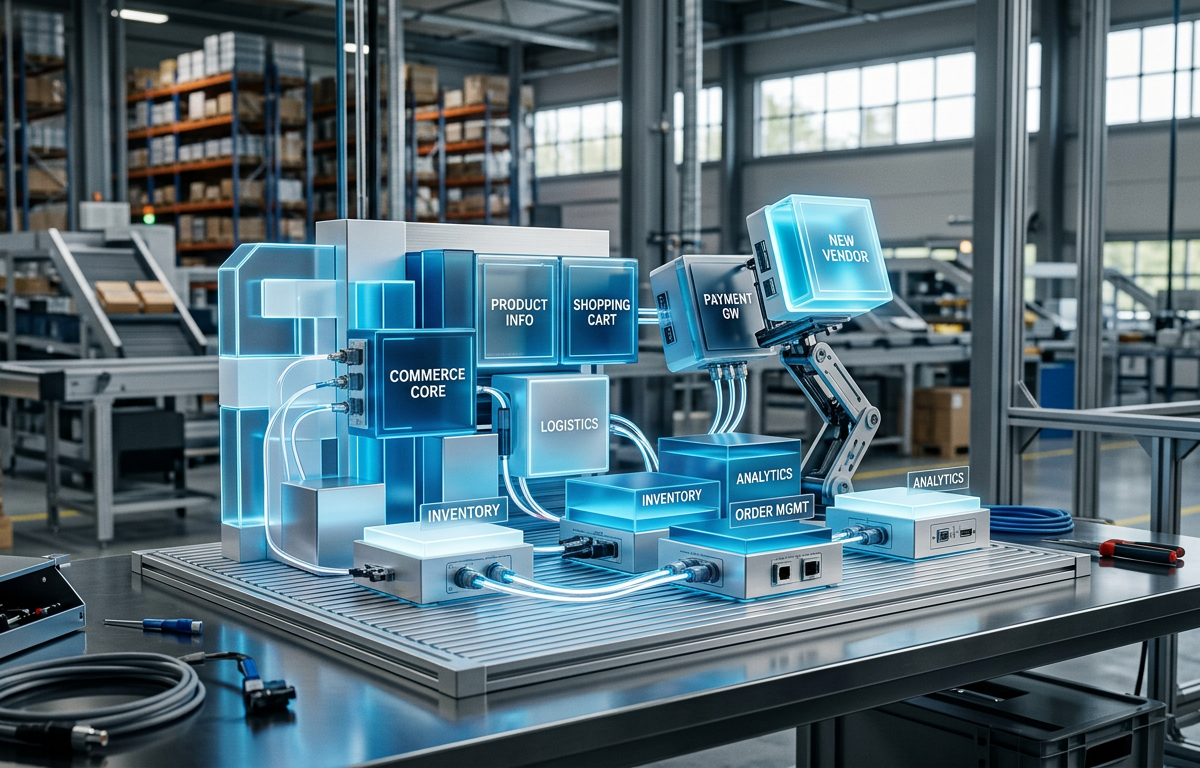
Composable Commerce Architecture: Building Modular Systems That Evolve With Your Business
A Midlands foodservice distributor spent £240,000 recovering from a pricing error in 2024. Their monolithic commerce platform took three days to update prices across 12,000 SKUs. Commodity costs moved faster than their approval cycle. By the time new prices went live, margins had eroded. The problem wasn't the platform. It was the architecture. Pricing, inventory, and order management sat in one system. Upgrading the pricing engine meant ripping out everything else. The platform vendor quoted 18 months and £180,000 for a custom pricing module. The distributor couldn't wait that long. This is the composable commerce question: when one component fails, can you swap it without dismantling the entire system?

Market Sensing Intelligence: Reading Weak Signals Before Competitors
Quarterly forecasts miss demand shifts that happen in days. Demand sensing uses real-time weak signals—POS data, supply disruptions, social trends—to detect changes 24-72 hours before they appear in historical patterns. For mid-market distributors managing volatile categories, this decision speed translates directly into margin capture and stockout reduction.

Agentic AI Advisory: When Your Operations Need Real-Time Workflow Support, Not Quarterly Reviews
A foodservice distributor takes three days to change a price. By the time the spreadsheet is approved and uploaded, the margin opportunity has passed. A seven-depot building merchant routes deliveries manually each morning, missing optimisation windows that close by 9am. A fashion retailer delays markdown decisions until stock levels force action, tying up £180,000 in slow-moving inventory for an extra six weeks. Workflow delay costs more than imperfect decisions made fast.
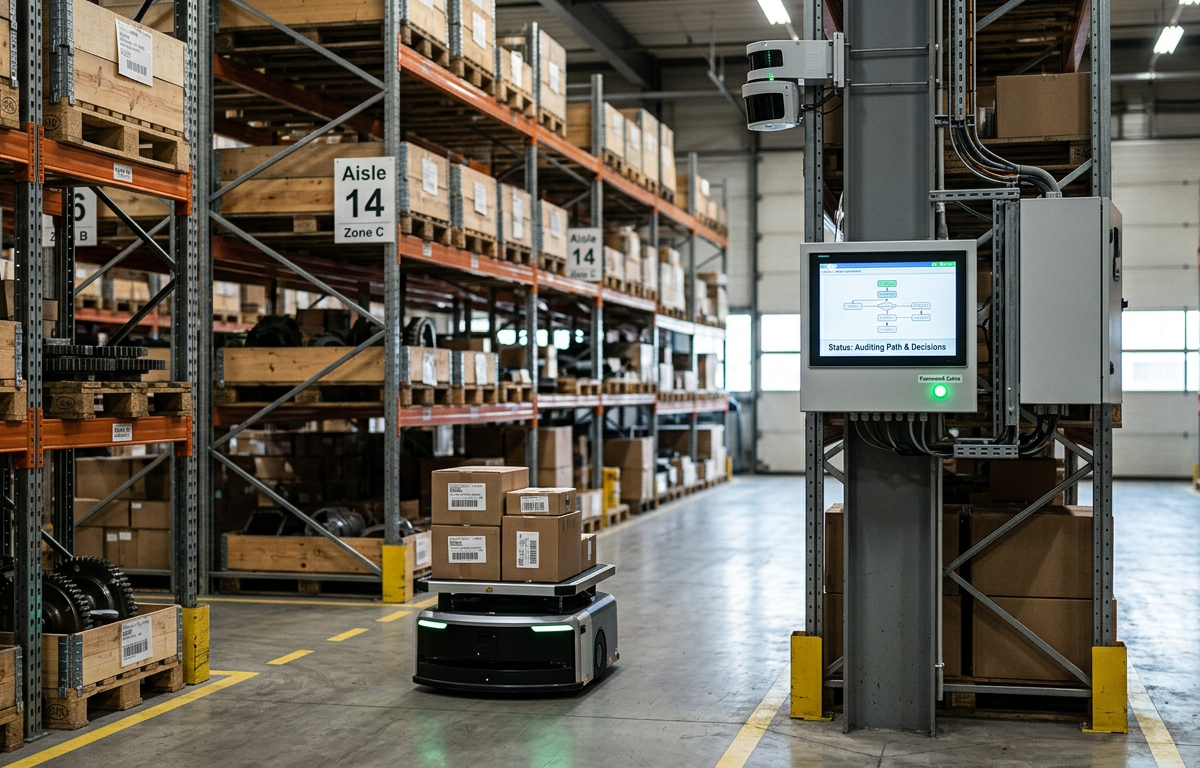
Controlled Automation: The Governance Framework Mid-Market Distributors Need Before Deployment
Autonomous agents can accelerate decisions and reduce costs in B2B commerce. But most mid-market distributors lack the governance frameworks to deploy them safely. Without audit trails, decision boundaries, escalation rules, and performance monitoring, autonomous systems become liabilities. This article maps the four control pillars required before autonomous everyday work goes into production - and the practical roadmap for implementing them without killing velocity.

Build vs Buy vs Partner: The AI Vendor Selection Framework for Mid-Market Distributors
Mid-market distributors face three paths when deploying AI: pre-built vendor models, custom development, or third-party APIs. Most lack a clear framework to evaluate them. The wrong choice delays implementation by 6-12 months and wastes £50,000-£200,000. This decision matrix maps implementation timeline, cost structure, and risk profile for each approach. Pre-built models deploy in 8-12 weeks at lower cost but limited customisation. Custom development takes 16-24 weeks with full control and competitive advantage. Third-party APIs offer middle ground at moderate cost and configuration flexibility. The right choice depends on data maturity, technical capacity, and competitive urgency. A distributor with clean data and a 6-month runway can pursue custom development. A distributor with fragmented systems and a 10-week deadline cannot. Four questions determine the viable path: data quality, timeline urgency, competitive differentiation, and internal technical capacity.

Real-Time Commerce Operations: Moving Beyond Static Dashboards
Most distributors manage operations through yesterday's reports. Morning meetings review exceptions, investigate anomalies, and plan interventions - all based on data that's already 12-18 hours old. Real-time operational intelligence transforms everyday work from reactive problem-solving to proactive opportunity capture.

Customer Lifetime Value Intelligence: Predicting Profit Per Relationship
Most B2B distributors calculate customer lifetime value by adding up historical purchases, missing predictive factors that signal churn risk and growth opportunities. True CLV intelligence uses behavioural patterns, payment data, and market context to guide resource allocation decisions before customer value changes become obvious in purchase history.

Multi-Depot Fulfilment Routing: When Driver Knowledge Isn't Enough
Manual fulfilment routing costs building materials distributors 18% in unnecessary expenses. Smart routing systems optimise multi-depot operations while preserving driver expertise.

Inventory Velocity Intelligence: How AI Accelerates Stock Turn Without Stockouts
Fifteen per cent of your working capital sits in stock that hasn't moved in six months. AI transforms this from reactive clearance to proactive velocity management, predicting turn rate decline 60 - 90 days before it shows up in traditional reports.