Thinking
real-time workflow support
All articles tagged with "real-time workflow support".
Commerce operations insights and applications
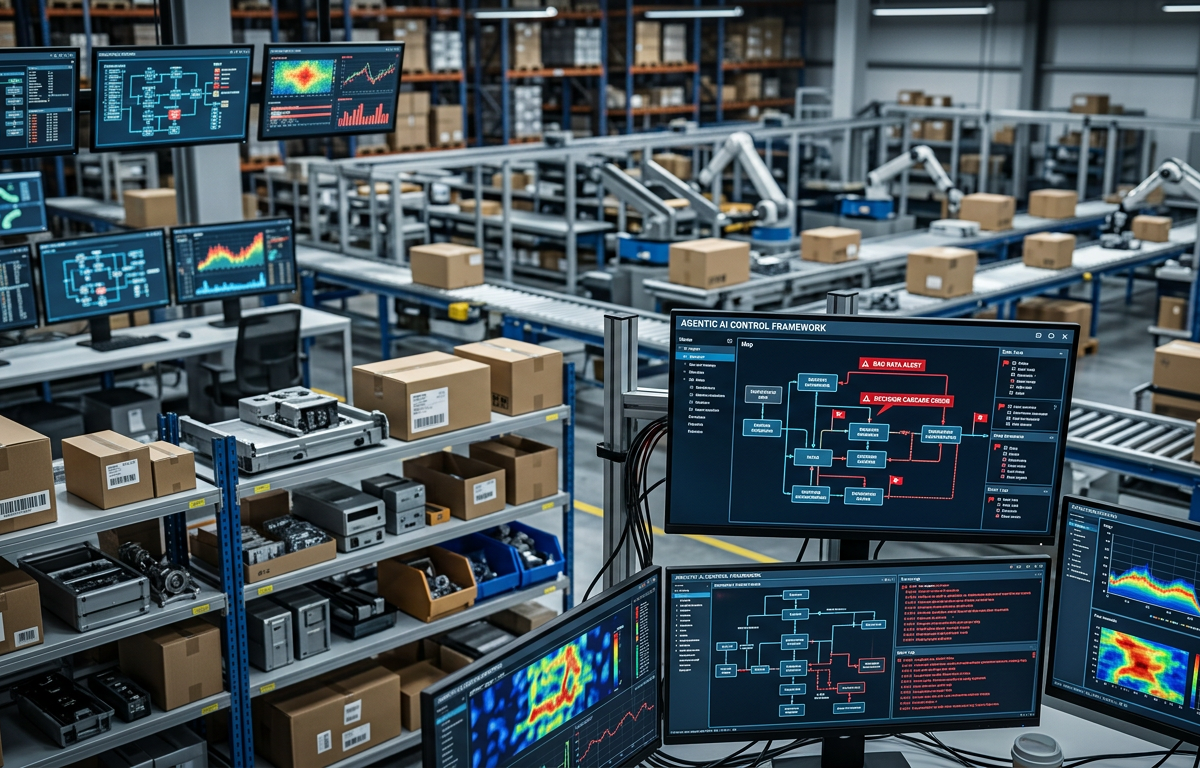
Agentic AI Observability: Detecting When Your Autonomous Systems Are Operating on Bad Data
Agentic systems fail quietly. A pricing agent drifts 2% below target margin over eight weeks, processing 4,200 decisions before anyone notices. Margin leakage: £87,000. The agent didn't crash or throw errors—it just made slightly wrong decisions, consistently, for two months. Gartner predicts 40% of agentic AI projects will be cancelled by 2027, primarily due to silent degradation that compounds into operational disasters.
Operational workflow improvement
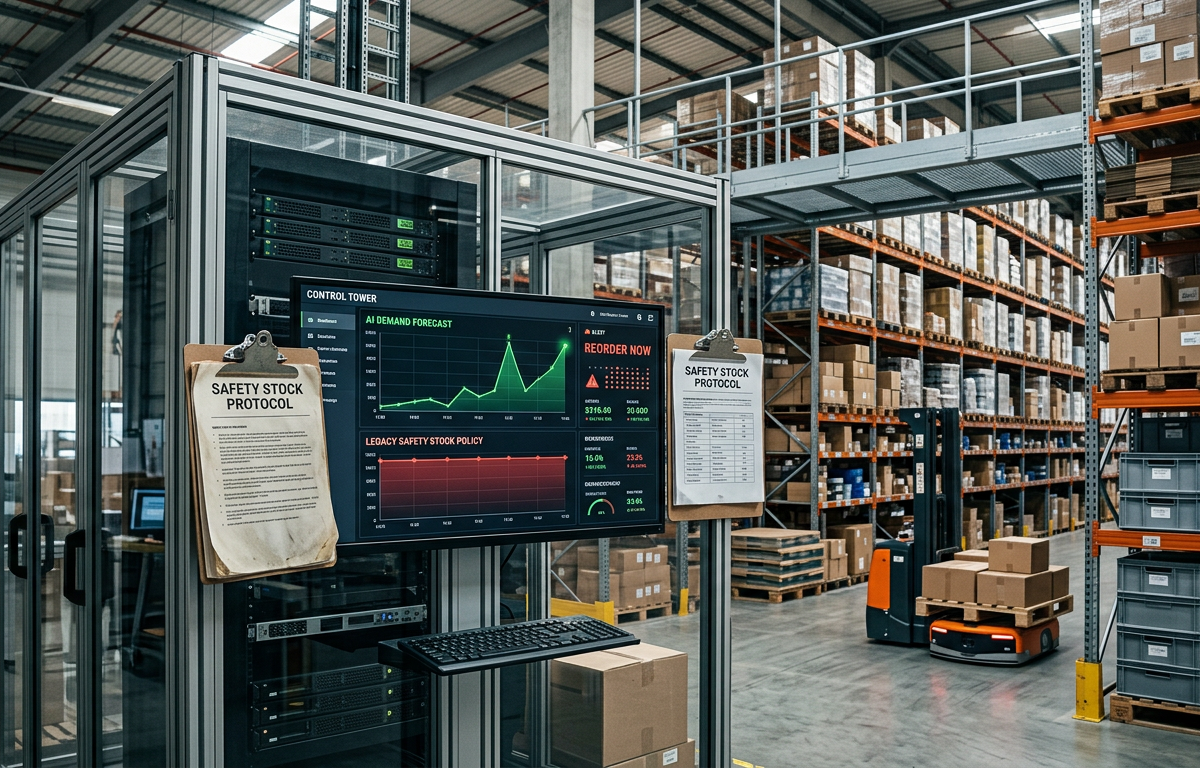
Inventory Decisions Under Uncertainty: When AI Forecasts Conflict With Safety Stock Rules
Deploying demand sensing AI without retiring legacy safety stock policies creates a hidden cost: dual everyday work. Inventory planners second-guess AI recommendations, override autonomous reorder points, and maintain manual guardrails 'just in case.' This article quantifies the cost of running both systems, explains why most deployments fail at the governance layer, and outlines the workflow clarity required to let one system own inventory decisions.

Platform capabilities and technical insights
System Integration Challenges: When Legacy Meets Modern AI
A legacy ERP connects to a modern AI pricing platform. A field mapping breaks. Prices don't update. Nobody notices for 48 hours. By then, £15,000-£30,000 in margin has leaked. Silent failures are worse than loud ones because they compound. Real-time data observability makes these failures visible and resolvable before they cost money.

Operational workflow improvement
Agentic AI Data Architecture: Why Your Supply Chain Intelligence Fails Without the Right Foundation
A pricing agent at a South Yorkshire distributor adjusted 1,200 SKUs based on supplier cost data that was six weeks stale. The pipeline reported healthy. The data quality checks passed. The system lost £34,000 in margin over three months before anyone noticed. The agent hadn't malfunctioned - it had operated exactly as designed on information that was technically valid but operationally worthless. This is the observability gap that makes autonomous systems dangerous. Traditional monitoring tracks schema compliance and pipeline health. Agentic AI needs semantic monitoring - systems that understand whether data makes sense in the context of the decision being made, not just whether it arrives on time in the right format.

Platform capabilities and technical insights
Event-Driven Architecture: Real-Time Commerce Operations at Scale
A West Midlands foodservice distributor runs seven systems: SAP for ERP, Shopify Plus for commerce, Manhattan for warehousing, Salesforce for CRM, Xero for accounting, Akeneo for product data, and a legacy routing tool built in-house. None of them talk to each other in real time. Pricing updates take three days. Inventory visibility lags 24 hours behind actual stock. The operations director spends Monday mornings reconciling conflicts created by systems working from different versions of the truth. This is the middleware bottleneck. Mid-market B2B distributors have invested in best-of-breed systems but lack the integration layer to connect them. The B2B middleware market reached £14.1 billion in 2025, growing at 12.23% annually (MarketsandMarkets, 2024). That growth reflects a painful reality: buying good systems is easy, making them work together is not. Event-driven architecture promises to solve this. Order placed, inventory updated, fulfilment triggered, customer notified—all in real time. But most mid-market stacks lack the middleware to orchestrate that sequence. Without it, teams fall back to manual processes and the operational friction compounds.
Operational workflow improvement
Edge Intelligence in Distribution: Real-Time Decisions at the Warehouse Floor
Most mid-market distributors assume warehouse automation requires robotics. Reality: software orchestration delivers faster ROI without the capital spend. A Manchester plumbing merchant spent £480,000 on conveyors but orders still took 90 minutes from pick to dispatch because systems didn't communicate. The problem wasn't hardware, it was coordination. This article covers why warehouse execution systems matter, how AI decision logic works between platforms, real-time resource allocation mechanics, and the implementation reality most vendors skip.
Operational workflow improvement
Agentic Supply Chain Orchestration: Controlled Automation Across Multi-Depot Networks
Most mid-market distributors allocate stock across depots manually. A buyer reviews demand signals, checks inventory levels, and decides where to send stock. This takes hours or days. By then, demand has shifted. Autonomous agents change this by making allocation decisions in real-time — but only if governance frameworks define the boundaries within which they operate.

Platform capabilities and technical insights
Market Sensing Intelligence: Reading Weak Signals Before Competitors
Quarterly forecasts miss demand shifts that happen in days. Demand sensing uses real-time weak signals—POS data, supply disruptions, social trends—to detect changes 24-72 hours before they appear in historical patterns. For mid-market distributors managing volatile categories, this decision speed translates directly into margin capture and stockout reduction.
Platform capabilities and technical insights
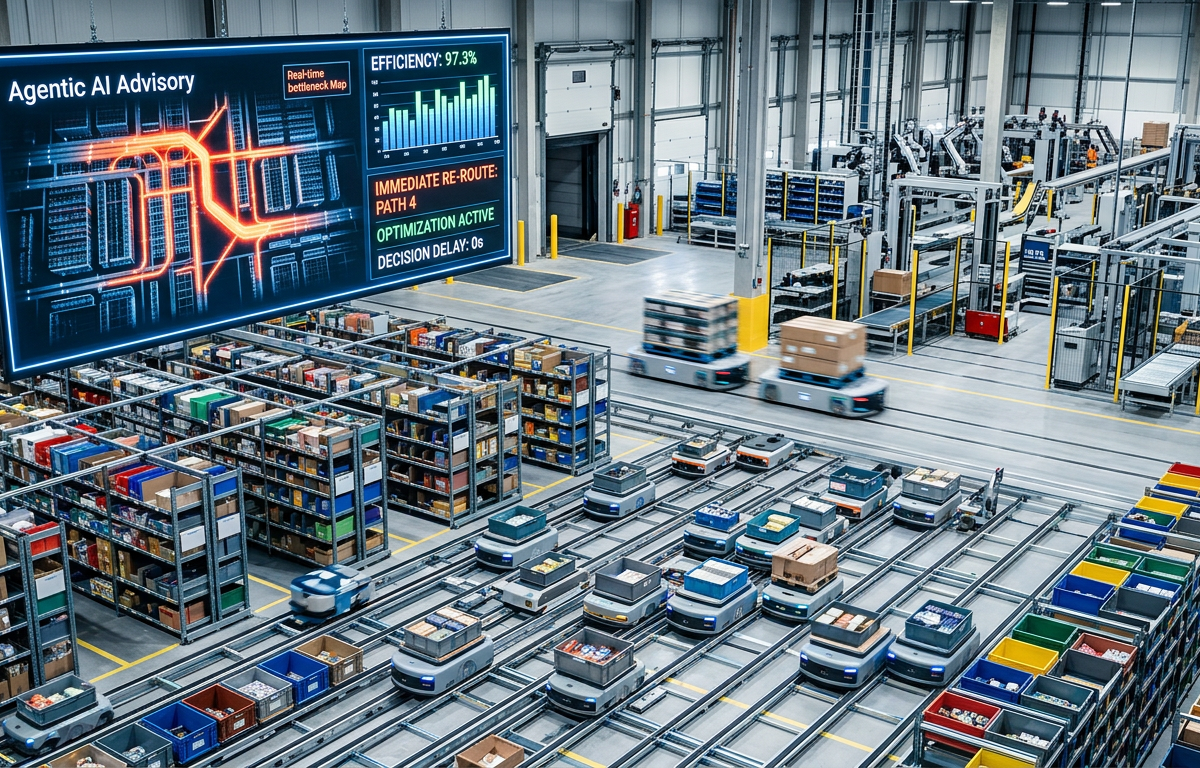
Agentic AI Advisory: When Your Operations Need Real-Time Workflow Support, Not Quarterly Reviews
A foodservice distributor takes three days to change a price. By the time the spreadsheet is approved and uploaded, the margin opportunity has passed. A seven-depot building merchant routes deliveries manually each morning, missing optimisation windows that close by 9am. A fashion retailer delays markdown decisions until stock levels force action, tying up £180,000 in slow-moving inventory for an extra six weeks. Workflow delay costs more than imperfect decisions made fast.

Operational workflow improvement
Faster Supply Chain Planning: Why Speed Beats Perfect Forecasts in 2026
Most mid-market distributors believe their slow decisions are caused by poor AI models or insufficient data. In reality, they've built latency into their system architecture. A well-trained model can generate a recommendation in milliseconds, but the decision doesn't reach the operator for 3-8 seconds—or longer—because of data pipeline delays, API call chains, and integration bottlenecks. Decision speed directly impacts margin recovery, inventory turns, and fulfilment efficiency. Yet companies continue to upgrade models while ignoring the infrastructure that determines how fast those decisions can actually execute.

Platform capabilities and technical insights
Real-Time Commerce Operations: Moving Beyond Static Dashboards
Most distributors manage operations through yesterday's reports. Morning meetings review exceptions, investigate anomalies, and plan interventions - all based on data that's already 12-18 hours old. Real-time operational intelligence transforms everyday work from reactive problem-solving to proactive opportunity capture.