Thinking
foodservice distribution
All articles tagged with "foodservice distribution".
Commerce operations insights and applications
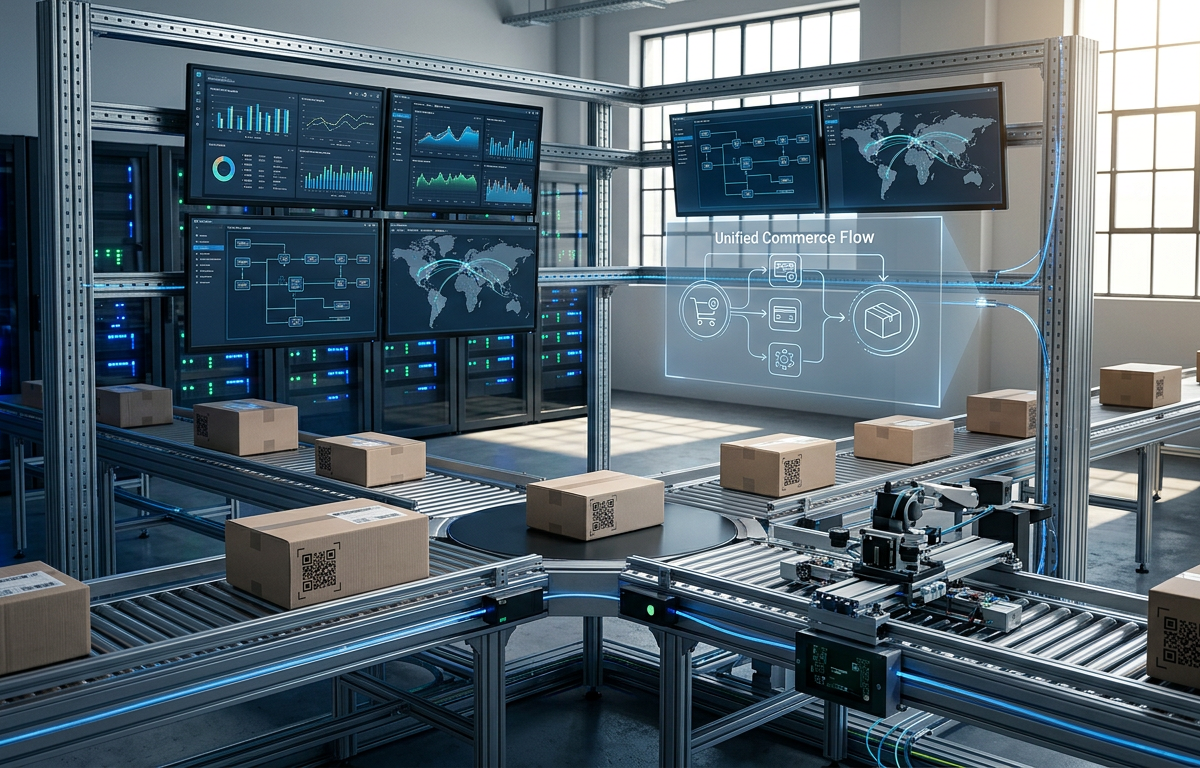
Unified Commerce Intelligence: Orchestrating Revenue Across Omnichannel B2B Transactions
A £60M foodservice distributor processes orders through four channels: Shopify Plus, EDI feeds, phone, and WhatsApp. Each channel lands in a different system. Web orders sync to the ERP overnight. EDI orders arrive every 15 minutes but don't update inventory visibility until the next batch run. Staff key phone orders directly into the ERP. Staff transcribe WhatsApp orders into a spreadsheet, then manually enter them. The operations director calculated the cost. Pricing inconsistencies between channels cost £180K annually in margin leakage. A customer quoted £4.20/kg for chicken thighs on the phone receives a different price (£4.45/kg) when they order the same product via the website three days later. They call to query it. The phone team has no visibility of the web order. They create a second order. By the time staff spot the duplicate, the customer has been invoiced twice and the stock has been picked. Resolution takes 90 minutes and involves three people.
Commerce operations insights and applications
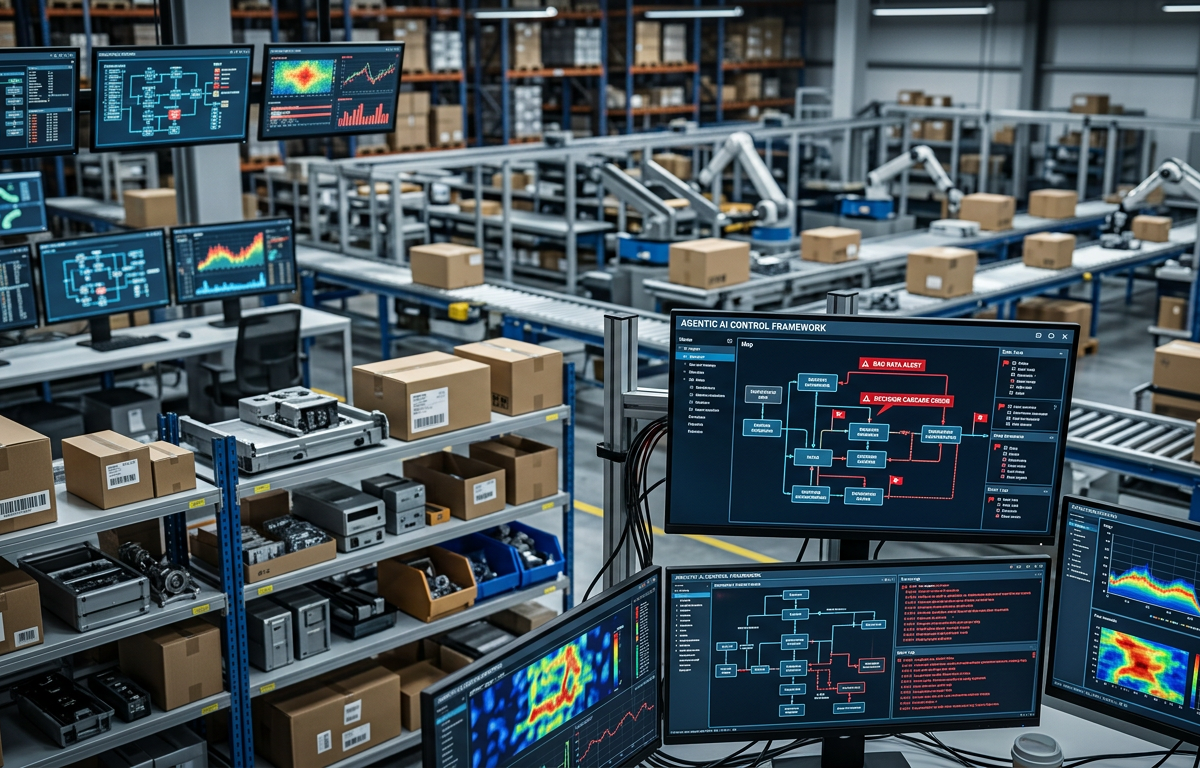
Agentic AI Observability: Detecting When Your Autonomous Systems Are Operating on Bad Data
Agentic systems fail quietly. A pricing agent drifts 2% below target margin over eight weeks, processing 4,200 decisions before anyone notices. Margin leakage: £87,000. The agent didn't crash or throw errors—it just made slightly wrong decisions, consistently, for two months. Gartner predicts 40% of agentic AI projects will be cancelled by 2027, primarily due to silent degradation that compounds into operational disasters.
Operational workflow improvement
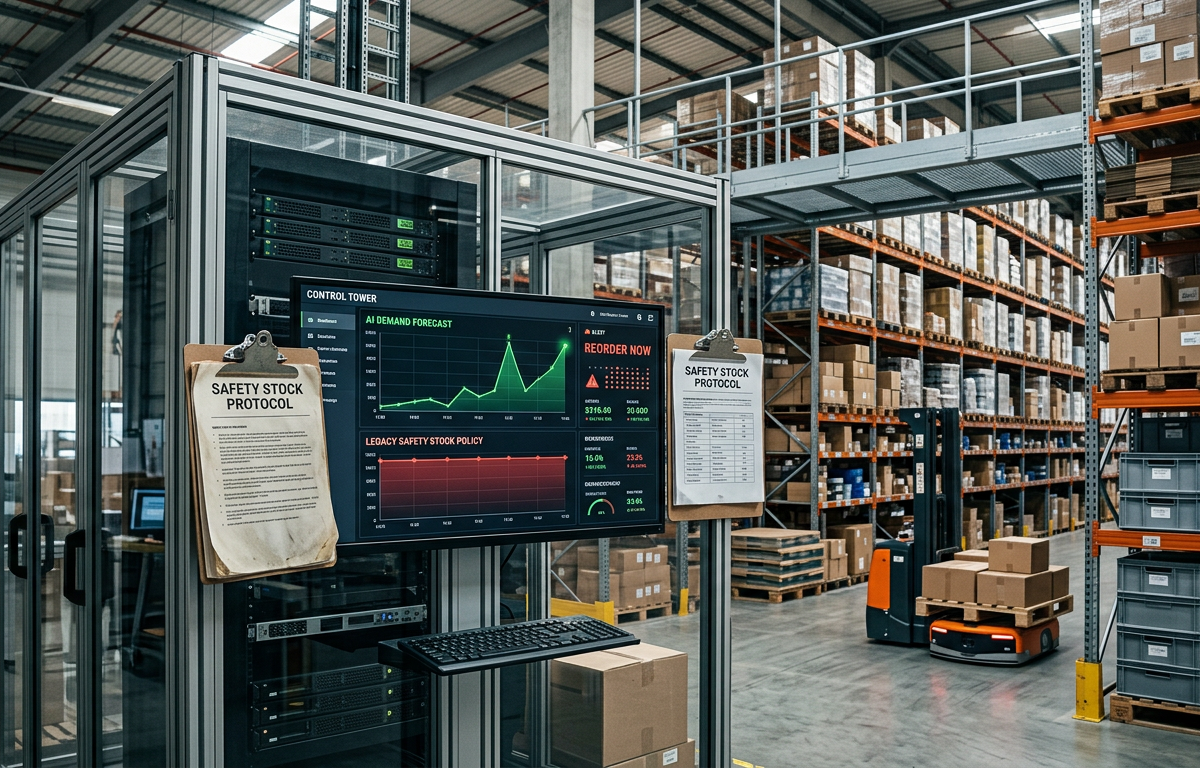
Inventory Decisions Under Uncertainty: When AI Forecasts Conflict With Safety Stock Rules
Deploying demand sensing AI without retiring legacy safety stock policies creates a hidden cost: dual everyday work. Inventory planners second-guess AI recommendations, override autonomous reorder points, and maintain manual guardrails 'just in case.' This article quantifies the cost of running both systems, explains why most deployments fail at the governance layer, and outlines the workflow clarity required to let one system own inventory decisions.
Operational workflow improvement
The Skill Deficit Crisis: Why 84% of Mid-Market Distributors Lack AI-Ready Talent
Mid-market distributors are hiring data scientists for problems that don't need them. The real gap isn't technical capability—it's workflow clarity and domain expertise. Most AI hiring fails because businesses copy tech company job specs instead of recruiting for operational roles that understand distribution workflows.
Platform capabilities and technical insights
Composable Commerce Architecture: Building Modular Systems That Evolve With Your Business
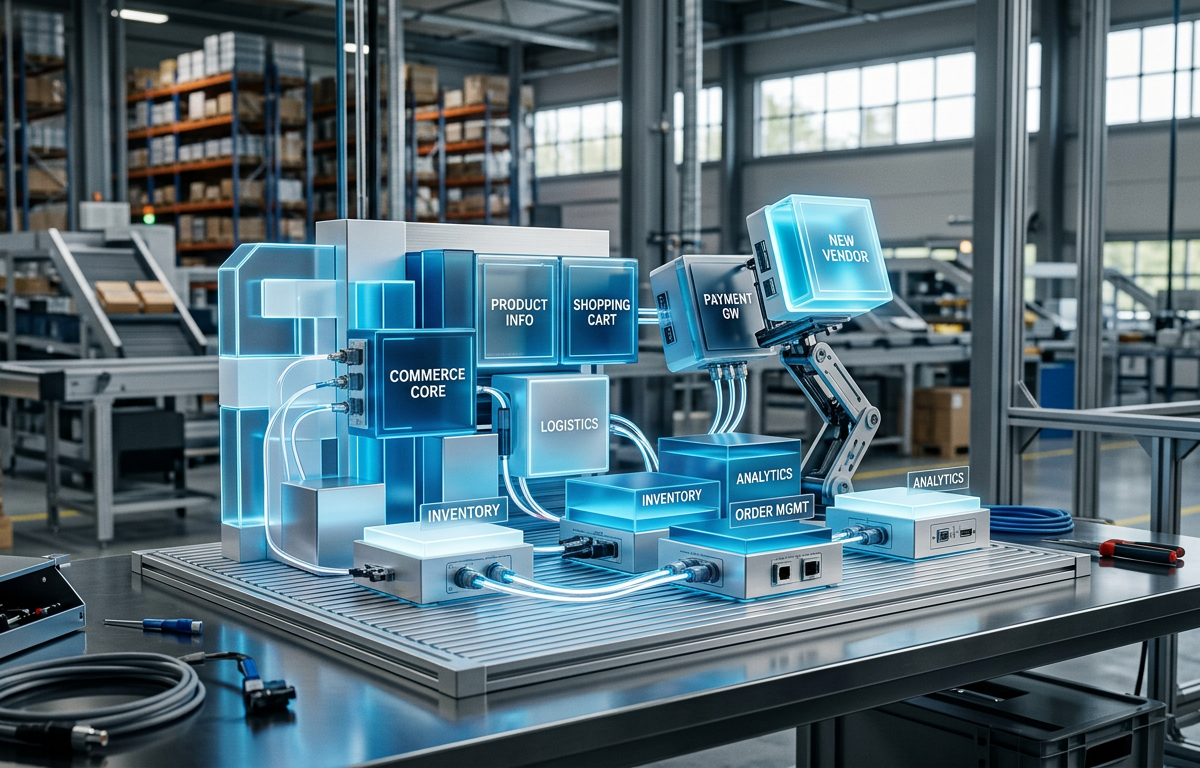
A Midlands foodservice distributor spent £240,000 recovering from a pricing error in 2024. Their monolithic commerce platform took three days to update prices across 12,000 SKUs. Commodity costs moved faster than their approval cycle. By the time new prices went live, margins had eroded. The problem wasn't the platform. It was the architecture. Pricing, inventory, and order management sat in one system. Upgrading the pricing engine meant ripping out everything else. The platform vendor quoted 18 months and £180,000 for a custom pricing module. The distributor couldn't wait that long. This is the composable commerce question: when one component fails, can you swap it without dismantling the entire system?

Platform capabilities and technical insights
Market Sensing Intelligence: Reading Weak Signals Before Competitors
Quarterly forecasts miss demand shifts that happen in days. Demand sensing uses real-time weak signals—POS data, supply disruptions, social trends—to detect changes 24-72 hours before they appear in historical patterns. For mid-market distributors managing volatile categories, this decision speed translates directly into margin capture and stockout reduction.
Platform capabilities and technical insights
Agentic AI Advisory: When Your Operations Need Real-Time Workflow Support, Not Quarterly Reviews
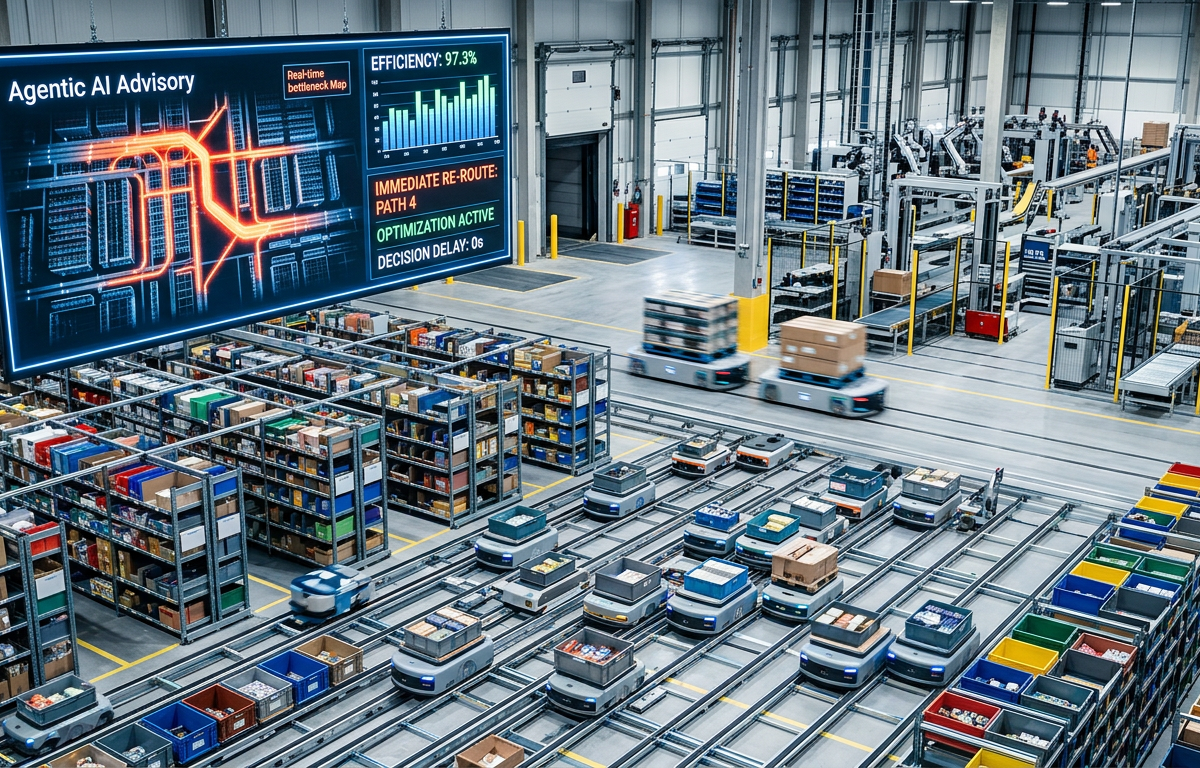
A foodservice distributor takes three days to change a price. By the time the spreadsheet is approved and uploaded, the margin opportunity has passed. A seven-depot building merchant routes deliveries manually each morning, missing optimisation windows that close by 9am. A fashion retailer delays markdown decisions until stock levels force action, tying up £180,000 in slow-moving inventory for an extra six weeks. Workflow delay costs more than imperfect decisions made fast.
Operational workflow improvement
Supply Chain Workflow Debt: How Deferred Planning Choices Compound into AI Failure
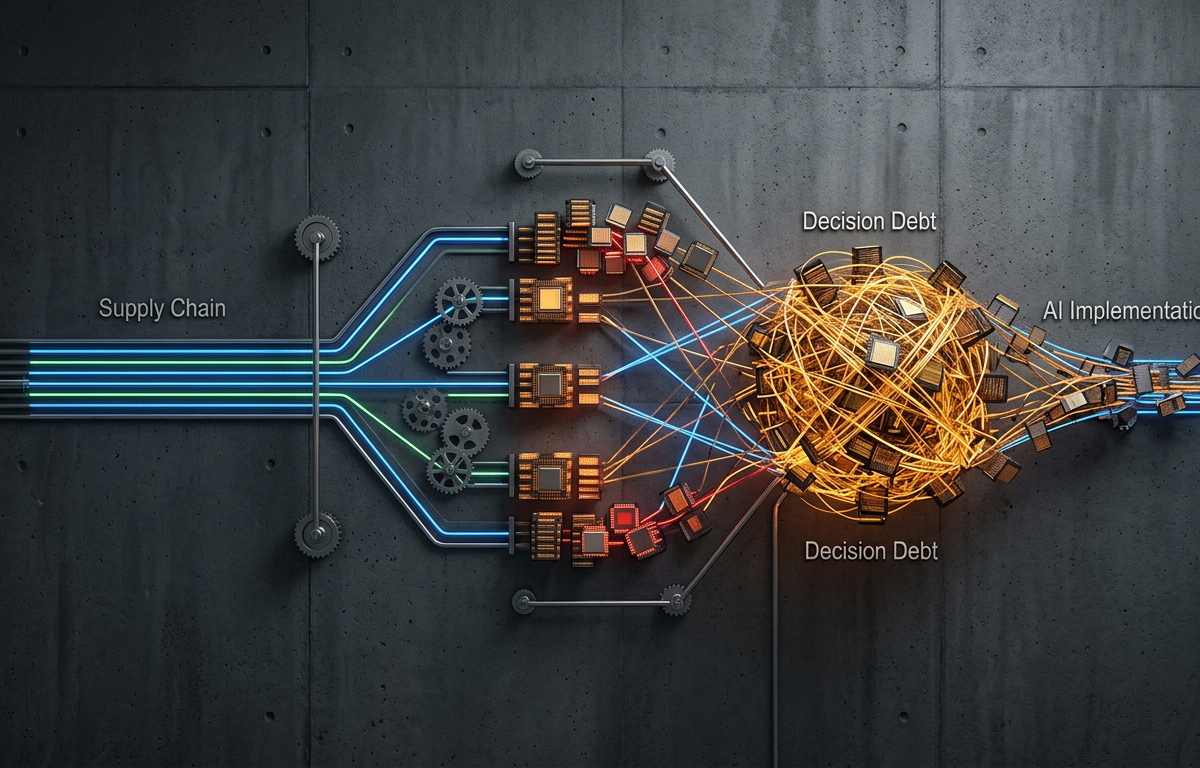
Most mid-market distributors rush to AI deployment without auditing what they're actually deciding. A Nottinghamshire food wholesaler spent £85,000 on demand forecasting AI that sat dormant because buying decisions existed only in one person's head. The pre-implementation audit - decision inventory, assumption mapping, rule documentation - is the gate that determines whether AI works or sits unused.

Operational workflow improvement
Faster Supply Chain Planning: Why Speed Beats Perfect Forecasts in 2026
Most mid-market distributors believe their slow decisions are caused by poor AI models or insufficient data. In reality, they've built latency into their system architecture. A well-trained model can generate a recommendation in milliseconds, but the decision doesn't reach the operator for 3-8 seconds—or longer—because of data pipeline delays, API call chains, and integration bottlenecks. Decision speed directly impacts margin recovery, inventory turns, and fulfilment efficiency. Yet companies continue to upgrade models while ignoring the infrastructure that determines how fast those decisions can actually execute.

Industry-specific operational AI applications
Kitchen timing and delivery windows in foodservice distribution
Foodservice distributors face unique operational challenges: volatile commodity pricing, perishable inventory, and complex delivery scheduling. Generic AI platforms don't understand these realities.