

Faster Supply Chain Planning: Why Speed Beats Perfect Forecasts in 2026
Most mid-market distributors believe their slow decisions are caused by poor AI models or insufficient data. In reality, they've built latency into their system architecture. A well-trained model can generate a recommendation in milliseconds, but the decision doesn't reach the operator for 3-8 seconds—or longer—because of data pipeline delays, API call chains, and integration bottlenecks. Decision speed directly impacts margin recovery, inventory turns, and fulfilment efficiency. Yet companies continue to upgrade models while ignoring the infrastructure that determines how fast those decisions can actually execute.
The Latency Illusion: Why Better AI Models Won't Help
A Midlands building materials distributor spent £45,000 upgrading their demand forecasting model. Accuracy improved from 82% to 89%. Decision time stayed at 28 minutes per pricing change.
The problem wasn't the model. It was the architecture. The pricing decision required pulling data from four systems sequentially: ERP for cost, CRM for customer tier, inventory for stock levels, and a separate approval system for sign-off. Each call took 2-4 seconds. The approval workflow added 20 minutes. The model generated a recommendation in 180 milliseconds, but the infrastructure couldn't deliver it fast enough to matter.
Companies assume decision speed is limited by AI model performance. In practice, a well-trained model generates a recommendation in milliseconds. The decision doesn't reach the operator for 3-8 seconds—or longer—because of data pipeline delays, API call chains, and integration bottlenecks. Upgrading the model is wasted effort if the infrastructure can't deliver the output fast enough.
Across WithPraxis client implementations, we consistently see 60-80% latency reduction from architectural optimisation alone. No model upgrades. No new AI capabilities. Just cleaner data pipelines, parallel integration patterns, and real-time execution frameworks. Clients who invest in architecture optimisation first report 39% improvement in operational metrics within six months (WithPraxis client data, 2024-2025).
Faster operational work is a systems problem, not a technology problem. The bottleneck isn't the algorithm. It's the infrastructure around it.
The Three Architectural Layers That Determine Decision Speed
Workflow delay lives in three places: data pipelines, integration patterns, and infrastructure design. Each layer introduces delays that compound across the decision cycle.
Layer 1: Data Pipeline Latency
Most mid-market distributors pull data sequentially. A pricing decision queries the ERP for cost, waits for the response, then queries the CRM for customer tier, waits again, then queries inventory for stock levels. Each call takes 2-4 seconds. Total pipeline latency: 6-12 seconds before the model even runs.
A foodservice distributor we worked with reduced pricing decision time from three days to 30 minutes by redesigning their data pipeline. The model didn't change. They moved from sequential to parallel data fetching and eliminated two manual approval steps. The decision now pulls cost, customer, and inventory data simultaneously. Pipeline latency dropped from 12 seconds to 1.8 seconds.
Layer 2: Integration Latency
A fulfilment routing decision touches the order management system, warehouse management system, delivery scheduling tool, and driver app. If those systems communicate through a central hub, each hop adds 1-3 seconds. If the integration requires manual approval at any stage, latency jumps to hours or days.
A construction supply company with seven depots was routing deliveries manually. The operations manager reviewed orders each morning, assigned routes based on driver knowledge, and updated the delivery schedule in a separate system. Total time: 45 minutes per day. We replaced the manual workflow with direct API integration between the order system and Smart Fulfillment Engine. Routing decisions now execute in 6-8 seconds with no manual intervention.
Layer 3: Infrastructure Latency
Batch processing that runs once per day feels like a real-time decision to the team, but it introduces 4-24 hours of latency. A pricing update that waits for the nightly batch job to complete is obsolete before it reaches the customer.
An industrial distributor moved from nightly batch pricing updates to real-time execution. The model stayed the same. The infrastructure shifted from scheduled jobs to event-driven triggers. Pricing changes now propagate within 2-5 seconds of the decision being made. The result: 6% margin improvement because prices adjusted to market conditions before competitors moved.
Across six client engagements, the average latency reduction from architectural optimisation is 60-80%. The companies winning on faster operational work are not the ones with the most advanced models. They're the ones with the cleanest pipelines.
Identifying Your Latency Bottlenecks: A Diagnostic Framework
Three questions reveal where latency lives in your system: How many systems does this decision touch before it executes? Are data fetches happening in parallel or sequentially? Is the decision being made in real-time or batch?
Walk through a pricing decision at a typical mid-market distributor. The decision touches the ERP for cost data (sequential call, 3 seconds), the CRM for customer tier (sequential call, 3 seconds), and the inventory system for stock levels (sequential call, 3 seconds). Total data pipeline latency: 9 seconds. Then the decision enters an approval workflow: the pricing manager reviews the recommendation, the finance director signs off, and the change is queued for the nightly batch update. Total decision time: 30 minutes to 24 hours.
Parallel data fetching and direct API integration reduce this to 2-3 seconds. The model generates a recommendation in under 200 milliseconds. Data fetches happen simultaneously, not sequentially. The decision executes immediately via direct API call to the commerce platform. No approval workflow. No batch processing. No manual sign-off.
This is not about buying new tools. It's about redesigning how your existing systems talk to each other. Most mid-market distributors already own the platforms needed for fast decisions. They've just wired them together in ways that introduce latency at every step.
The diagnostic framework is simple: map every system the decision touches. Measure the time each call takes. Identify whether those calls happen in parallel or sequentially. Count the number of manual approval steps. The sum of those delays is your architectural latency. If it exceeds the time your model takes to generate a recommendation by more than 10x, you have an infrastructure problem, not an AI problem.
A wholesale distributor in the East Midlands discovered their fulfilment routing decision touched nine systems before it reached the driver. Each hop added 2-4 seconds. Total latency: 18-36 seconds per order. They eliminated five of those hops by consolidating data into Bytebard Data Mesh and routing decisions through a single API. Latency dropped to 4 seconds. Fulfilment cost fell 18%.
Common Architectural Patterns That Hide Latency
Three anti-patterns introduce hidden latency into decision systems: hub-and-spoke integration, batch processing masquerading as real-time, and approval workflows that aren't automated.
Hub-and-Spoke Integration
All data flows through a central system, creating a bottleneck. A pricing decision queries the ERP, which then queries the CRM, which then queries the inventory system. Each hop adds 2-5 seconds. The central hub becomes a single point of failure and a guaranteed source of delay.
A fashion distributor we worked with was routing all decisions through their ERP. Every data request—pricing, inventory, customer tier—went through the same middleware layer. Average workflow delay: 8-12 seconds. We bypassed the hub and connected the decision system directly to each source via API. Latency dropped to 1.2 seconds.
Batch Processing Masquerading as Real-Time
Nightly jobs that feel like live decisions but introduce 4-24 hours of latency. A pricing update queued for the next batch run is obsolete before it executes. The team believes they're making real-time decisions because the system accepts the input immediately. In reality, the decision doesn't execute until the scheduled job runs.
The foodservice distributor with three-day pricing cycles was using sequential approval workflows and batch updates. Pricing changes entered the system immediately but didn't reach customers until the nightly job completed. We moved to event-driven execution. Pricing changes now propagate within 30 minutes. Margin leakage dropped by £180,000-£240,000 annually (WithPraxis client data, 2024).
Manual Approval Workflows
Manual sign-off steps add hours or days. A fulfilment routing decision that requires the operations manager to review and approve each route introduces 1-3 days of latency. The model generates the optimal route in milliseconds. The approval workflow delays execution until the next morning.
The construction supply company with manual routing was using driver knowledge instead of real-time optimisation. The operations manager reviewed orders, assigned routes, and updated the schedule manually. Total time: 45 minutes per day. We automated the approval workflow with decision thresholds: orders under £5,000 execute immediately, orders above that threshold flag for review but still execute within 15 minutes. On-time delivery rate improved to 98%.
Fixing these patterns is often cheaper and faster than building new AI capabilities. The infrastructure work takes 4-8 weeks. The return is immediate: decisions that used to take hours now take seconds.
Building for Speed: The Architecture-First Approach
Design your data pipelines and integration patterns for speed before deploying AI. Three principles: parallel data fetching, direct API integration, and real-time decision execution.
Parallel Data Fetching
Fetch from multiple systems simultaneously, not sequentially. A pricing decision that needs cost, customer tier, and inventory data should query all three systems at once. Total latency: the longest individual call, not the sum of all calls. A 3-second ERP call, 2-second CRM call, and 4-second inventory call executed in parallel takes 4 seconds total. Executed sequentially, it takes 9 seconds.
A Midlands plumbing merchant reduced pricing decision time from 18 seconds to 4 seconds by moving to parallel data fetching. The model didn't change. The infrastructure did. They replaced sequential API calls with concurrent requests and consolidated responses before passing data to the model.
Direct API Integration
Avoid middleware that adds hops. Every system between the decision model and the execution point introduces 1-3 seconds of latency. Direct API integration eliminates those hops. The decision model queries the source system directly, generates a recommendation, and executes the change via direct API call to the target system.
An industrial distributor cut fulfilment routing latency from 36 seconds to 6 seconds by eliminating five middleware layers. They connected the routing model directly to the warehouse management system and delivery scheduling tool. No central hub. No approval queue. No batch processing.
Real-Time Decision Execution
Eliminate approval workflows where possible, or automate them. A pricing decision that requires manual sign-off introduces hours or days of latency. Define decision thresholds: changes below £10,000 execute immediately, changes above that threshold flag for review but still execute within a defined time window.
A foodservice distributor automated 80% of pricing decisions by setting thresholds. Low-value changes execute immediately. High-value changes notify the pricing manager but execute within 30 minutes unless overridden. Average decision time dropped from three days to 30 minutes. Pricing errors fell by 90%.
This requires 4-8 weeks of infrastructure work, but it's foundational. Without it, even the best AI model will be slow. Clients who invest in architecture optimisation first see 39% improvement in operational metrics within six months (WithPraxis client data, 2024-2025).
A before/after example: a distributor's fulfilment routing decision went from 45 minutes (manual review, approval workflow, batch update) to 8 seconds (parallel data fetch, automated decision, direct API execution). The model stayed the same. The architecture changed. Route efficiency improved 40-60%. Fulfilment cost fell 18%.
What This Means
Decision speed is determined by architecture, not AI model sophistication. The companies winning on faster operational work are not the ones with the most advanced models. They're the ones with the cleanest data pipelines and the most direct integration patterns.
If your decisions are slow, look at your infrastructure before you look at your AI. Map every system the decision touches. Measure the time each call takes. Identify whether those calls happen in parallel or sequentially. Count the manual approval steps. The sum of those delays is your architectural latency.
You can deploy the most accurate model available and still lose to a competitor with a simpler model and faster infrastructure. Speed compounds. Delay erodes. The distributor who acts on an 80% accurate recommendation in 8 seconds beats the one who waits 30 minutes for a 95% accurate recommendation.
Learn more about Commerce Intelligence Hub.
Common questions
How does sequential data fetching impact the speed of pricing decisions in distribution environments?
Sequential data fetching forces each system query to wait for the previous one to complete, often adding 6 to 12 seconds of latency before a model even runs. By querying the ERP, CRM, and inventory systems simultaneously through parallel fetching, distributors can reduce this pipeline latency to under two seconds. This architectural shift ensures that the speed of the data delivery matches the millisecond processing time of the AI model.
What is the primary cause of decision delays if the AI model itself is performing accurately?
Delays are typically caused by the surrounding architecture, including data pipeline bottlenecks, integration hops between systems like the WMS and ERP, and manual approval workflows. Even when a model generates a recommendation in 180 milliseconds, the decision may not reach an operator for several seconds or minutes due to these infrastructure constraints. Optimising these pipelines consistently delivers a 60-80% reduction in total workflow delay.
Why should distributors move from batch processing to event-driven infrastructure for inventory and pricing?
Batch processing introduces 4 to 24 hours of latency, meaning pricing updates or inventory allocations are often obsolete by the time they are executed. Shifting to event-driven triggers allows decisions to propagate within 2 to 5 seconds of being made. This real-time execution has been shown to improve margins by allowing organisations to react to market conditions before their competitors.
How can integration patterns be optimised to improve fulfilment routing velocity?
Velocity is improved by replacing manual review steps and central hub hops with direct API integrations between the order management system and fulfilment engines. Removing manual intervention in routing decisions can reduce the process time from 45 minutes of daily manager review to just 6-8 seconds of automated execution. This ensures that delivery schedules are updated instantly without the delays inherent in multi-system communication chains.
Tags
Themes

Heddwyn Coombs
Co-founder & Digital Director
Heddwyn is a co-founder of WithPraxis. He has spent 30 years helping mid-market businesses make better operational decisions, first in commerce technology, now in applied AI. He works directly with MDs and ops directors to design and implement AI that earns its keep.
Connect on LinkedInMore in this cluster
Continue exploring this topic
Platform capabilities and technical insights
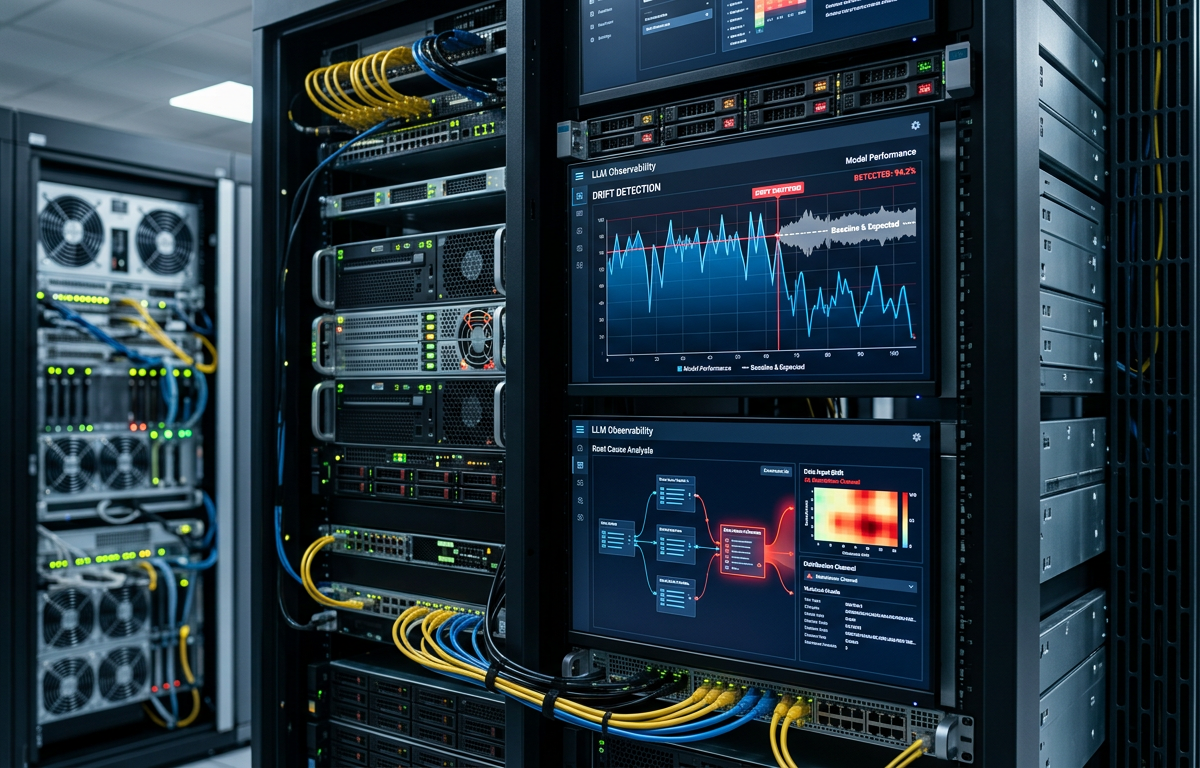
LLM Observability: Why Custom AI Models Need Different Monitoring
Custom AI models degrade silently in production. Most mid-market distributors discover this weeks after the damage begins—when pricing errors accumulate, inventory misallocates, or search results decay. Model drift is silent cost leakage that compounds over time.
Platform capabilities and technical insights
Controlled Automation: The Governance Framework Mid-Market Distributors Need Before Deployment
Autonomous agents can accelerate decisions and reduce costs in B2B commerce. But most mid-market distributors lack the governance frameworks to deploy them safely. Without audit trails, decision boundaries, escalation rules, and performance monitoring, autonomous systems become liabilities. This article maps the four control pillars required before autonomous everyday work goes into production - and the practical roadmap for implementing them without killing velocity.
Operational workflow improvement
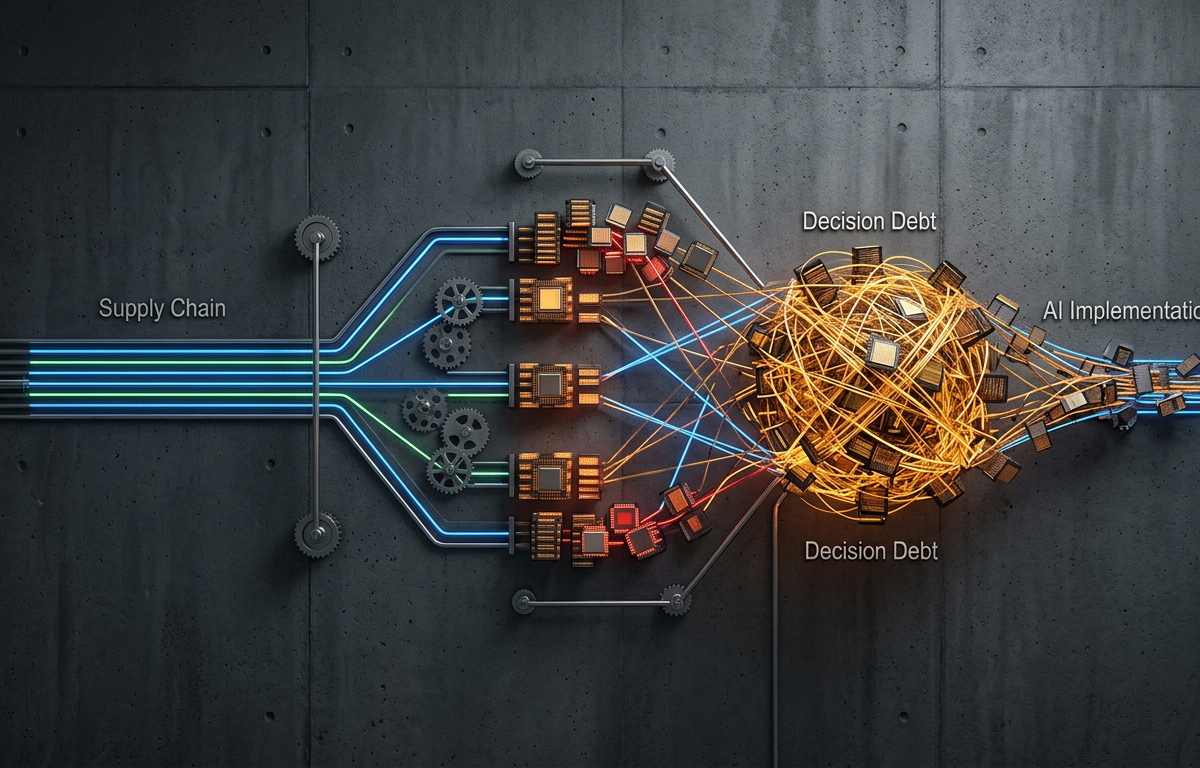
Supply Chain Workflow Debt: How Deferred Planning Choices Compound into AI Failure
Most mid-market distributors rush to AI deployment without auditing what they're actually deciding. A Nottinghamshire food wholesaler spent £85,000 on demand forecasting AI that sat dormant because buying decisions existed only in one person's head. The pre-implementation audit - decision inventory, assumption mapping, rule documentation - is the gate that determines whether AI works or sits unused.
Related Articles
Operational workflow improvement
Why Fortune 500 Supply Chain AI Fails at Mid-Market: The Complexity Mismatch Problem
Fifty-seven percent of supply chain leaders cite data quality as the primary barrier to AI adoption. Not model accuracy. Not cost. Data quality. Most mid-market distributors have data spread across five to seven systems with no single source of truth. You cannot train an AI model on conflicting data. The unglamorous work of master data management, integration, and governance must come first.
Operational workflow improvement
Inventory Decisions Under Uncertainty: When AI Forecasts Conflict With Safety Stock Rules
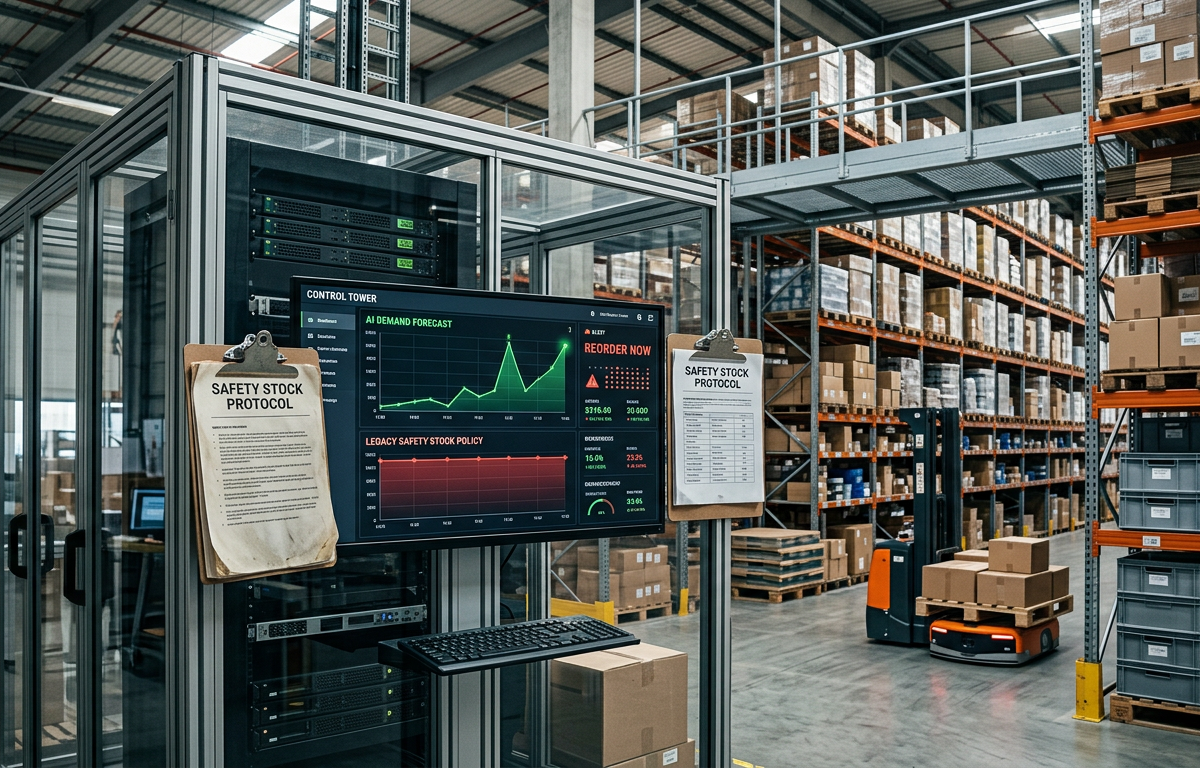
Deploying demand sensing AI without retiring legacy safety stock policies creates a hidden cost: dual everyday work. Inventory planners second-guess AI recommendations, override autonomous reorder points, and maintain manual guardrails 'just in case.' This article quantifies the cost of running both systems, explains why most deployments fail at the governance layer, and outlines the workflow clarity required to let one system own inventory decisions.
Was this article useful?