Thinking
operational efficiency
All articles tagged with "operational efficiency".

Commerce operations insights and applications
Unified Commerce Intelligence: Orchestrating Revenue Across Omnichannel B2B Transactions
A £60M foodservice distributor processes orders through four channels: Shopify Plus, EDI feeds, phone, and WhatsApp. Each channel lands in a different system. Web orders sync to the ERP overnight. EDI orders arrive every 15 minutes but don't update inventory visibility until the next batch run. Staff key phone orders directly into the ERP. Staff transcribe WhatsApp orders into a spreadsheet, then manually enter them. The operations director calculated the cost. Pricing inconsistencies between channels cost £180K annually in margin leakage. A customer quoted £4.20/kg for chicken thighs on the phone receives a different price (£4.45/kg) when they order the same product via the website three days later. They call to query it. The phone team has no visibility of the web order. They create a second order. By the time staff spot the duplicate, the customer has been invoiced twice and the stock has been picked. Resolution takes 90 minutes and involves three people.

Operational workflow improvement
Agentic AI Data Architecture: Why Your Supply Chain Intelligence Fails Without the Right Foundation
A pricing agent at a South Yorkshire distributor adjusted 1,200 SKUs based on supplier cost data that was six weeks stale. The pipeline reported healthy. The data quality checks passed. The system lost £34,000 in margin over three months before anyone noticed. The agent hadn't malfunctioned - it had operated exactly as designed on information that was technically valid but operationally worthless. This is the observability gap that makes autonomous systems dangerous. Traditional monitoring tracks schema compliance and pipeline health. Agentic AI needs semantic monitoring - systems that understand whether data makes sense in the context of the decision being made, not just whether it arrives on time in the right format.

Platform capabilities and technical insights
LLM Observability: Why Custom AI Models Need Different Monitoring
Custom AI models degrade silently in production. Most mid-market distributors discover this weeks after the damage begins—when pricing errors accumulate, inventory misallocates, or search results decay. Model drift is silent cost leakage that compounds over time.

Operational workflow improvement
Predictive Orchestration: The 2026 Supply Chain AI Priority CSCOs Can't Ignore
Most supply chain directors spend Monday mornings reviewing exceptions from last week. A supplier shipment arrived late. A customer order exceeded forecast. A warehouse ran short on a fast-moving line. By the time the team decides what to do, the problem has compounded.

Platform capabilities and technical insights
Event-Driven Architecture: Real-Time Commerce Operations at Scale
A West Midlands foodservice distributor runs seven systems: SAP for ERP, Shopify Plus for commerce, Manhattan for warehousing, Salesforce for CRM, Xero for accounting, Akeneo for product data, and a legacy routing tool built in-house. None of them talk to each other in real time. Pricing updates take three days. Inventory visibility lags 24 hours behind actual stock. The operations director spends Monday mornings reconciling conflicts created by systems working from different versions of the truth. This is the middleware bottleneck. Mid-market B2B distributors have invested in best-of-breed systems but lack the integration layer to connect them. The B2B middleware market reached £14.1 billion in 2025, growing at 12.23% annually (MarketsandMarkets, 2024). That growth reflects a painful reality: buying good systems is easy, making them work together is not. Event-driven architecture promises to solve this. Order placed, inventory updated, fulfilment triggered, customer notified—all in real time. But most mid-market stacks lack the middleware to orchestrate that sequence. Without it, teams fall back to manual processes and the operational friction compounds.
Operational workflow improvement
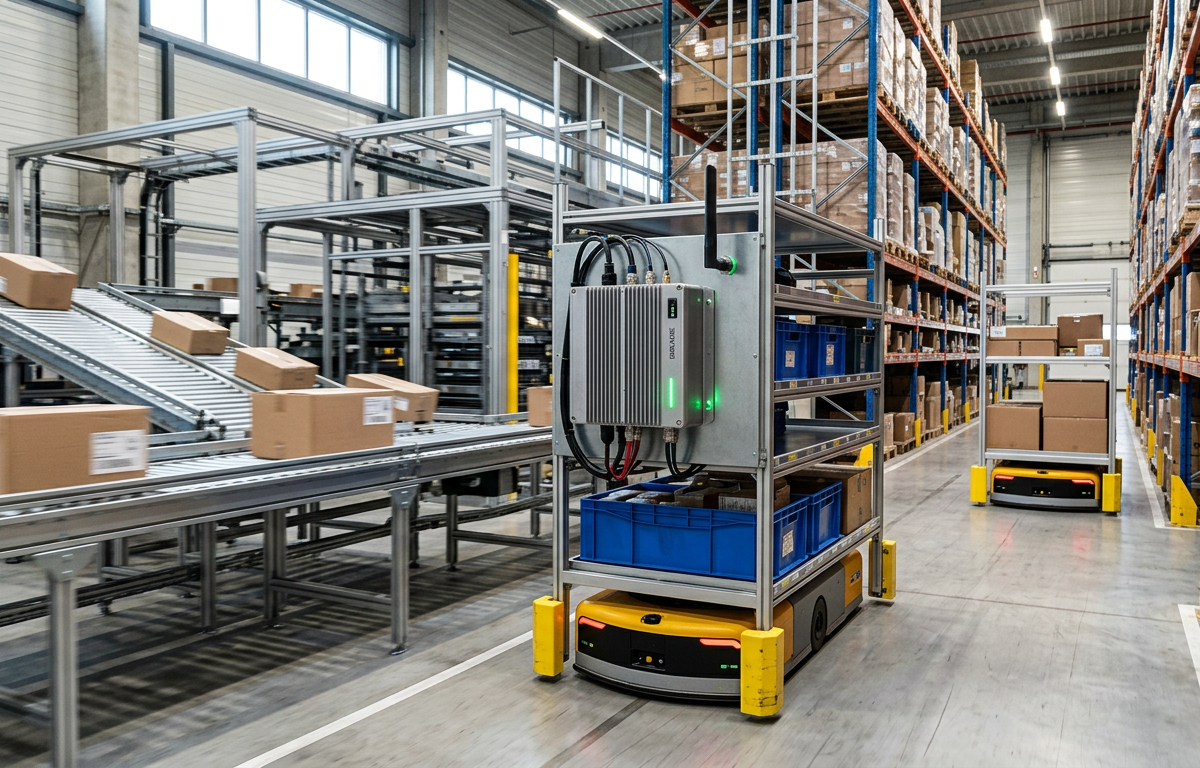
Edge Intelligence in Distribution: Real-Time Decisions at the Warehouse Floor
Most mid-market distributors assume warehouse automation requires robotics. Reality: software orchestration delivers faster ROI without the capital spend. A Manchester plumbing merchant spent £480,000 on conveyors but orders still took 90 minutes from pick to dispatch because systems didn't communicate. The problem wasn't hardware, it was coordination. This article covers why warehouse execution systems matter, how AI decision logic works between platforms, real-time resource allocation mechanics, and the implementation reality most vendors skip.

Operational workflow improvement
Agentic Supply Chain Orchestration: Controlled Automation Across Multi-Depot Networks
Most mid-market distributors allocate stock across depots manually. A buyer reviews demand signals, checks inventory levels, and decides where to send stock. This takes hours or days. By then, demand has shifted. Autonomous agents change this by making allocation decisions in real-time — but only if governance frameworks define the boundaries within which they operate.
Platform capabilities and technical insights
Composable Commerce Architecture: Building Modular Systems That Evolve With Your Business
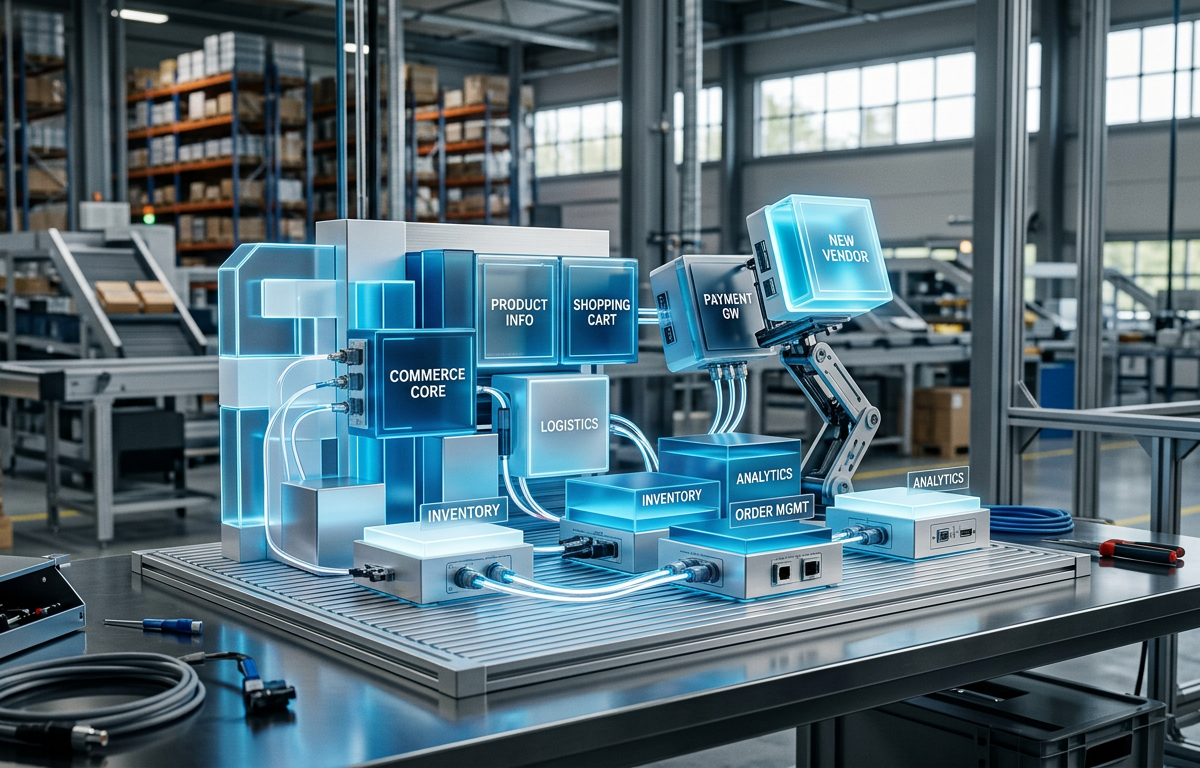
A Midlands foodservice distributor spent £240,000 recovering from a pricing error in 2024. Their monolithic commerce platform took three days to update prices across 12,000 SKUs. Commodity costs moved faster than their approval cycle. By the time new prices went live, margins had eroded. The problem wasn't the platform. It was the architecture. Pricing, inventory, and order management sat in one system. Upgrading the pricing engine meant ripping out everything else. The platform vendor quoted 18 months and £180,000 for a custom pricing module. The distributor couldn't wait that long. This is the composable commerce question: when one component fails, can you swap it without dismantling the entire system?

Platform capabilities and technical insights
Build vs Buy vs Partner: The AI Vendor Selection Framework for Mid-Market Distributors
Mid-market distributors face three paths when deploying AI: pre-built vendor models, custom development, or third-party APIs. Most lack a clear framework to evaluate them. The wrong choice delays implementation by 6-12 months and wastes £50,000-£200,000. This decision matrix maps implementation timeline, cost structure, and risk profile for each approach. Pre-built models deploy in 8-12 weeks at lower cost but limited customisation. Custom development takes 16-24 weeks with full control and competitive advantage. Third-party APIs offer middle ground at moderate cost and configuration flexibility. The right choice depends on data maturity, technical capacity, and competitive urgency. A distributor with clean data and a 6-month runway can pursue custom development. A distributor with fragmented systems and a 10-week deadline cannot. Four questions determine the viable path: data quality, timeline urgency, competitive differentiation, and internal technical capacity.

Operational workflow improvement
Workflow Automation vs Task Automation: Why Manufacturers Choose Wrong
Manufacturing operations leaders invest heavily in workflow automation but see limited ROI because they haven't addressed decision quality. This maturity framework maps the progression from reactive, rule-based decisions to AI-augmented operations — showing mid-market manufacturers how to identify their current state and plan the next evolution without ripping out existing systems.

Operational workflow improvement
Faster Supply Chain Planning: Why Speed Beats Perfect Forecasts in 2026
Most mid-market distributors believe their slow decisions are caused by poor AI models or insufficient data. In reality, they've built latency into their system architecture. A well-trained model can generate a recommendation in milliseconds, but the decision doesn't reach the operator for 3-8 seconds—or longer—because of data pipeline delays, API call chains, and integration bottlenecks. Decision speed directly impacts margin recovery, inventory turns, and fulfilment efficiency. Yet companies continue to upgrade models while ignoring the infrastructure that determines how fast those decisions can actually execute.

Platform capabilities and technical insights
Real-Time Commerce Operations: Moving Beyond Static Dashboards
Most distributors manage operations through yesterday's reports. Morning meetings review exceptions, investigate anomalies, and plan interventions - all based on data that's already 12-18 hours old. Real-time operational intelligence transforms everyday work from reactive problem-solving to proactive opportunity capture.

WithPraxis
Data Quality: The Foundation Every AI Project Needs
Eighty percent of AI initiatives fail before reaching production. The culprit isn't model complexity - it's bad data. This article examines what proper data quality assessment looks like, how migration transforms messy data into AI-ready systems, and what governance means for mid-market distributors.

WithPraxis
Client Success Stories: Real ROI from Applied AI
Real ROI from applied AI across five distribution verticals. Anonymous case studies showing measurable outcomes: 6% margin improvements, 18% fulfilment cost reductions, and 90% error elimination. Implementation timelines, effort required, and lessons learned from actual client engagements.

Operational workflow improvement
Why Workflow Delays Cost More Than Bad Choices
Workflow delay costs more than bad decisions. While businesses obsess over accuracy, slow approval cycles erode margins daily. Commerce operations that reduce decision time by 60-80% see immediate financial returns through faster pricing, inventory allocation, and campaign responses.

Operational workflow improvement
The Workflow Ownership Problem Nobody Wants to Talk About
Monthly meetings where the same operational workflows get debated without resolution aren't inevitable. They're symptoms of unclear workflow ownership that most organisations refuse to acknowledge - and can fix.

Commerce operations insights and applications
Quote-to-Cash Intelligence: Why Manual Quotation Processes Kill B2B Deals
Three days to generate a B2B quote while competitors respond in hours. Manual quotation processes create systematic disadvantage - delayed responses, pricing errors, approval bottlenecks. Intelligent automation transforms quote generation from operational burden to competitive advantage.